Galaxy S25 Verdict: The Compact Flagship Formula, Refined
Samsung's compact flagship closes the regional chipset gap and leans harder into Galaxy AI, but battery capacity stays exactly where it was last year.
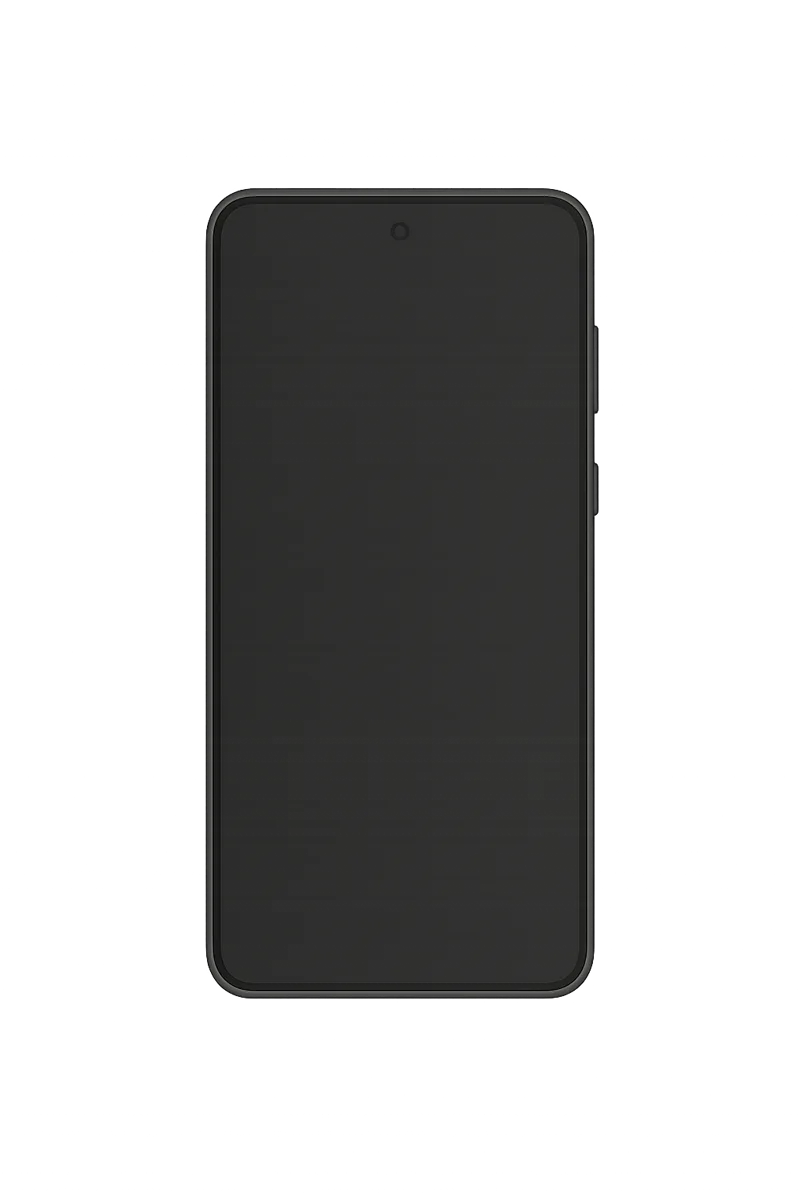
Samsung's small flagship has historically been the phone you bought because you wanted a Galaxy S but didn't want to carry around the Ultra's size or price tag — and the Galaxy S25 mostly keeps to that script, but it does it with a level of polish and AI ambition that makes it feel like a much more complete package than its S24 predecessor. Having spent real time with it as a daily phone, it's a genuinely hard phone to find a bad word for, which is either high praise or evidence that Samsung has run out of obvious things to fix.
Design and Display: Familiar, and That's Fine
Visually, the Galaxy S25 is an evolution rather than a redesign — the same 6.2-inch footprint, the same flat-edged aluminum frame Samsung calls Armor Aluminum, and the same general silhouette anyone who's held an S24 or S23 will recognize instantly. The Dynamic AMOLED 2X display runs at 120Hz with LTPO technology that scales the refresh rate down when it isn't needed, which helps battery life without sacrificing the smoothness that makes flagship Android phones feel noticeably better to scroll through than a 60Hz budget device. Corning's Gorilla Glass Victus 2 on the front and back, combined with an IP68 rating, means this is a phone built to survive the realistic hazards of daily carry — drops onto tile, a splash in the sink, a few months riding around in a bag full of keys.
What Samsung didn't change is arguably the smartest decision here: this form factor already worked. A phone that fits comfortably in one hand while still offering a screen big enough for video and multitasking is a genuinely narrow sweet spot, and the S25 sits right in the middle of it in a way most "compact flagship" competitors don't manage as gracefully.
Snapdragon 8 Elite for Galaxy: No More Chip Compromises
Every region now gets the same Snapdragon 8 Elite for Galaxy chipset, built on a 3nm process, closing the gap that used to exist between Snapdragon and Exynos variants sold in different markets — a real, buyer-relevant fix rather than a marketing footnote. In daily use this translates to a phone that simply doesn't stutter: app switching, camera launch times, and gaming all feel instantaneous, and the 12GB of RAM standard across the line means background apps stay resident in memory far longer than on phones with 8GB configurations. Paired with fast UFS 4.0 storage, the S25 has zero perceptible lag anywhere in the interface, which after a decade of Android phones slowly accumulating software bloat is not something to take for granted.
Cameras: The Same Excellent Triple System, Smarter Software
Hardware-wise, the 50MP wide, 12MP ultrawide, and 10MP 3x telephoto array is functionally the same arrangement Samsung has refined across several generations, and it remains one of the most dependable camera systems in this price bracket — consistent color science, reliable autofocus, and a telephoto lens that actually earns its place instead of being a checkbox spec. What's changed is mostly under the hood: Samsung's computational photography pipeline continues to lean more heavily on AI processing for noise reduction and detail reconstruction in low light, and the difference shows up most in dim indoor shots and nightlife photography, where earlier Galaxy S generations tended to smear fine detail more aggressively. It's not a dramatic camera upgrade generation over generation, but it's a real one, and combined with genuinely excellent video stabilization, it holds its own against phones costing considerably more.
Galaxy AI: The Feature Samsung Is Betting the Phone On
Samsung has made no secret that Galaxy AI is the centerpiece of its current marketing, and the S25 leans into that harder than the S24 did — live translation during phone calls, more capable circle-to-search functionality, and generative photo editing tools are all faster and more reliable than they were a generation ago. Whether any of that actually changes how you use the phone day to day is a genuinely personal question; live call translation is a neat trick that most people will demo once and rarely use, while the more mundane AI features — smarter notification summaries, better predictive text — quietly improve the experience without ever calling attention to themselves. We dug into how these features actually compare against Apple's and Google's equivalents in our phone AI assistant comparison, and the short version is that no single company has a clean lead across every use case yet.
Battery Life: Good, Not Great
The 4000mAh battery is the one spec where the Galaxy S25 doesn't feel like it's pushing the category forward — it's identical in capacity to the outgoing S24, and while efficiency gains from the newer chip and display help it last a comfortable full day under normal use, heavy users doing a lot of camera work, navigation, or gaming will still want a charger within reach by evening. Charging speed is similarly unchanged at 25W wired, which remains conservative by 2026 standards when some competitors are shipping 65W-plus charging, though Samsung's inclusion of reliable Qi2 wireless charging at 15W is a welcome, genuinely useful convenience for topping up on a desk charger overnight.
Verdict: The Compact Flagship Formula, Refined
The Galaxy S25 isn't a phone that reinvents anything, and it doesn't need to — it takes a formula Samsung has been refining for years and removes nearly every remaining rough edge: the chipset gap between regions is gone, performance is uniformly excellent, and the camera system continues to be one of the most trustworthy in its class. Compared with our Galaxy S24 review, this is a smaller jump than the leap from S23 to S24 was, and buyers currently on an S24 have little urgent reason to upgrade. But for anyone coming from an S22, S23, or a competing brand, this is as complete and dependable a compact Android flagship as exists right now, and it's easy to recommend without much hedging.
Related Reading
Pros
- Snapdragon 8 Elite for Galaxy now ships worldwide, no more chip lottery
- Compact 6.2-inch size with genuine flagship performance
- Reliable triple camera system with a real telephoto lens
- Galaxy AI features are faster and more useful than last year
Cons
- 4000mAh battery is unchanged from the Galaxy S24
- 25W wired charging is conservative next to rivals
- Design is a close repeat of the last two generations