Best Display Phones in 2026: A Screen Shootout Across All 11 Phones We've Reviewed
Refresh rate, resolution, brightness, and panel technology all matter for how a phone actually feels to use. Here's our full lineup ranked by display quality.
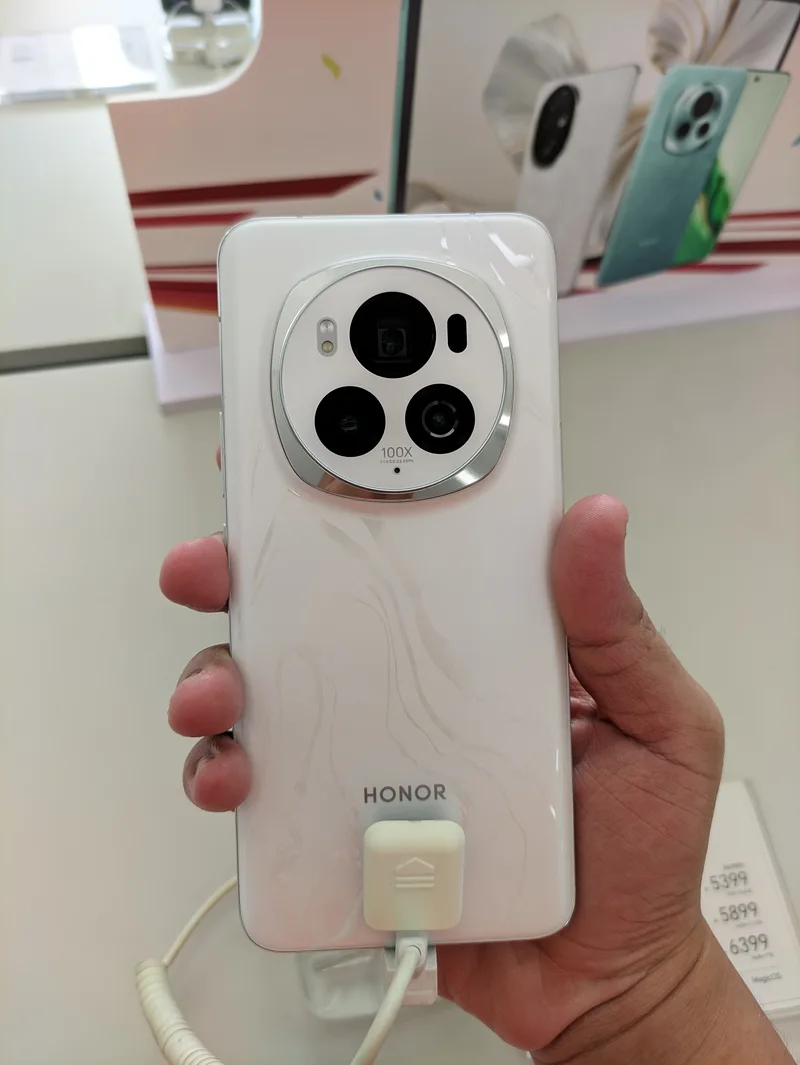
A phone's display is arguably the single component you interact with the most, every time you use it, yet it's often overshadowed in reviews by camera and chip comparisons. Across the 11 phones we've reviewed, display quality varies enormously — from cutting-edge LTPO panels capable of dynamically scaling their refresh rate, down to a fixed 60Hz LCD that was already dated when it launched. Here's how the full lineup actually ranks.
The Top Tier: HONOR Magic6 Pro and Pixel 8 Pro
The HONOR Magic6 Pro's 6.8-inch LTPO OLED panel, running at up to 120Hz with a sharp 2800x1280 resolution, is the most technically capable display in our entire lineup — LTPO technology lets it dynamically scale refresh rate based on content, balancing smoothness with battery efficiency more intelligently than fixed-refresh panels. The Pixel 8 Pro's 6.7-inch LTPO OLED, running 1-120Hz at 1344x2992 resolution, is right there with it, with Google's typically excellent color calibration giving it a slight edge for color-accuracy-focused buyers specifically.
Excellent, Fixed High Refresh: Xiaomi 14 and Galaxy S24
Both the Xiaomi 14's 6.36-inch LTPO AMOLED and the Galaxy S24's 6.2-inch Dynamic AMOLED 2X deliver excellent brightness, color, and 120Hz smoothness, sitting just a notch below the top tier mainly on raw technical specification rather than any visible real-world difference most users would actually notice. Samsung's OLED expertise in particular means the S24's smaller panel remains one of the most color-accurate displays available at any size in our lineup.
The Cinema-Aspect Specialist: Sony Xperia 1 V
The Xperia 1 V's 6.5-inch 4K HDR OLED panel deserves a category of its own — its unusual 21:9 aspect ratio matches cinema content precisely, making it the single best phone in our lineup specifically for watching widescreen video without black bars, even though that same narrow aspect ratio makes typical app use feel less conventional than on other phones. Its 4K resolution at this size is technically excessive for typical viewing distances, but genuinely valuable for the professional video-editing use case Sony built the phone around.
Strong Mid-Tier: Nothing Phone (2) and Galaxy A54
The Nothing Phone (2)'s 6.7-inch LTPO AMOLED at 120Hz punches above its $599 price point, offering genuinely flagship-adjacent display quality at a meaningful discount. The Galaxy A54's 6.4-inch Super AMOLED, also at 120Hz, is arguably the best budget-tier display in our entire lineup — Samsung clearly prioritized screen quality even while trimming costs elsewhere on this phone, and it shows.
Good But Fixed-Refresh: iPhone 15 and iPhone 14
Both iPhones use genuinely excellent Super Retina XDR OLED panels with accurate color and strong brightness, but both are capped at a fixed 60Hz refresh rate — a deliberate Apple decision to reserve higher refresh rates for its Pro-tier models. In direct side-by-side use against any 120Hz phone in this ranking, the difference in scrolling smoothness is immediately noticeable, even though the underlying panel quality on both iPhones is otherwise excellent. Our iPhone 15 vs Galaxy S24 comparison covers this specific gap in more detail.
The Foldable Wildcard: Galaxy Z Flip5
The Z Flip5's 6.7-inch foldable Dynamic AMOLED 2X main display runs at a smooth 120Hz and looks genuinely excellent when unfolded, plus it adds a useful 3.4-inch external cover screen no conventional phone in our lineup offers. The trade-off is the visible crease inherent to current folding hinge technology, a real if modest compromise on an otherwise excellent panel. For buyers weighing that trade-off, our foldable buying guide goes deeper on whether it's worth accepting.
The Clear Bottom of the Ranking: iPhone SE
There's no way around it: the iPhone SE's 4.7-inch Retina IPS LCD, running at a fixed 60Hz with a 1334x750 resolution, is the weakest display in our entire lineup by a wide margin. It was already dated when the SE launched in 2022, built around a design from 2017, and every other phone we've reviewed offers a meaningfully better screen. Buyers who prioritize display quality highly should look elsewhere in our lineup regardless of the SE's other strengths.
Why Refresh Rate Matters More Than Most Buyers Realize
The jump from 60Hz to 120Hz is one of the most immediately noticeable upgrades in mobile tech — once you've used a 120Hz phone for even a day, going back to 60Hz feels sluggish in a way that's hard to unsee. Buyers shopping primarily on camera or chip specs often underweight display refresh rate, but it affects literally every interaction with the phone, all day, every day, in a way few other specs do.
Brightness and Outdoor Visibility
Peak brightness matters as much as resolution for real-world usability, particularly for anyone checking their phone outdoors in direct sunlight. The flagship OLED panels across our lineup — the Magic6 Pro, Pixel 8 Pro, Galaxy S24, and Xiaomi 14 in particular — all handle bright outdoor conditions comfortably, while the iPhone SE's older LCD technology struggles noticeably more in direct sun, a genuine practical downside beyond its lower resolution and fixed refresh rate.
Protective Glass and Long-Term Durability
Display quality isn't just about the panel itself; the protective glass layered on top matters for how well that quality holds up over years of ownership. Most flagships in our lineup use some generation of Gorilla Glass Victus, while the Magic6 Pro's Gorilla Glass Armor adds extra scratch resistance specifically. Budget phones in this ranking generally use older, less scratch-resistant glass generations, a cost-cutting trade-off worth knowing about before committing to daily use without a screen protector.
Our Recommendation
For buyers who want the single best all-around display experience, the Magic6 Pro and Pixel 8 Pro sit at the top of our lineup. For video-focused buyers specifically, the Xperia 1 V's cinema-aspect 4K panel is genuinely unique. And for anyone prioritizing display quality on a budget, the Galaxy A54 punches well above its price.
Verdict
Display quality varies more across our 11-phone lineup than almost any other single spec category, from the Magic6 Pro's and Pixel 8 Pro's cutting-edge LTPO panels down to the iPhone SE's genuinely dated fixed 60Hz LCD. For buyers who spend hours a day looking at their screen — which is to say, nearly everyone — this ranking deserves at least as much weight as camera or chip comparisons.