iPhone 15 vs Xiaomi 14: Two Flagship Camera Philosophies
One relies on two well-tuned sensors and computational restraint. The other throws a Leica-tuned triple camera and 120Hz everything at the problem. Here is how they actually compare.
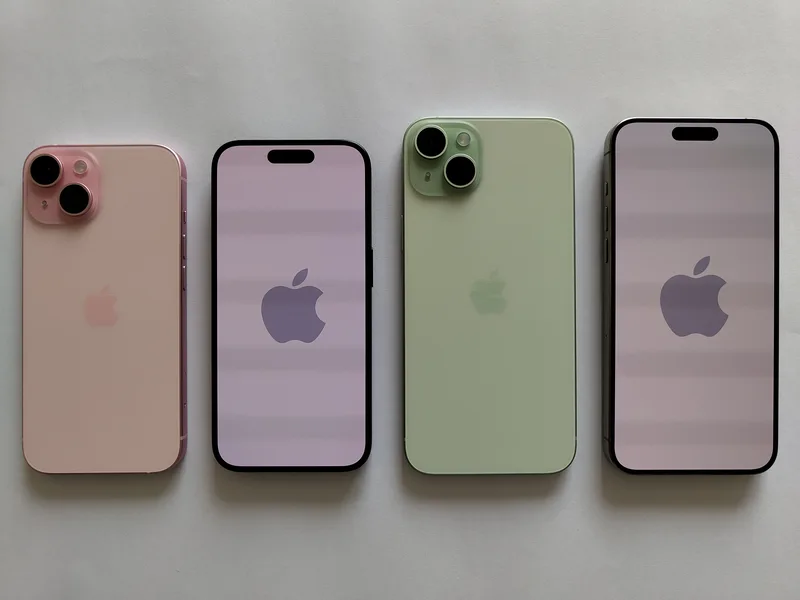
The iPhone 15 and the Xiaomi 14 both launched as their maker's mainstream flagship for the cycle, and both start conversations about what a $799-to-$999 phone should actually deliver in 2026. They could hardly be more different in how they get there: Apple ships a two-camera system it has spent years refining computationally, while Xiaomi throws a Leica-tuned triple camera, a 120Hz LTPO display, and 90W wired charging at the same price bracket. Neither approach is wrong, but they produce genuinely different phones, and the right pick depends heavily on which parts of that list you actually care about.
Display: Refresh Rate Is the Headline Gap
Xiaomi's 6.36-inch LTPO AMOLED panel runs at 120Hz with a 1200x2670 resolution, and the LTPO backend means it can drop its refresh rate down for static content to save battery without the user ever noticing a downside. The iPhone 15's 6.1-inch Super Retina XDR OLED is sharp and color-accurate, with Apple's usual excellent calibration, but it's capped at 60Hz — a limitation Apple still reserves for the base iPhone line even as 120Hz has become standard on Android flagships at this price and well below it. If smoothness while scrolling is something you'll notice every day, and for most people who've used a 120Hz phone it is, this is Xiaomi's clearest win.
Cameras: Leica Tuning vs Computational Restraint
The Xiaomi 14's Leica-tuned 50MP main, 50MP ultrawide, and 50MP telephoto (3.2x optical) give it genuine versatility — three matched-resolution sensors mean the ultrawide and telephoto shots hold up much better than on phones where the secondary lenses are an afterthought. Leica's color science leans toward punchier, more contrasty output that a lot of buyers find immediately appealing straight out of the camera app. Apple's 48MP main and 12MP ultrawide on the iPhone 15 is a smaller spec sheet, but Apple's computational pipeline — years of refinement in Smart HDR and Photonic Engine processing — tends to produce more consistent, more naturally exposed results across a wider range of lighting, especially indoors and in mixed light where oversaturation is an easy trap. Neither camera system is a clear loser; it's a real style choice between vivid, characterful images and quieter, more reliable ones.
Performance and Everyday Speed
Apple's A16 Bionic and Qualcomm's Snapdragon 8 Gen 3 are both extremely capable chips, and in practice the gap between them matters far less than the software running on top of them. The Snapdragon 8 Gen 3 in the Xiaomi 14 benchmarks slightly ahead in raw GPU throughput, which shows up in sustained gaming sessions with demanding titles, while the A16 Bionic's efficiency and Apple's tight hardware-software integration keep the iPhone 15 feeling snappy without ever needing to show off a spec sheet. Neither phone will bottleneck a typical buyer's daily use; this is a category where both platforms have simply solved the problem.
Charging and Battery Life
This is the least close comparison in the whole review. The Xiaomi 14 supports 90W wired charging and 50W wireless charging, fast enough to go from empty to a substantial charge in well under half an hour, while the iPhone 15 tops out at 20W wired and 15W wireless via MagSafe — figures that haven't meaningfully moved in years of iPhone generations. Xiaomi's 4610mAh cell is also larger than what Apple discloses in raw capacity terms (Apple quotes video playback hours rather than mAh), and combined with the fast charging, the Xiaomi 14 is simply a less anxious phone to own if you routinely forget to charge overnight.
Software and Ecosystem
Apple's iOS 17 offers the tightest hardware-software integration in the industry, seamless AirDrop and Handoff with other Apple devices, and a realistic five-plus years of update support — a track record HyperOS, Xiaomi's newer Android skin, simply hasn't built yet outside its home market. For anyone already inside iMessage, AirPods, and a Mac or iPad, that ecosystem pull is difficult to overstate and often decides the comparison before specs even enter the conversation. Xiaomi's HyperOS is genuinely improved over MIUI in polish and bloatware discipline, but Western buyers should go in with clear eyes about a shorter and less consistent update cadence than Apple's, plus occasional carrier-band and warranty-support friction outside markets where Xiaomi sells directly. Our Xiaomi 14 vs Galaxy S24 comparison goes deeper on exactly what that friction looks like for buyers outside China and Europe.
Storage Tiers and Starting Price
Apple sells the iPhone 15 starting at 128GB for $799, with 256GB and 512GB options above that for buyers who need more room. Xiaomi skips a 128GB tier entirely on the 14, starting at 256GB and going up to 512GB and a full 1TB — a generous baseline that reflects Xiaomi's strategy of loading up the spec sheet at every price point rather than upselling storage as an add-on the way Apple typically does. If you shoot a lot of 4K video or keep a large offline photo library, Xiaomi's higher baseline storage is worth real money that Apple would otherwise charge extra for at checkout.
Build Quality and Water Resistance
Both phones use an aluminum frame with an IP68 rating, so day-to-day durability and dust/water resistance are effectively a wash. Apple's color-infused glass back on the iPhone 15 has a slightly more premium, less fingerprint-prone finish in hand, while Xiaomi's ceramic and glass back options on the 14 lean toward a more substantial, denser feel that some buyers prefer for a flagship-tier phone. Neither is a meaningful reason to pick one over the other on its own, but it's worth handling both in person if build feel matters to you as much as specs on paper.
Price and Value
At $799, the iPhone 15 undercuts the $999 Xiaomi 14 by $200 while still delivering Apple's usual resale value, which tends to stay far stronger over time than most Android flagships including Xiaomi's. That resale gap is worth factoring into any true cost-of-ownership comparison, not just the sticker price at checkout — a two-year-old iPhone typically retains a noticeably higher percentage of its original price than a two-year-old Xiaomi flagship on the resale market.
Verdict
Buyers who want a 120Hz display, faster charging, and a more versatile triple-camera system with punchier Leica color should lean toward the Xiaomi 14, especially if they're not tied to iOS already. Buyers who value Apple's ecosystem, longer software support, stronger resale value, and a more naturally exposed camera output should stick with the iPhone 15 — and at $200 less, it's an easier recommendation for anyone not chasing spec-sheet wins. For the complete picture on each phone individually, read our full iPhone 15 verdict and Xiaomi 14 verdict, or see how the iPhone 15 stacks up against a different camera-first Android flagship in our iPhone 15 vs Pixel 8 Pro comparison.