iPhone 15 vs Pixel 8 Pro: Which Camera Philosophy Wins?
Apple's natural, no-fuss processing against Google's AI-powered editing tools — here's how the two actually compare.
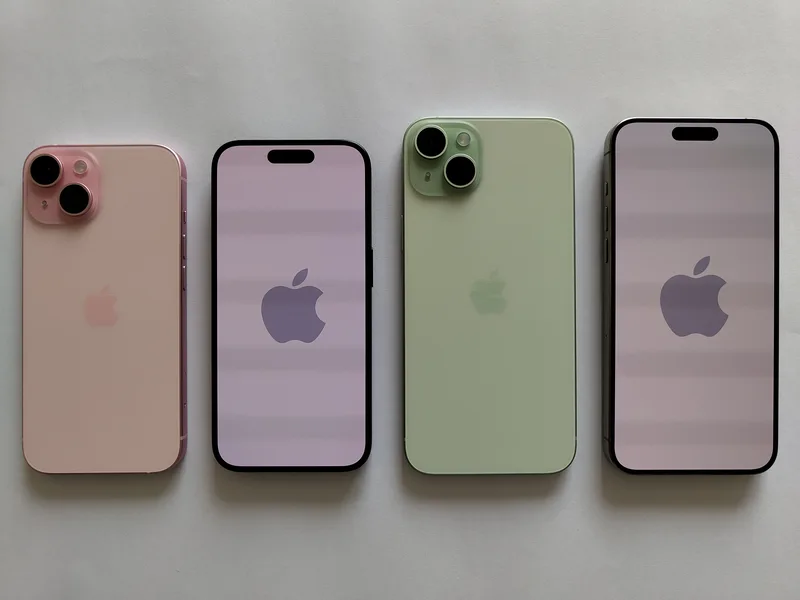
Apple and Google approach the $799-$999 flagship tier from almost opposite directions, and no pair of phones makes that clearer than the iPhone 15 and the Pixel 8 Pro. One is a polished, conservative iteration on a formula Apple has refined for a decade. The other is Google's most aggressive bet yet that AI processing, not raw sensor size, is what actually separates a good camera phone from a great one. Both are excellent. They are just excellent in ways that reward completely different priorities.
Design and Display: Compact Familiarity vs. Big-Screen Ambition
The iPhone 15 keeps Apple's 6.1-inch OLED at a fairly conservative 60Hz refresh rate — a genuine sore point given that even mid-range Android phones now ship with 120Hz panels as standard. What the iPhone 15 does bring that's new is the Dynamic Island (previously Pro-only), a USB-C port replacing Lightning for the first time, and a Color-infused glass back that feels noticeably more premium than the 14's finish. It's a small phone by current flagship standards, and for anyone who values one-handed use, that's a real selling point most Android flagships no longer offer.
The Pixel 8 Pro goes the other way entirely: a 6.7-inch LTPO OLED running at up to 120Hz, with a temperature sensor built into the rear camera bar (a genuinely odd feature few reviewers found essential) and a flat-edge design that echoes iPhone Pro styling more than previous Pixels did. The bigger, smoother screen makes scrolling and video noticeably nicer day to day, and Google's tuning of brightness and color accuracy on the Pro's panel is very competitive with Samsung's best.
Cameras: Editing Software vs. Optical Simplicity
This is where the philosophies diverge hardest. The iPhone 15's 48MP main sensor with a 12MP ultrawide is a capable, no-drama setup that produces consistent, true-to-life color with minimal user intervention — Apple's computational photography aims to look "natural" rather than obviously processed, and mostly succeeds.
The Pixel 8 Pro ships a 50MP main, 48MP ultrawide, and a 48MP 5x telephoto — a genuine zoom advantage the iPhone 15 (non-Pro) simply doesn't have. But the bigger differentiator is software: Magic Editor can move, resize, or erase subjects from a photo with AI-generated fill; Best Take swaps individual faces across a burst of group photos so nobody blinks; Audio Magic Eraser separates and reduces background noise in videos after the fact. None of this is gimmick-tier — these are tools people actually use — and it's a level of post-capture control the iPhone 15 doesn't attempt to match, by design. If you want a phone that reduces how much you think about photography, the iPhone 15 wins. If you want a phone that gives you more to work with after the shutter clicks, the Pixel 8 Pro is ahead, and our full camera phone ranking reflects that gap.
Performance and Software Longevity
Apple's A16 Bionic in the iPhone 15 is a known quantity — fast, efficient, and more than capable of years of smooth performance, though it's the same silicon that powered the iPhone 14 Pro the year before, so it's not the newest chip Apple makes. The Tensor G3 in the Pixel 8 Pro is not the fastest chip on paper (Qualcomm's Snapdragon 8 Gen 3 outperforms it in raw benchmarks), but Tensor's entire design purpose is running Google's on-device AI models efficiently, which is exactly what powers the camera features above.
Software support is a genuinely decisive factor for anyone keeping a phone more than two years. Google committed to seven years of OS upgrades and security patches for the Pixel 8 Pro at launch — a number that, at the time, matched or beat every Android competitor including Samsung. Apple doesn't publish a fixed number for iPhones but has a long track record of five-plus years of iOS updates in practice. Both are strong here, though Google's public seven-year commitment gives buyers more certainty in writing.
Battery, Charging, and Ecosystem
Real-world battery life favors the larger Pixel 8 Pro simply due to its bigger cell and display efficiency gains at lower refresh rates when idle, though the iPhone 15's efficient A16 keeps it competitive despite the smaller battery. Charging speeds are unremarkable on both by 2026 standards — neither phone is fast to top up compared with Xiaomi or HONOR's 80W-plus charging, something covered in our Pixel 8 Pro vs Galaxy S24 comparison as well.
Ecosystem lock-in matters more than most buyers admit. If you already own a MacBook, AirPods, or an Apple Watch, the iPhone 15 integrates with all of it in ways Android simply cannot replicate. If your life runs through Gmail, Google Photos, and Chrome, the Pixel 8 Pro is the phone built specifically to be the best possible front end for those services, with zero compromise.
Video Recording: A Quiet Apple Advantage
Photography gets most of the attention in these comparisons, but video is where the gap between the two actually widens in Apple's favor. The iPhone 15 records 4K at up to 60fps with noticeably better rolling shutter control, more stable electronic image stabilization while walking, and audio capture that consistently rates ahead of Android competitors in side-by-side tests. Cinematic mode, which racks focus automatically between subjects, is still a genuinely unique feature nobody has fully replicated. The Pixel 8 Pro's video is solid and its Audio Magic Eraser is a clever post-processing trick, but if video is a primary use case — vlogging, home movies, content for social platforms — the iPhone 15 remains the safer pick despite its older-generation chip.
Who Actually Fits Each Phone
Break it down by use case rather than spec sheet and the decision gets easier. Someone who shoots a lot of family video, already owns other Apple devices, and prefers a smaller phone that fits in one hand should lean iPhone 15 without much hesitation. Someone who lives inside Google's apps, wants the biggest possible screen for browsing and video, zooms in on distant subjects regularly, and wants AI editing tools baked directly into the gallery app should lean Pixel 8 Pro. Buyers torn between the two are usually better served by asking which ecosystem they're already invested in rather than parsing individual benchmark numbers, since both phones are fast enough that neither will feel slow in daily use for years.
Price and Verdict
At $799, the iPhone 15 undercuts the $999 Pixel 8 Pro by $200 while delivering a smaller, simpler, extremely polished experience. The Pixel 8 Pro justifies its higher price with a bigger 120Hz screen, genuine zoom capability, and AI editing tools with no real iPhone equivalent. Neither is the wrong choice — this is a case where the deciding factor is genuinely which ecosystem and which camera philosophy fits how you actually use a phone, not which phone is objectively "better." For a deeper look at each individually, read our full iPhone 15 verdict and Pixel 8 Pro verdict.