Xiaomi 14 vs Galaxy S24: Is Xiaomi Finally Ready for Western Buyers?
Xiaomi's flagship beats Samsung on charging speed and camera hardware. We look at why availability and software support still tip the scale.
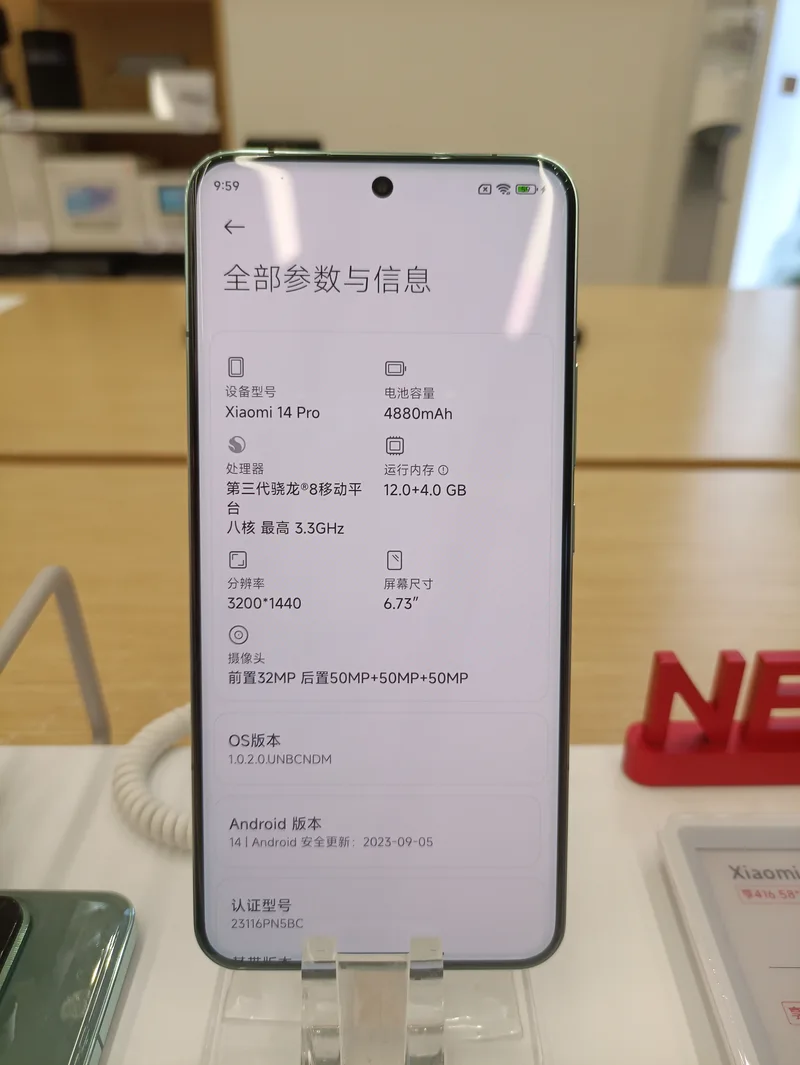
Xiaomi has been the biggest phone maker most American and British buyers have never owned, mostly because the company's flagship phones have historically been hard to find outside China and parts of Europe and Asia. The Xiaomi 14 is the clearest case yet for why that's a shame. It's a genuinely excellent flagship, co-engineered camera hardware with Leica, a compact 6.36-inch body that dodges the everything-is-huge trend, and specs that go toe-to-toe with the Galaxy S24 on paper. The question worth asking isn't whether the Xiaomi 14 is good — it clearly is — but whether it's good enough, and available enough, to actually compete for your money against Samsung's far more established flagship.
Camera hardware is where Xiaomi makes its loudest case. The 14 packs a 50MP Leica-tuned main sensor alongside a 50MP ultrawide and a 50MP telephoto with 3.2x optical zoom — three matched 50MP sensors is a genuinely unusual spec sheet, and it shows in consistency across focal lengths. The Leica partnership isn't just marketing either; Xiaomi ships two distinct color profiles, a "Leica Authentic Look" that renders more true-to-life, and a "Leica Vibrant Look" that's punchier and closer to what Samsung's Galaxy S24 produces by default. Having that choice built into the camera app is a nice touch most competitors don't offer. The S24's camera, meanwhile, is more conservative on paper — a 50MP main, 12MP ultrawide, and a shorter 3x telephoto — but it benefits from years of Samsung's processing refinement and a camera app that's simpler to use quickly without digging into settings.
Charging speed is where the Xiaomi 14 wins outright and it isn't particularly close. Xiaomi's 90W wired charging can take the phone from empty to full in under 30 minutes, with 50W wireless charging as a fast option too. Samsung's Galaxy S24 charges at 25W wired and 15W wireless — numbers that were reasonable a few years ago but now look dated next to what Xiaomi, OnePlus, and other Chinese-market-first brands routinely ship. If fast charging matters to your daily routine, there's no real debate here.
Performance is essentially a wash. Both phones use the Snapdragon 8 Gen 3, the same top-tier Qualcomm chipset, so raw benchmark numbers land in the same range. Where they differ is software polish around that hardware. Xiaomi's HyperOS (the successor to MIUI) has improved significantly in recent years but still carries some of MIUI's old reputation for occasional bloatware and inconsistent update timing outside China. Samsung's One UI, running on top of Android 14 here, remains one of the more refined and consistent Android skins on the market, with clearer long-term software support commitments — Samsung promises seven years of updates for the S24, a commitment Xiaomi has not matched for the 14 in most markets.
Design and in-hand feel are worth a closer look too, since the two phones take genuinely different approaches to a flagship-sized phone. The Xiaomi 14's 6.36-inch display is noticeably more compact than most current flagships, and Xiaomi clearly aimed it at buyers tired of phones that barely fit in a pocket — it's one of the few 2024 flagships that's comfortably usable one-handed. The Galaxy S24's 6.2-inch screen is close in size but the phone itself runs slightly larger overall due to bezel and frame differences, though both remain in the same general "compact flagship" category rather than the oversized Pro/Ultra tier. Build quality is a near-tie: both use aluminum frames with Gorilla Glass Victus 2 protection and carry IP68 water and dust resistance, though the Xiaomi 14's ceramic back option (available on higher storage tiers) adds a more premium in-hand texture than either phone's standard glass back.
Battery life splits along predictable lines given the charging speed gap. The Xiaomi 14 carries a 4610mAh cell versus the Galaxy S24's smaller 4000mAh battery, and combined with efficient Snapdragon 8 Gen 3 power management, real-world screen-on time runs slightly ahead of Samsung's phone in most day-to-day use. Neither phone will struggle to get most users through a full day, but heavy users — several hours of screen time, camera-heavy days, or frequent GPS navigation — will notice the Xiaomi lasting longer between charges, and recovering far faster when it does need topping up thanks to that 90W charging advantage.
That software support gap is arguably the real deciding factor, more than any single spec. Buying a phone is a multi-year commitment, and knowing exactly how long you'll get security patches and OS upgrades matters more than most buyers give it credit for until they're stuck on an outdated version two years in. Samsung's transparent, market-consistent update policy is a genuine advantage the Xiaomi 14 doesn't fully counter, even with better charging and an arguably more interesting camera system.
Then there's the practical matter of actually buying one. The Galaxy S24 is sold through every major carrier and retailer in the US, UK, and most of Europe, with full warranty support, carrier financing, and trade-in programs. The Xiaomi 14's official availability is spottier — strong in China and parts of Europe and Asia, but without official US carrier support, meaning American buyers who want one are often looking at importing a phone that may lack full band compatibility with US networks, and warranty support becomes a real headache if anything goes wrong. This single factor rules the Xiaomi 14 out for a large share of readers regardless of how the phones compare on paper.
So who should actually consider the Xiaomi 14? If you live somewhere it's officially sold — much of Europe and Asia — and you value fast charging and Leica-tuned photography over rock-solid long-term software support, it's a legitimately excellent alternative to the Galaxy S24, and arguably a more interesting phone to use day to day. If you're in the US, or you simply want the safest, most supported flagship purchase with the least friction, Samsung's phone remains the more sensible default — you can read our full Galaxy S24 verdict for the deeper breakdown, and our Xiaomi 14 verdict covers where this phone stands on its own merits outside the comparison.