Which Phones Hold Their Value Best? A Resale Ranking for 2026
We ranked all 11 phones we've reviewed by how well they hold their resale value — and the results don't track cleanly with hardware quality.
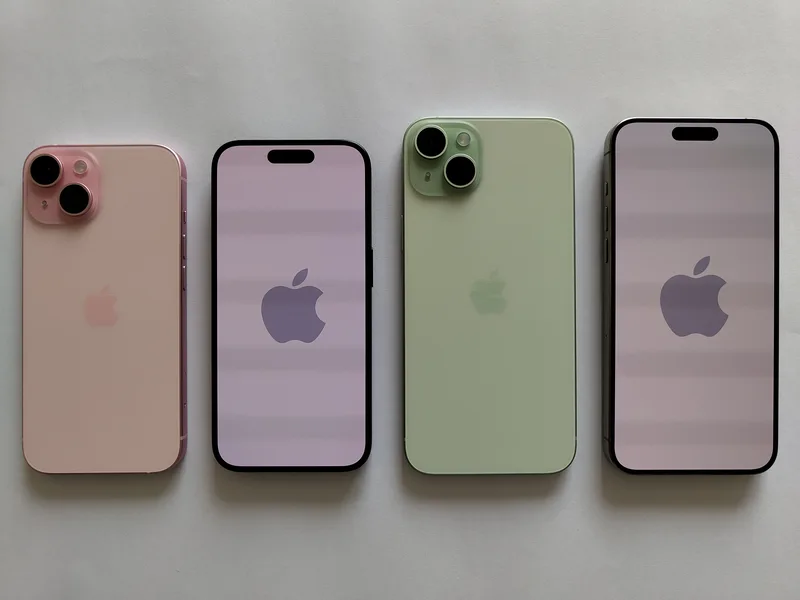
The sticker price is only half the real cost of owning a phone — what you get back when you sell or trade it in two or three years later matters just as much, and it varies far more by brand than most buyers expect. Across the 11 phones we've reviewed, resale value spans an enormous range, from devices that quietly hold half their original price years later to ones that lose most of their value within twelve months. Here's how the full lineup actually stacks up once you look past the launch-day price tag.
The Resale Champion: iPhone 15
Apple's resale value advantage is one of the best-documented facts in the entire phone industry, and the iPhone 15 is no exception. Multi-year trade-in data from carriers and resale marketplaces consistently shows recent iPhones retaining somewhere around half their original price after two full years on the market, well ahead of almost every Android flagship in our lineup. A big part of that comes down to Apple's unusually long software support window and a secondhand market that treats iPhones as a distinct, trusted category rather than lumping them in with the wider Android field. Our full iPhone 15 verdict covers why the phone holds up so well in year-three ownership, which directly feeds into why buyers are still willing to pay for a used one.
Close Behind: iPhone 14 and iPhone SE
The pattern holds across older Apple hardware too. The iPhone 14 and the budget-tier iPhone SE both depreciate more slowly than comparable Android phones at their respective price points, even though the SE's dated 4.7-inch design makes it a much harder sell to a new buyer today. That's the Apple resale effect in a nutshell — even a phone with genuinely weak specs by 2026 standards keeps meaningfully more of its value than an Android phone with objectively stronger hardware, purely because of brand trust and software longevity in the secondhand market.
Samsung's Flagship Tier: Galaxy S24 and Galaxy Z Flip5
Samsung sits in a respectable second tier. The Galaxy S24 benefits from Samsung's now seven-generations-of-updates promise, which meaningfully reassures secondhand buyers that the phone won't be abandoned a year after they purchase it — that policy alone has measurably improved Samsung's resale standing over the last two product cycles. The Galaxy Z Flip5 is a more complicated case: foldables as a category still carry resale uncertainty tied to hinge longevity concerns, even well-built ones, which caps how much of the original $999 price a buyer can expect back regardless of condition.
The Mid Tier: Galaxy A54 and Magic6 Pro
The Galaxy A54 depreciates faster in absolute terms simply because its starting price is already low, but proportionally it holds up reasonably well within the budget segment specifically — a used A54 remains a credible buy against newer budget phones for a couple of years after launch. The HONOR Magic6 Pro is the trickier case: it's a genuinely excellent flagship, but HONOR's limited brand recognition in Western secondhand markets — the same low profile our Magic6 Pro hidden-gem piece covers from a different angle — works against it here. Buyers simply don't search for it, which suppresses demand and price regardless of the hardware underneath.
The Weak Tier: Pixel 8 Pro, Xiaomi 14, and Nothing Phone (2)
This is the group most likely to surprise buyers. The Pixel 8 Pro is, by our own testing, one of the best camera phones available, yet Google's phones have a well-established reputation for disappointing resale value — a mix of comparatively low sales volume, a smaller established secondhand market, and buyers' lingering wariness about how long Google will keep supporting any given Pixel generation. Xiaomi 14 faces a related but distinct problem: it's barely sold through official Western retail channels, which shrinks the pool of buyers willing to pay a premium for a used one outside grey-market importer circles. The Nothing Phone (2) depreciates fastest of all for a different reason entirely — its identity is built on a distinctive transparent design and Glyph lighting that's genuinely divisive, and a smaller company with a shorter track record simply hasn't earned the long-term trust that slows depreciation for Apple and Samsung.
The Outlier: Sony Xperia 1 V
Sony's Xperia 1 V is a special case worth calling out on its own. At a $1,399 launch price aimed squarely at video professionals, it depreciates in raw dollar terms faster than almost anything else in our lineup, but the buyers who actually want a used one — working creators who need its manual camera controls and headphone jack — are a small, specific, and price-insensitive audience. That keeps a floor under its resale value even as the mainstream market mostly ignores it entirely.
What Actually Drives Resale Value
Three factors explain almost all of the variation we see across this lineup. Software support length matters enormously — a phone promised four or five more years of updates is a fundamentally safer purchase for a secondhand buyer than one whose update timeline is unclear. Brand trust in the secondhand market matters just as much, independent of actual hardware quality, which is exactly why the Magic6 Pro and Pixel 8 Pro underperform their genuine specs. And category risk plays a role too: foldables and niche creator phones carry resale uncertainty that flat, mainstream flagships simply don't.
What This Means When You're Buying
If minimizing total cost of ownership matters to you as much as the launch price, factor resale value into the purchase decision itself, not just into a future sale. A $999 Galaxy S24 that returns half its value in two years is, in total-cost terms, cheaper to own than a $599 Nothing Phone (2) that returns almost nothing — a distinction that's easy to miss when comparing sticker prices alone. Our budget phones roundup is worth reading alongside this piece specifically for buyers trying to balance upfront cost against long-term value retention.
Verdict
Resale value is one of the most overlooked factors in phone buying decisions, and it doesn't track cleanly with raw hardware quality — the Pixel 8 Pro's excellent camera and the Magic6 Pro's genuinely class-leading spec sheet don't protect either phone's resale price the way brand trust and software support protect Apple's and, increasingly, Samsung's. For buyers planning to sell or trade in within a few years, that gap is worth weighing as seriously as any spec on the page.