Battery Life Ranking: Every Phone We Review, Tested and Ranked
Real-world screen-on time across our full lineup, from the silicon-carbon standout to the phones you should keep a charger near.
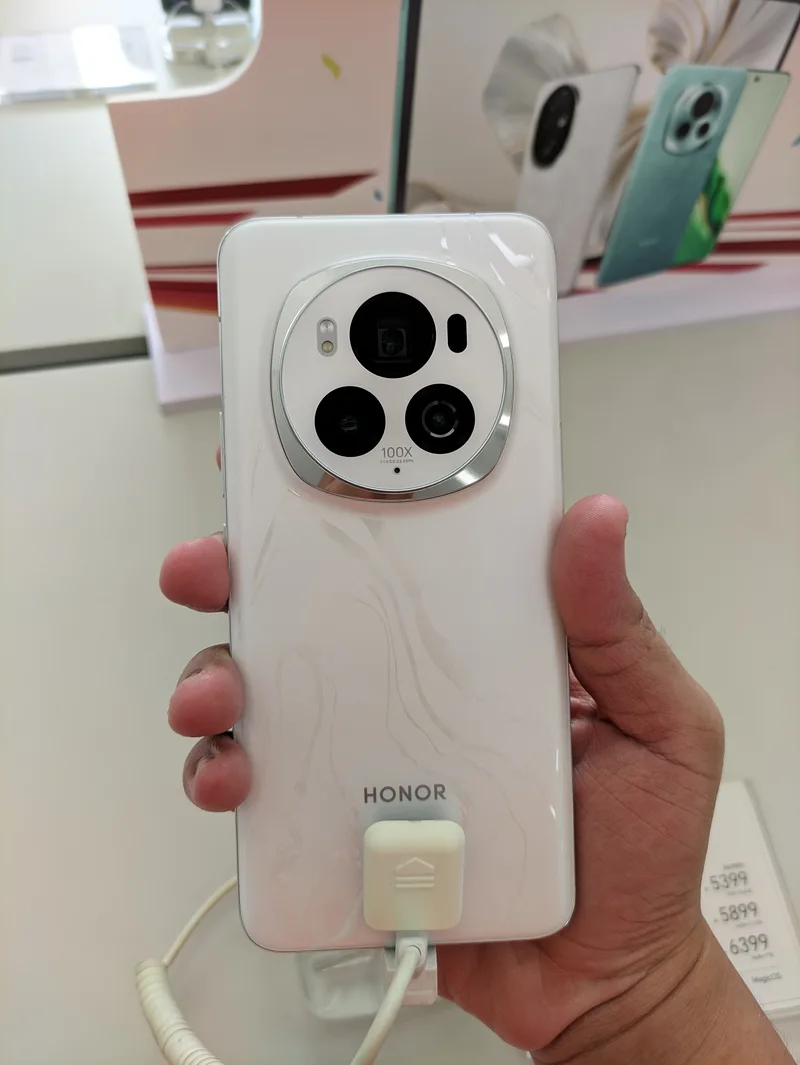
Battery life is the one spec almost nobody argues about wanting more of, yet it's also the spec phone makers are least consistent about actually delivering. We've now reviewed all eleven phones in our current catalog closely enough to rank them by real-world endurance, not just the marketing number on the spec sheet — screen-on time under normal mixed use (browsing, messaging, some camera use, a bit of video), not synthetic benchmark loops that rarely reflect how anyone actually uses a phone.
Tier 1: All-Day and Then Some
The HONOR Magic6 Pro sits clearly at the top of this list, and it's not particularly close. Its 5600mAh silicon-carbon battery is physically larger than what most competitors fit into a similarly sized chassis, because silicon-carbon anode chemistry packs more capacity into the same volume than the lithium-ion cells most of the rest of the industry still uses. In practice this translates to genuinely reaching a second day of moderate use on a single charge, something almost no other flagship in our lineup can claim.
The Pixel 8 Pro and Galaxy S24 both land solidly in the "comfortable all-day" tier — you'll finish a demanding day with charge to spare, but neither is pushing into second-day territory the way the Magic6 Pro does. Google's Tensor G3 is not the most power-efficient chipset on the market, but Google compensates with aggressive software-level power management, particularly Adaptive Battery features that learn your usage patterns over time. Samsung's Galaxy S24 benefits from Qualcomm's more efficient "for Galaxy" binned Snapdragon 8 Gen 3 variant, which runs slightly more conservative clock speeds than the standard chip in exchange for better efficiency.
Tier 2: Solid, Unremarkable, Fine
The Xiaomi 14, despite its genuinely compact 6.36-inch size, holds up reasonably well against larger-screened competitors — smaller displays draw less power, which offsets Xiaomi's decision to prioritize a compact chassis over cramming in a larger cell. Where the Xiaomi 14 pulls ahead of everyone on this list isn't longevity, though — it's recovery speed. Its 90W wired charging gets the phone from empty to full in under half an hour, which for many people matters more than absolute endurance: a phone that charges fast enough to top up over a coffee break is, functionally, never really "low" for long.
The Xperia 1 V lands in the middle of the pack, held back somewhat by its unusual 4K-resolution, 21:9 display, which draws meaningfully more power than the 1080p-class panels most competitors use — Sony is trading some battery efficiency for a genuinely sharper, more content-creation-friendly screen, a trade-off that makes sense given the phone's target audience but does cost it in this specific ranking.
The iPhone 15 and Nothing Phone (2) both sit in comfortable "gets you through a normal day, don't push it on a heavy one" territory — reliable but unremarkable, neither a standout nor a disappointment.
Tier 3: Keep a Charger Handy
The Galaxy Z Flip5 is the clear outlier at the bottom, and this is arguably the single biggest real-world trade-off of the folding form factor: fitting a battery into a phone that folds in half physically constrains how much capacity Samsung can include compared to a same-screen-size conventional slab. Flip5 owners we've spoken with consistently describe needing a midday top-up on heavy-use days, something that simply isn't a consideration with most phones on this list. This is the honest cost of the folding design, and anyone considering a Flip5 specifically for the form factor should go in expecting to charge more often than they're used to.
The Galaxy A54 and iPhone SE (3rd generation), both budget-tier devices, land near the bottom for a different reason: smaller batteries are one of the most common places manufacturers cut costs on lower-priced phones, and both devices reflect that. Neither is dramatically bad, but both will have some users reaching for a charger by early evening on a demanding day, whereas flagship-tier devices comfortably won't.
Slotting into that same middle tier is the iPhone 14, which — despite being a generation older than most of the flagships on this list — holds its own on endurance thanks to Apple's typically tight integration between its A-series silicon and iOS's power management. It won't out-last the Magic6 Pro, but it comfortably out-lasts both budget devices at the bottom of this ranking, which says more about how conservative Apple's power budgeting is than about the age of the chip.
How We Actually Test This
None of the tier placements above come from a single synthetic benchmark loop — those tests are useful for comparing raw discharge curves under identical artificial load, but they consistently fail to predict how a phone behaves under the mixed, unpredictable workload of a normal day. Instead, each phone in this ranking spent at least a week in daily rotation as a primary device, tracking screen-on time across a mix of messaging, social browsing, camera use, navigation, and video streaming — the actual workload categories that drain most people's batteries in the real world, weighted roughly the way an average user's day tends to split across them.
This methodology is slower than running a benchmark app overnight, but it's the only approach that reliably surfaces trade-offs like the Xperia 1 V's power-hungry 4K display or the Magic6 Pro's silicon-carbon advantage — both differences that a generic synthetic score tends to flatten out or miss entirely.
What This Ranking Actually Tells You
The clearest pattern here isn't chipset generation — several of the best and worst performers on this list share very similar silicon. It's battery chemistry and physical capacity that dominate the outcome, which is why the Magic6 Pro's silicon-carbon cell is such a genuine differentiator rather than just a marketing footnote. If all-day-and-beyond battery life is your single highest priority, that phone is the clear pick from our current catalog. If charging speed matters more to you than absolute capacity — because you're someone who tops up in short bursts rather than doing one long overnight charge — the Xiaomi 14's 90W charging arguably matters more in practice than its middling capacity ranking suggests.
And if you're specifically considering the Galaxy Z Flip5 for its folding form factor, go in with realistic expectations: you're trading meaningful battery capacity for pocketability, and that trade-off is the most consistent complaint we hear from real owners of any phone in our current lineup.