Best Budget Phones in 2026: What You Actually Get for Under $500
The iPhone SE and Galaxy A54 both undercut every flagship on this site by hundreds of dollars. Here's exactly what that savings costs you.
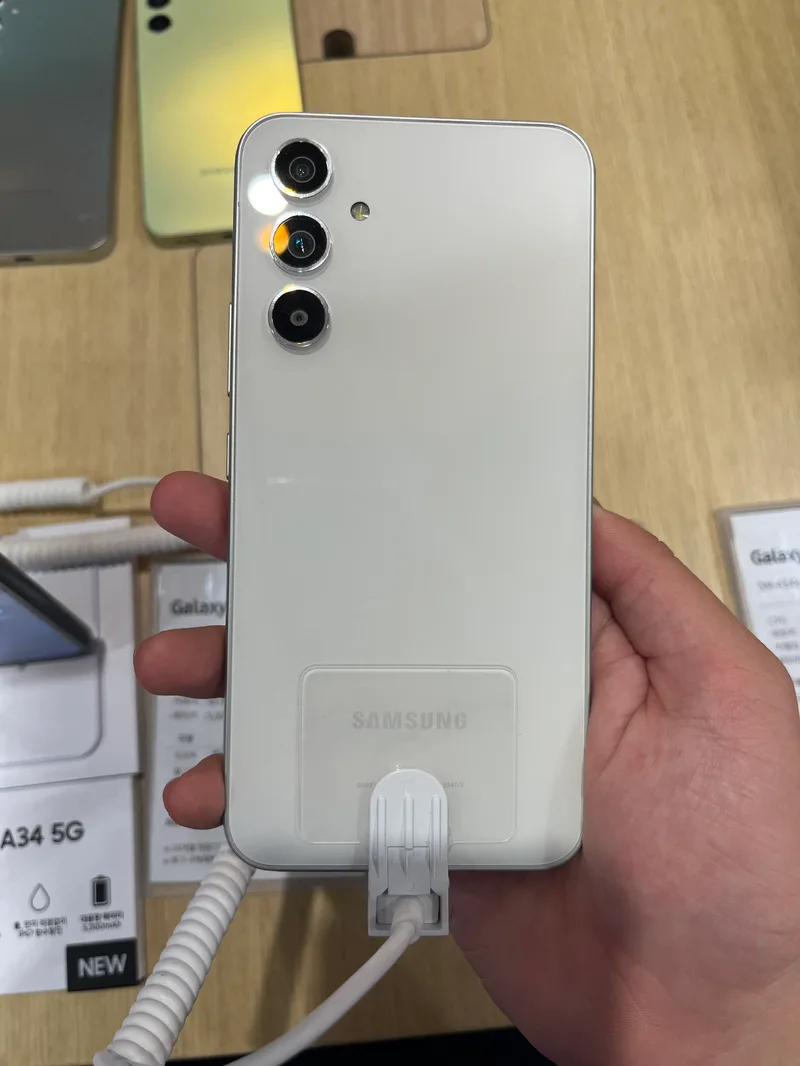
Of the 11 phones we've reviewed on this site, two are built specifically for buyers who want a current, well-supported phone without paying flagship prices: the $429 iPhone SE and the $449 Galaxy A54. Both undercut every other phone in our lineup by hundreds of dollars, but they get there through very different trade-offs — one keeps a genuinely old design alive with modern internals, the other builds a more conventional modern phone around more modest specs. Here's what buyers actually give up at this price tier, and whether it's worth it.
The iPhone SE's Trade-Off: An Old Body, a Current Chip
The iPhone SE's core bargain is straightforward: you get Apple's A15 Bionic chip — genuinely fast, and the same silicon that powered flagship iPhones as recently as the iPhone 13 Pro — wrapped in a design dating back to the iPhone 8 from 2017. That means a 4.7-inch 750p LCD display at a fixed 60Hz, thick bezels, a single 12MP rear camera, and Touch ID instead of Face ID. For buyers who prioritize raw processing speed and don't mind a genuinely dated design and small screen, that's a real bargain. For anyone who cares about display quality or camera versatility, it's a much harder sell.
The Galaxy A54's Trade-Off: Modern Design, Modest Chip
The Galaxy A54 takes the opposite approach — a genuinely contemporary 6.4-inch Super AMOLED display running at 120Hz, a triple rear camera system with ultrawide and macro lenses, and a modern design language that doesn't look or feel like a budget compromise at a glance. What you give up is chip performance: the Exynos 1380 is a clear step down from Samsung's own flagship silicon, noticeably slower under demanding use than the Galaxy S24 sitting above it in Samsung's lineup, though perfectly adequate for browsing, messaging, and casual apps.
Display: Galaxy A54 Wins Clearly
This isn't close. The Galaxy A54's 120Hz AMOLED panel is a genuinely modern display that would look at home on a much more expensive phone, while the iPhone SE's 60Hz LCD panel was already dated when the SE launched in 2022 and hasn't improved with time. Anyone who cares about smooth scrolling, rich colors, or simply not feeling like they're using an old phone should weigh this heavily.
Camera: Galaxy A54 Offers More Versatility
The A54's three-lens setup, including a genuine ultrawide, gives it compositional flexibility the SE's single 12MP lens simply can't match, and Samsung's processing produces punchy, shareable photos that satisfy most casual photographers. The iPhone SE's camera is solid within its limits — Apple's computational photography remains reliably good — but a single fixed lens is a real constraint at this price point when competitors offer more.
Performance: iPhone SE Wins Clearly
Here the tables turn. The A15 Bionic in the iPhone SE comfortably outperforms the A54's Exynos 1380 in raw processing speed, a gap that shows up in app launch times, multitasking, and gaming performance. Buyers who specifically prioritize a snappy, lag-free experience over display quality should weigh this in the SE's favor.
Software Support: Both Are Strong, Differently
The iPhone SE benefits from Apple's typical multi-year iOS update commitment, running the same current software as brand-new iPhones. Samsung has significantly improved its own update commitment for the Galaxy A-series in recent years, and the A54 receives regular security patches and OS updates on a schedule that, while not matching Samsung's own flagship promise, is competitive within the Android budget segment. Neither buyer is choosing a phone that will feel abandoned within a year or two.
Build Quality and Durability
The iPhone SE's aluminum-and-glass construction with an IP67 rating feels more premium in hand than its price suggests, benefiting from a design Apple has refined over many years. The A54's plastic-glass hybrid frame with Gorilla Glass 5 and an IP67 rating is solid but noticeably less premium-feeling, a clear sign of where Samsung trimmed costs to hit its price point.
Head to Head: Read the Full Comparison
For readers deciding directly between the two, our full iPhone SE vs Galaxy A54 budget comparison goes deeper on every category covered here, including a closer look at ecosystem lock-in considerations that matter for many budget buyers deciding between iOS and Android for the first time.
How Much More Does a Flagship Actually Buy?
It's also worth asking whether stepping up to a flagship is worth the jump. Our Galaxy S24 vs Galaxy A54 comparison quantifies exactly what Samsung's own $350 premium buys within its own lineup, a useful reference point for anyone wondering whether budget really is the right tier for their needs.
Who Should Buy Which
Buyers who want the fastest possible chip at this price, don't mind a small dated-feeling screen, and are already invested in Apple's ecosystem should lean toward the iPhone SE. Buyers who want a modern-feeling display and more camera flexibility, and are comfortable with more modest raw performance, should lean toward the Galaxy A54. Neither is a wrong choice — they represent genuinely different bets on what matters most at a budget price point.
Total Cost of Ownership Beyond the Sticker Price
Budget buyers should also weigh costs beyond the initial purchase price. The iPhone SE's Lightning port means buying into an accessory ecosystem Apple itself is phasing out across the rest of its lineup, a minor but real long-term inconvenience. The Galaxy A54's more modest chip may mean feeling the need to upgrade sooner if your usage grows more demanding over time. Neither cost is dramatic, but both are worth factoring into a genuinely budget-conscious purchase decision rather than looking at launch price alone.
Verdict
Both the iPhone SE and Galaxy A54 prove that a sub-$500 phone doesn't have to feel like a compromise across the board — it just concentrates its compromises in different places. The SE trades display quality and camera versatility for raw chip speed and Apple's ecosystem; the A54 trades chip performance for a genuinely modern screen and more camera flexibility. Knowing which trade-off matters more to you is the entire decision.