Xiaomi 14 vs Nothing Phone (2): Leica Restraint vs Transparent Design
A true flagship's Leica-tuned cameras against a design-first mid-ranger that punches well above its price.
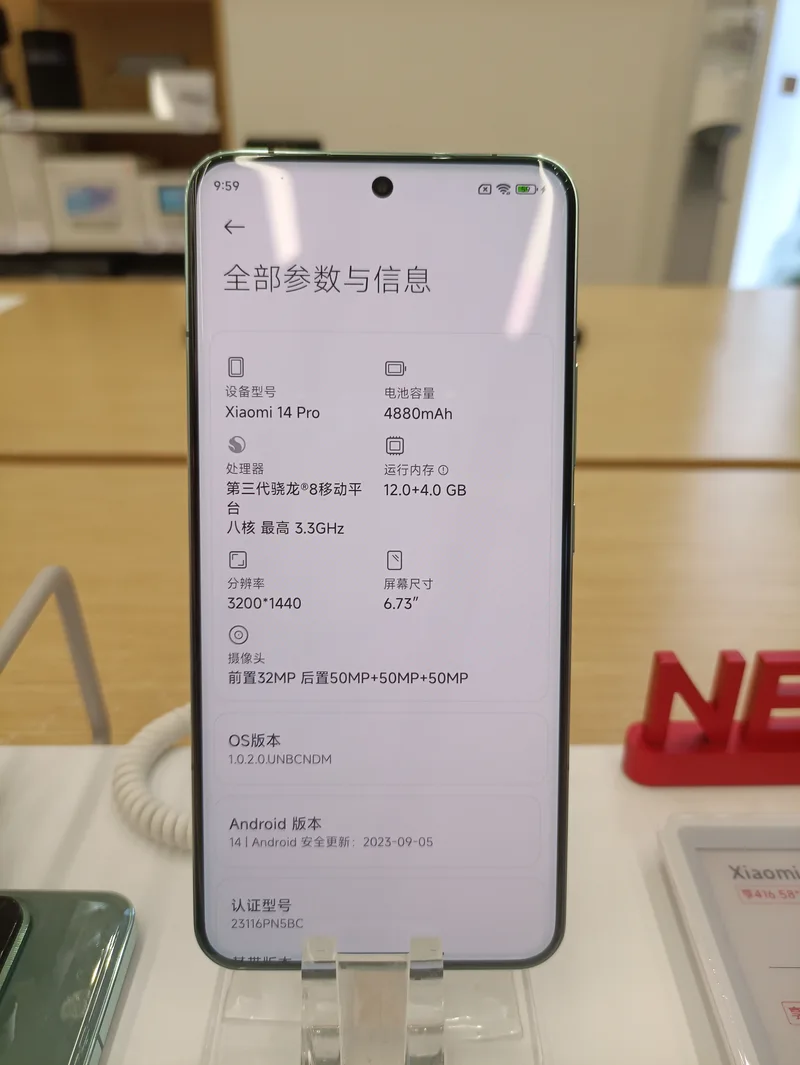
Put the Xiaomi 14 and the Nothing Phone (2) next to each other and the price gap alone tells part of the story — Xiaomi's phone starts well above $900 as a genuine flagship, while Nothing's sits around $599 as a upper-mid-range phone dressed in a design that gets more attention than devices costing twice as much. But both are, in their own way, betting that design and restraint sell better than a spec sheet stuffed with superlatives.
Design Philosophy: Leica Restraint vs. Transparent Theater
Xiaomi's approach to the 14 is quiet confidence: a compact 6.36-inch OLED body, a co-engineered Leica camera system with genuinely restrained, natural-looking color science, and a build quality that feels every bit as premium as Samsung or Apple's equivalents, just without shouting about it. It's a phone designed for people who've already decided what a good flagship looks like and simply want it executed well.
The Nothing Phone (2) takes the opposite approach entirely — a transparent back panel exposing wireless charging coils and internal components, wrapped around the Glyph Interface, a set of LED strips that light up in customizable patterns for notifications, ringtones, and charging status. It's the single most recognizable phone design of the past few years that isn't a foldable, and reviewers who found the Glyph gimmicky in early Nothing devices generally came around once they actually lived with it — glanceable notifications without picking up the phone turn out to be genuinely useful, not just a party trick.
Cameras: Leica Color Science vs. Honest Mid-Range Limits
This is where the price gap shows most clearly. The Xiaomi 14's 50MP Leica-tuned triple camera (main, ultrawide, 3.2x telephoto) produces some of the most natural, least over-processed color output of any flagship on the market — a direct result of Leica's involvement in tuning rather than just licensing its name. Low-light performance and dynamic range both hold up against Samsung and Google's best efforts.
The Nothing Phone (2)'s 50MP main and 50MP ultrawide combination is genuinely good for its price bracket — sharp, reasonably accurate color, solid HDR — but it doesn't chase flagship-tier low-light performance or offer any real telephoto zoom capability. That's an honest trade-off for the price, not a hidden weakness: Nothing built a phone that's excellent value rather than one competing spec-for-spec with true flagships, a distinction covered further in our Nothing Phone (2) one-year retrospective.
Performance and Charging
The Xiaomi 14 runs a Snapdragon 8 Gen 3, the newest and fastest silicon available at launch, while the Nothing Phone (2) uses a Snapdragon 8+ Gen 1 — still a genuinely capable chip, just one generation and one tier behind. In practice, both phones handle everyday multitasking, camera processing, and most current games smoothly; the gap only really shows up in sustained gaming sessions or heavy computational photography tasks where the 8 Gen 3's extra headroom matters.
Charging tells a similar generational story: Xiaomi's 90W wired charging fills the 14's 4610mAh battery dramatically faster than the Nothing Phone (2)'s more modest charging speed on its 4700mAh cell. If fast top-ups between meetings matter to your routine, Xiaomi's advantage here is significant and immediately noticeable, not a marginal spec-sheet win.
Software: Near-Stock Simplicity vs. Feature-Dense HyperOS
Nothing OS is one of Android's cleanest, closest-to-stock skins — minimal bloatware, a custom monochrome icon pack and widget set that ties visually into the Glyph aesthetic, and updates that arrive without the heavy customization layer Chinese OEMs are typically known for. It's a genuinely appealing pitch for anyone who found Xiaomi or Samsung's software overwrought in the past.
Xiaomi's HyperOS, which replaced MIUI across the lineup, is far more feature-dense — deep customization options, a wider settings surface, and tighter integration with Xiaomi's broader ecosystem of smart home products, at the cost of a steeper learning curve and, historically, more preloaded apps than most Android skins ship with. Buyers who want a phone that gets out of the way should lean Nothing; buyers who want to tweak every setting and already own Xiaomi smart home gear should lean Xiaomi, a contrast our Xiaomi 14 vs Galaxy S24 comparison also touches on from a different angle.
Availability and Long-Term Value
Both phones share an availability quirk for Western buyers: neither is sold through official US carrier channels, meaning importing is typically required for American buyers specifically, with the usual caveats around warranty support and band compatibility. Nothing has a more established presence in the UK and Europe than Xiaomi does in some specific markets, though both companies sell direct online in most of Europe and Asia without major friction.
Build Quality and Durability
The Xiaomi 14's glass-and-metal construction carries an IP68 rating for dust and water resistance, matching the protection standard set by Samsung and Apple's current flagships — a meaningful reassurance for anyone who's dropped a phone in a sink or been caught in the rain without a case. The Nothing Phone (2) also carries an IP54 rating, which covers splashes and light rain but falls meaningfully short of full submersion protection; it's adequate for normal daily use but not the same safety margin Xiaomi's flagship offers. Given that the transparent back panel is also the Nothing Phone (2)'s signature design element, there's a reasonable argument that a case defeats part of the purpose of buying it in the first place, which makes that lower ingress rating a slightly more relevant consideration than it would be on a phone nobody wants to leave uncovered.
Who Should Buy Which
The decision here comes down less to feature comparison and more to what kind of phone owner you are. Someone chasing the best possible photos without learning any manual camera settings, who charges fast and often, and who's willing to pay flagship prices for it should buy the Xiaomi 14 without much hesitation. Someone on a tighter budget who wants a phone that still feels distinctive in a sea of black-slab Android devices, doesn't need flagship-tier zoom or low-light performance, and appreciates software that stays out of the way should buy the Nothing Phone (2) and feel good about the value. Both succeed at what they're actually trying to do — they're just trying to do different things for different amounts of money.
Verdict
These two phones aren't really direct competitors so much as answers to two different budgets. If $900-plus for a true flagship camera and the fastest available charging matters, the Xiaomi 14 is the better phone in almost every measurable way. If $599 for a phone that turns heads, runs close to stock Android, and delivers genuinely good (not flagship-tier) performance and cameras is the goal, the Nothing Phone (2) remains one of the best design-first values available. Read our complete Xiaomi 14 verdict and Nothing Phone (2) verdict for the full breakdown of each phone on its own terms.