Nothing Phone (2) One Year Later: Is the Glyph Interface Still Worth It?
The LED-lit back panel was the headline feature at launch. A year on, we look at what actually stuck and what turned out to be a gimmick.
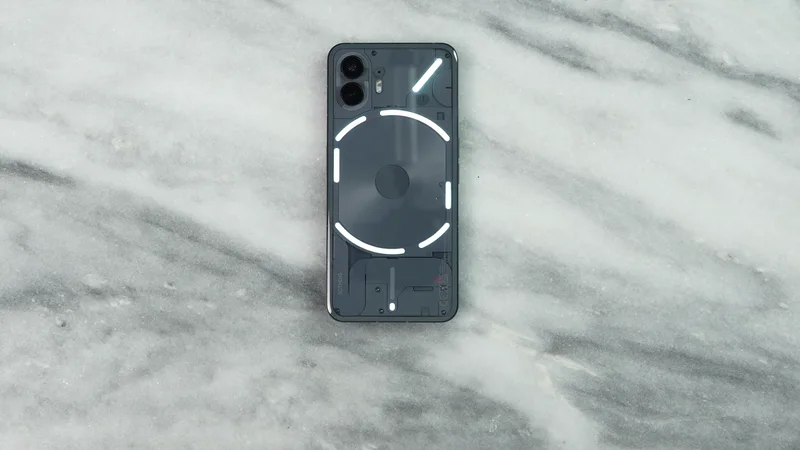
When the Nothing Phone (2) launched, the headline feature was impossible to miss: the Glyph Interface, a grid of LED strips embedded in the transparent back panel that light up in patterns for calls, notifications, charging status, and even a built-in countdown timer you could trigger manually. It was genuinely novel, and it was the single biggest reason the Phone (2) generated more buzz than most mid-tier flagships manage. Now that the initial excitement has worn off and Nothing has shipped a genuine successor in the Phone (3), it's worth asking the question honestly: is the Glyph Interface still worth caring about, or was it always more gimmick than genuine utility?
The honest answer is that it's somewhere in between, and where you land depends entirely on how you actually use your phone. For notification triage, the Glyph Interface earns its keep more than skeptics expected. Being able to glance at a face-down phone and identify roughly what kind of notification just arrived, based on which lights activate and in what pattern, is a genuinely useful bit of information without unlocking the screen or picking the phone up at all. Assigning specific contacts their own Glyph patterns means you can tell, from across a room, whether a call is worth answering immediately or can wait — a feature that sounds trivial until you're in a meeting and need exactly that information without being visibly on your phone.
Where the Glyph Interface earns more skepticism is in the features built around pure novelty rather than function. The Glyph Timer, which counts down visually using the LED strips, is a fun party trick the first few times and then essentially never used again once the novelty wears off — a phone's built-in timer app or a smart speaker does the same job more conveniently in practice. Glyph-synced ringtones, where the lights pulse in time with custom sound effects, fall into the same category: clever the first week, forgotten by the second month for the vast majority of owners, based on how little the feature comes up in ongoing user discussion a year on.
Beyond the Glyph gimmick, the Phone (2) has aged into a genuinely solid mid-tier flagship on its underlying merits, which get less attention than the lights but matter more for daily use. The Snapdragon 8+ Gen 1 chip, while a generation behind the Snapdragon 8 Gen 3 in newer phones like the Xiaomi 14, remains plenty fast for everyday use, gaming, and multitasking — the kind of chip that doesn't feel dated even a year or two after launch. Nothing OS, the company's Android skin, has held up as one of the cleaner, more considered Android interfaces on the market, closer in spirit to a minimalist launcher than the feature-bloated skins some competitors ship, and software updates have arrived reasonably on schedule since launch.
The dual 50MP camera system — a 50MP main paired with a 50MP ultrawide — was never going to compete with the computational photography of a Pixel 8 Pro or the versatility of a three-lens flagship, and a year of use hasn't changed that assessment. Photos are perfectly serviceable in good light and start showing their limits after dark, which is a fair trade for a phone that launched well under $700. The 4700mAh battery and 45W wired charging have also aged well, comfortably covering a full day of use for most owners with room to spare, and charging quickly enough that top-ups rarely feel like an interruption.
The transparent glass back with visible internal components — screws, coils, and structural elements deliberately made visible rather than hidden — remains one of the more distinctive design choices in the phone industry, and unlike the Glyph lights, it hasn't worn thin with familiarity the way novelty features often do. It photographs well, it's genuinely different from every other slab-of-glass flagship on the market, and a year on, it's arguably the Phone (2)'s most enduringly appealing feature precisely because it's a design choice rather than a software gimmick that novelty inevitably wears off of.
The community response over the past year offers another useful data point. Nothing built an unusually engaged enthusiast community around the Phone (2), partly through the company's transparent, active communication style and partly through third-party Glyph developer tools that let users build custom light patterns and integrations beyond what Nothing shipped out of the box. That ecosystem has kept the Glyph Interface more relevant than it might otherwise be a year on — features that ship once and never get revisited tend to fade from relevance fast, but ongoing community development has genuinely extended what the lights can meaningfully do, from custom app-specific notification patterns to third-party smart home integrations that weren't part of the original pitch.
For anyone considering a Phone (2) today, likely at a meaningfully discounted price now that newer Nothing phones exist, the calculus is straightforward: you're buying a phone whose headline feature turned out to be a solid, occasionally clever notification tool rather than the interface-changing innovation the marketing implied, wrapped around genuinely competent mid-range hardware that has aged gracefully. That's not a bad trade at a discounted used or clearance price, even if it's a more modest pitch than what greeted the phone at launch — treat the Glyph lights as a pleasant extra rather than the deciding factor, and judge the purchase on the same fundamentals — chip, screen, camera, battery, software support — you'd apply to any other phone in this price range.
So is the Glyph Interface still worth it a year later? As the headline reason to buy the phone, no — it's a nice-to-have that's mostly settled into "notification glance" duty rather than the transformative feature Nothing's marketing suggested at launch. But as one appealing piece of a phone that's aged into a genuinely solid, distinctively designed mid-ranger on its other merits, the Glyph lights are still a pleasant bonus rather than a mistake. Our full Nothing Phone (2) verdict covers the complete picture for anyone considering one on the used or discounted market today.