Xiaomi 14 vs Galaxy Z Flip5: Compact Slab vs Folding Phone
Two $999 answers to the same problem -- phones have gotten too big -- solved in completely different ways.
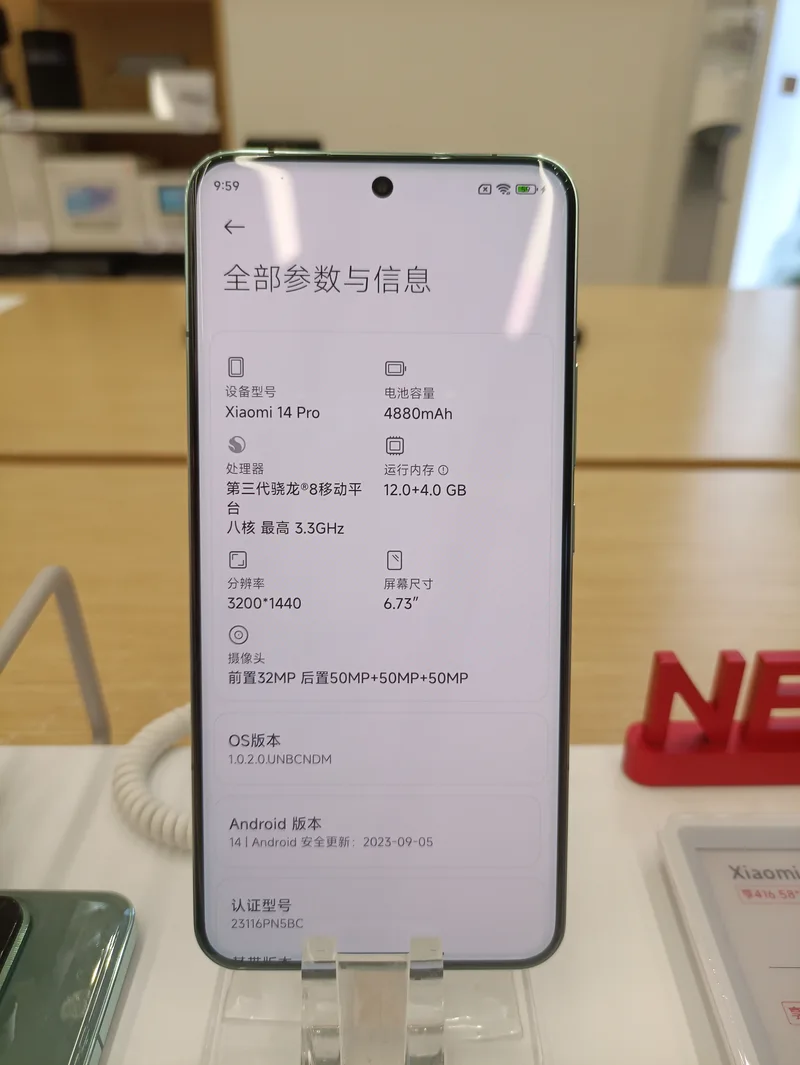
The Xiaomi 14 and the Galaxy Z Flip5 both cost $999, and both are trying to solve the same basic problem — most current flagships have gotten too large — with completely different engineering answers. Xiaomi shrinks a conventional slab down to 6.36 inches without cutting corners on internals. Samsung folds a normal-sized phone in half instead. Neither approach is objectively better, but they trade away very different things to get there.
The compact-slab approach versus the folding approach
At 6.36 inches, the Xiaomi 14 is noticeably smaller than nearly every other current flagship, most of which have settled around 6.7-6.8 inches — and it achieves that without treating small size as an excuse to cut internals, packing a Snapdragon 8 Gen 3 chip and up to 16GB of RAM into that compact body. The Galaxy Z Flip5 takes the opposite route: it unfolds to a normal 6.7-inch slab-phone screen size, then folds down to roughly half that height for pocketability. Both phones solve the "phones are too big" problem, but the Xiaomi 14 is small all the time, while the Z Flip5 is small only when folded — a real difference if you frequently need the full screen for reading, browsing, or watching video.
The cover screen versus no cover screen at all
The Z Flip5's 3.4-inch cover display changes the calculation for a folding phone significantly — you can reply to messages, check directions, and take selfies using the superior rear camera without ever unfolding the phone. The Xiaomi 14 has no equivalent, obviously, since it's a conventional slab. This is arguably the Z Flip5's single most distinctive practical advantage: a genuinely useful secondary display that lets you do quick tasks one-handed, folded, in a way no compact slab phone can replicate.
Camera: Leica partnership versus foldable compromise
The Xiaomi 14's Leica-co-engineered triple camera — 50MP main, 50MP ultrawide, and a 50MP telephoto with 3.2x optical zoom — is a genuinely capable system for a phone this size, with two distinct Leica color profiles built into the camera app. The Z Flip5's camera hardware is a real compromise of the folding format: just a 12MP main and 12MP ultrawide, noticeably behind what $999 buys in a non-folding phone, since Samsung prioritizes hinge engineering and battery packaging within a tight internal volume budget. If camera quality matters more to you than the folding format itself, the Xiaomi 14 wins clearly.
Battery, charging, and the folding-format tax
This is where the folding format costs the Z Flip5 the most. Its 3700mAh battery is small by 2024 flagship standards, where 5000mAh has become the norm on comparably priced slab phones — fitting a battery into a folding chassis simply means less usable volume. The Xiaomi 14 carries a 4610mAh cell and, more importantly, ships 90W wired charging that takes it from empty to full in around 30 minutes, plus 50W wireless charging. The Z Flip5 charges far more slowly by comparison. If battery anxiety is a real concern for you, the Xiaomi 14 is the more forgiving phone to live with day to day.
Durability: crease and hinge versus rigid glass
The Z Flip5 carries the durability questions unique to any foldable: a visible crease down the middle of the internal display, a hinge mechanism with more moving parts than a rigid phone, and a folding OLED panel that uses a softer protective layer more susceptible to scratches. Samsung's Armor Aluminum hinge and IPX8 water resistance are genuine improvements over earlier foldable generations, but "as durable as a normal phone" still isn't an honest claim for any current foldable. The Xiaomi 14 uses a conventional aluminum frame with Gorilla Glass Victus 2 and full IP68 water and dust resistance — the safer, more proven durability profile of the two.
Software and update policy
Samsung's update commitment on the Galaxy S-series and its foldables has improved dramatically in recent years, now stretching to seven years of OS and security updates on newer models — a genuinely industry-leading policy. Xiaomi's HyperOS, the successor to MIUI, has improved significantly but Xiaomi has historically offered three to four years of Android version updates on flagship devices, a shorter window than Samsung now promises.
One-handed ergonomics
Both phones market themselves on being easier to handle one-handed than a typical 6.7-inch flagship, but they get there differently. The Xiaomi 14's more conventional proportions at a genuinely smaller overall size make it comfortable to use one-handed at all times, without any acquired-taste factor. The Z Flip5 is only compact when folded — the moment you need the full screen, it's back to a normal 6.7-inch phone's footprint, and unfolding it one-handed takes a beat of practice most slab-phone owners never have to think about. If one-handed use matters to you constantly rather than occasionally, the Xiaomi 14's approach is the more consistently practical one.
Resale value considerations
Foldables have historically lagged behind flat-screen flagships in resale value, since the hinge mechanism is a wear item that makes buyers of used devices understandably cautious — a concern that simply doesn't apply to the Xiaomi 14's conventional construction. If you like to sell or trade in your phone every year or two, that's worth factoring into the real cost of ownership beyond the identical $999 sticker price, since the Xiaomi 14 is likely to hold a larger share of its value at resale time than the Z Flip5, even setting aside their different secondhand markets by region.
Who should actually buy which
Buy the Xiaomi 14 if camera quality, fast charging, and rock-solid conventional durability matter more to you than novelty, and you want a genuinely compact phone that's small all the time rather than only when folded. Buy the Galaxy Z Flip5 if pocketability and the party-trick appeal of a folding phone genuinely interest you, and you're willing to accept weaker battery life and a less capable camera as the trade-off. Our full Xiaomi 14 verdict and Galaxy Z Flip5 verdict cover each phone's complete picture, and our broader foldable-phones buying guide covers the format's tradeoffs in more depth. If compact size is what draws you to the Xiaomi 14 specifically, our Xiaomi 14 vs Xperia 1 V comparison covers another overlooked flagship worth considering.