Is a Flip Phone Worth It in 2026? The Case for and Against Foldables
Five years into the foldable era, an honest accounting of what you gain and lose with a flip phone.
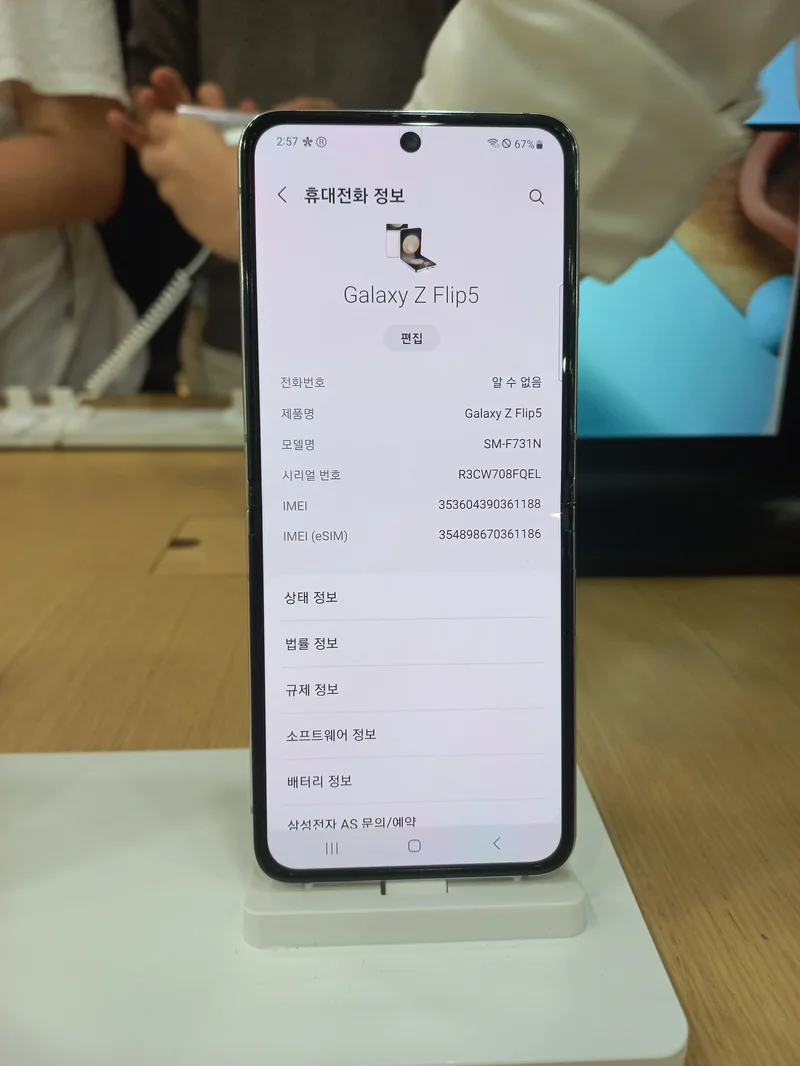
Foldable phones have been commercially available for five years now, long enough that the "is this just a gimmick" question deserves a real answer instead of a reflexive one. Using the Galaxy Z Flip5 as the reference point — currently one of the most mature and widely available flip-style foldables — here's an honest accounting of what you actually gain and lose by choosing a folding phone over a conventional slab.
What foldables genuinely get right
The clamshell form factor solves a real, specific problem: phones have gotten too large for pockets while screens have needed to stay large for usability. The Z Flip5 unfolds to a normal 6.7-inch slab-phone screen size, but folds down to a footprint that's roughly half the height of an unfolded phone — genuinely pocket-friendly in a way no 6.7-inch slab phone can be. This isn't a marginal improvement; it's the difference between a phone that disappears into a front pocket and one that doesn't.
The 3.4-inch cover screen, upgraded significantly on the Z Flip5 compared to earlier Flip models, is more functional than most people expect before trying one. Checking notifications, replying to messages with a keyboard, controlling music playback, and even running select apps in a shrunken view are all possible without unfolding the phone — which, in practice, cuts down on how often the phone comes out of your pocket at all, something that matters if reducing screen time is a goal.
What foldables still get wrong
Battery capacity is the most consistent, unavoidable compromise. The Z Flip5 packs a 3700mAh cell — small by 2024 flagship standards, where 5000mAh has become the norm on comparably priced slab phones. This isn't a Samsung-specific limitation; it's a physics problem shared by every clamshell foldable, since half the phone's internal volume has to be split across two halves connected by a hinge rather than used as one contiguous battery compartment. In real-world use, this typically means charging once during a heavy-use day rather than reliably making it from morning to night, and it's the single complaint that comes up most consistently across long-term owner reviews of every flip-style foldable on the market, not just Samsung's.
Durability remains a legitimate, unresolved concern despite manufacturer marketing to the contrary. The folding OLED panel uses a softer protective layer than rigid glass because it needs to flex without cracking, which makes it more susceptible to scratches from fingernails, sand, or grit trapped against the screen during a fold — issues that simply don't exist on a rigid-glass slab phone. Samsung's Armor Aluminum hinge on the Z Flip5 is meaningfully more durable than earlier Galaxy Fold generations, and IPX8 water resistance is a genuine improvement over the original 2019 Fold's complete lack of water resistance, but "as durable as a normal phone" is still not an honest claim for any current foldable, including this one.
Camera hardware is another consistent compromise: the Z Flip5's 12MP main and 12MP ultrawide sensors are noticeably behind what $999 buys in a non-folding flagship, where 50MP main sensors with dedicated telephoto lenses are now standard. Samsung prioritizes hinge engineering and battery packaging within a tight internal volume budget, and camera hardware is where that budget gets cut to make room.
Who a foldable actually makes sense for
The clearest case for a flip-style foldable is someone who values pocketability above almost everything else and doesn't push battery life to its limits daily — someone with regular access to a charger, who isn't traveling or off-grid for long stretches, and who primarily uses their phone for messaging, social media, and light browsing rather than heavy camera use or all-day video streaming.
The clearest case against one is anyone who already struggles with all-day battery life on a normal phone, anyone who prioritizes camera quality, or anyone who has genuine concerns about screen durability from experience with cracked glass in the past — the folding panel's vulnerability profile is different from, not necessarily better or worse than, a cracked-glass slab phone, but it is different, and worth understanding before buying rather than after.
Flip versus book-style: not all foldables are the same trade
It's worth being clear that "foldable phone" covers two genuinely different product categories with different trade-offs. The Z Flip5's clamshell design folds a normal-sized phone in half to shrink its footprint — you're trading battery and camera capability for pocketability, as covered above. Book-style foldables like the Galaxy Z Fold line take the opposite approach: they fold a phone-sized device open into a small-tablet-sized screen, trading a larger closed footprint and higher price for a genuinely bigger canvas for multitasking, reading, and video.
Someone evaluating "should I buy a foldable" needs to first decide which of these two very different questions they're actually asking. The Z Flip5's trade-offs (smaller pocket footprint, weaker battery and camera) are effectively the inverse of the Z Fold's trade-offs (larger unfolded canvas, higher price, even more hinge engineering to worry about long-term). Conflating the two categories, as generic "are foldables good yet" takes often do, obscures more than it clarifies — they're solving different problems for different people.
Is it "worth it" in 2026?
Five years into the category, foldables have moved from "interesting but flawed" to "genuinely good at a specific job, with clear and well-understood tradeoffs" — which is a meaningfully different starting point for a buying decision than the first-generation Galaxy Fold's outright reliability problems. The Z Flip5 specifically represents Samsung's most refined flip foldable yet, and the core value proposition — pocketability in exchange for battery life and camera capability — is now a legitimate choice rather than an early-adopter gamble, provided you go in understanding exactly what you're trading away.
For our full assessment of the Z Flip5 specifically, including our complete pros and cons breakdown and a week of real daily-use notes, see our standalone Galaxy Z Flip5 review. If battery life matters more to you than pocketability, our five phones we'd actually recommend roundup covers stronger all-day options with none of the fold-related trade-offs discussed here.