Which Phones Are Actually Repairable? Self-Repair Scores and Parts Availability Compared
A phone you can't repair is a phone you'll replace sooner than you should. Here's how iFixit's teardown scores and each manufacturer's own self-repair programs stack up across our 11 reviewed phones.
Repairability rarely factors into a phone purchase the way camera quality or battery life does, but it quietly determines whether a cracked screen or a worn-out battery two years from now means a $100 fix or an excuse to buy an entirely new phone. Independent teardown specialist iFixit has scored most of the phones in our lineup, and manufacturers' own self-repair programs — or lack of one — tell an equally important second half of the story.
Why Repairability Increasingly Matters
The average smartphone now costs enough that treating it as disposable after a single cracked screen is an expensive habit, and battery degradation alone can make an otherwise perfectly good phone feel sluggish and short-lived well before its processor is actually outdated. A phone with genuinely accessible repair options extends its useful life, reduces e-waste, and — increasingly relevant given right-to-repair legislation spreading across US states and the EU — keeps a manufacturer's practices more transparent to regulators and buyers alike.
Apple's Self Service Repair Program and the Parts-Pairing Controversy
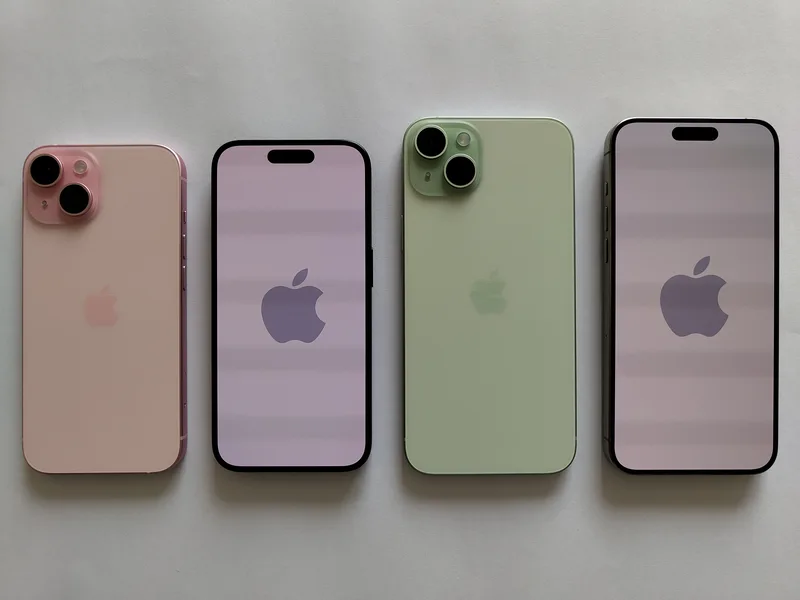
Apple's repairability story is genuinely complicated. When the iPhone 14 launched, iFixit initially scored it 7 out of 10, praising its new internal design that let the screen and back glass both be removed independently. That score was later retroactively dropped to 4 out of 10 once iFixit discovered Apple's parts-pairing system: replacement parts bought through Apple's own Self Service Repair store must be digitally paired to the specific device's serial number after installation, or the phone throws persistent warnings and loses some functionality — a restriction that applies even to genuine Apple parts moved between two iPhones. The good news is Apple has since walked some of this back; after improvements to its Repair Assistant software, iFixit bumped the iPhone 15 back up to 7 out of 10 — a real recovery from the iPhone 14's rockier repairability reputation. The iPhone SE, built on an older, simpler chassis, has never been part of Apple's official self-repair parts catalog in the same depth as the mainline flagships, meaning third-party repair shops remain the more realistic option for that model.
Samsung's Self-Repair Partnership With iFixit
Samsung runs its own self-repair program in direct partnership with iFixit rather than a proprietary in-house one, selling genuine screens, batteries, back glass, and charging-port assemblies with official repair guides available at no cost. The Galaxy S24 and Galaxy A54 both benefit from this program for straightforward repairs like screen and battery replacement. The Galaxy Z Flip5 is a different story: foldables are structurally harder to repair almost by definition, since the flexible display, hinge assembly, and internal cabling are all far more delicate and interdependent than a rigid slab phone's components — Samsung's own self-repair parts catalog for foldables remains far thinner than for its conventional Galaxy S phones, and independent repair shops still often decline foldable hinge work entirely.
Google's Pixel: Improving, But Inconsistent Across Generations
Google has also partnered with iFixit to sell official Pixel repair parts and guides, covering screen and battery replacement on recent Pixel models including the Pixel 8 Pro. Google's repairability scores have trended upward across recent Pixel generations as the company simplified internal adhesive and connector layouts, though — much like Apple — the exact score varies meaningfully model to model rather than holding at one consistent number across the whole product line, so it's worth checking the specific generation rather than assuming a blanket "Pixels are repairable" rule applies equally to every model.
Foldables Are the Hardest Category to Repair, Full Stop
This deserves its own section because it cuts across every foldable phone on the market, not just Samsung's. iFixit's teardown of an earlier-generation Galaxy Z Flip gave it a stark 2 out of 10, driven by ultra-thin folding glass that's extremely easy to crack during disassembly and a hinge mechanism that's genuinely difficult to service without specialized tools. The Galaxy Z Flip5 improves on its hinge design generation over generation, but the fundamental physics of a folding display haven't changed: it remains, by a wide margin, the hardest phone in our entire 11-phone lineup to repair safely, a real trade-off worth weighing against its novelty and compact form factor before buying.
Nothing, Xiaomi, HONOR, and Sony: The Weaker Tier
None of these four brands run an official self-repair parts program comparable to Apple, Samsung, or Google in our lineup. The Nothing Phone (2)'s transparent-back design, ironically, works against repairability rather than for it — the aesthetic depends on hiding fasteners under stickers and decorative panels that are easily damaged during even a careful teardown, a known weakness that carried into iFixit's low scoring of Nothing's later transparent-design phones as well. Xiaomi and HONOR both rely primarily on their own authorized service center networks rather than consumer self-repair kits, which works fine if you live near one but leaves buyers in regions without local service centers dependent on unofficial repair shops. Sony's Xperia 1 V falls into the same category — no official self-repair program exists, though its more traditional internal layout (compared to a foldable) at least gives independent repair technicians a more conventional starting point than Nothing's sticker-hidden fasteners or a foldable's hinge assembly.
What This Actually Means for Buyers
If a phone breaking down the road and being economically repairable rather than replaced matters to your buying decision, the practical ranking among our 11 phones runs roughly: Galaxy S24 and iPhone 15 at the top thanks to active manufacturer self-repair programs and reasonable iFixit scores, the Galaxy A54 and Pixel 8 Pro close behind for similar reasons, the iPhone SE and iPhone 14 solidly mid-pack, Xiaomi 14 and HONOR Magic6 Pro dependent on regional service-center access, the Nothing Phone (2) held back specifically by its own design language, and the Galaxy Z Flip5 at the bottom simply because foldable hardware is inherently harder to service regardless of manufacturer effort. None of this should override camera quality, performance, or price as the primary purchase factors, but it's a real, quantifiable difference worth knowing before a screen crack turns into an unplanned full phone replacement.
Verdict
Repairability has genuinely improved across the industry over the past several years, driven partly by right-to-repair pressure and partly by manufacturers like Samsung and Google partnering directly with iFixit rather than fighting independent repair. But the gap between the best and worst phones in our 11-phone lineup remains wide, and foldable hardware like the Galaxy Z Flip5 still sits in a fundamentally different, harder-to-service category than every conventional slab phone we've reviewed.