Pixel 8 Pro vs Galaxy S24: Which AI Camera Approach Actually Wins
Google and Samsung take opposite approaches to computational photography. We break down which one actually produces better photos for real people.
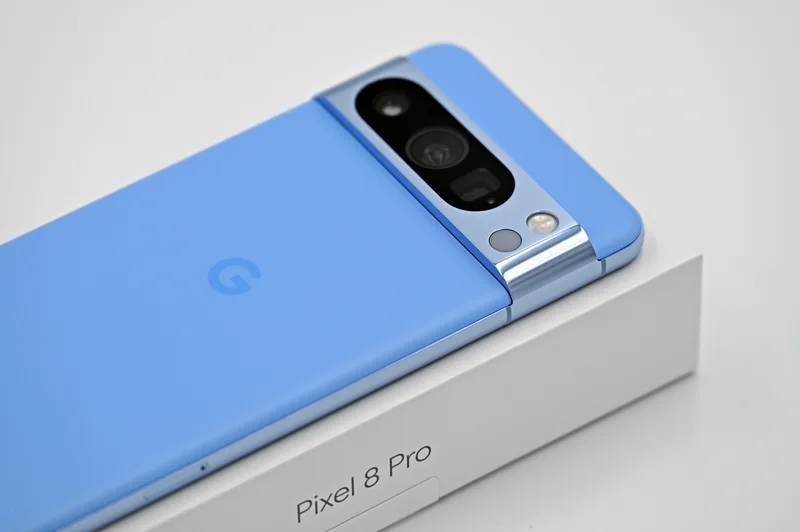
Google and Samsung take almost opposite approaches to phone photography, and nowhere is that more obvious than in the Pixel 8 Pro versus the Galaxy S24. Both ship with capable triple-camera systems, both lean hard on computational photography, and both cost roughly the same amount of money at launch. But the photos they produce, and the way each company gets you there, could hardly be more different. If you're trying to decide between them purely on camera performance, the answer depends less on megapixels and more on what kind of photographer you actually are.
Start with the hardware, because it sets real limits on what software can fix. The Pixel 8 Pro packs a 50MP main sensor, a 48MP ultrawide, and a 48MP telephoto with 5x optical zoom, all stabilized and all tuned by Google's own camera team. The Galaxy S24 uses a 50MP main sensor as well, paired with a 12MP ultrawide and a 10MP telephoto that tops out at 3x optical zoom before switching to digital cropping. On paper, the Pixel's telephoto has a real advantage for anyone who actually zooms in on distant subjects, whether that's a kid's soccer game from the sideline or a landmark across a plaza. The S24's shorter zoom range is fine for portraits and moderate crops but starts to show its limits past 3x, where Samsung's software has to do more heavy lifting.
Where the two phones diverge most sharply is in tone. Google's Pixel cameras have always favored a flatter, more neutral rendering style, especially in daylight. Skin tones stay believable, shadows aren't crushed into pure black, and the overall effect looks closer to what your eyes actually saw. Samsung, by contrast, still leans into a punchier look: warmer skies, more saturated greens, higher contrast. Neither approach is objectively wrong, but they produce genuinely different photos from the same scene, and which one you prefer is almost entirely a matter of taste. If you post directly to social media without editing, Samsung's out-of-camera punch tends to read better at a glance. If you like to edit afterward or just prefer accuracy, the Pixel's flatter files give you more room to work with.
Night photography is where the Pixel 8 Pro pulls ahead more decisively. Google's Night Sight processing has had years to mature, and it still handles extreme low light — genuinely dark rooms, unlit streets — better than Samsung's Night mode, particularly when it comes to keeping noise under control without turning the image into a smeared watercolor. The S24 is good in dim light, arguably good enough for most people's needs, but push it into truly dark scenes and you'll notice more aggressive noise reduction eating fine detail that the Pixel preserves.
Portrait mode tells a similar story from a different angle. Samsung's portrait processing is faster and more consistent with busy backgrounds — hair, glasses, and pets get cleaner edge detection more often. Google's portraits can occasionally misjudge edges around complex subjects, but when it gets it right, the background blur falls off more naturally, without the slightly artificial look that heavier processing can leave behind. Neither phone nails every portrait shot, but Samsung is the safer bet if you're photographing people in cluttered environments a lot.
Video is arguably where the gap is smallest. Both phones shoot excellent 4K footage with solid stabilization, and both support similar frame rate options. Samsung's video autofocus and color science have improved enough in recent generations that it's a genuine toss-up here rather than a clear win for either side — a change from a few years ago when Pixel video reliably lagged behind Samsung's.
Beyond the lens itself, Google's AI features lean into editing after the shot: Magic Eraser, Best Take for group photos, and Audio Magic Eraser for video are genuinely useful and, in most cases, still ahead of what Samsung offers in the same categories, even though Samsung has added its own generative editing tools. If post-capture AI editing matters to you as much as the raw capture, that tips things toward the Pixel 8 Pro.
Battery life and charging speed are worth weighing alongside the camera comparison, since they affect how much you actually get to use that camera over a full day. The Pixel 8 Pro's 5050mAh battery is noticeably larger than the Galaxy S24's 4000mAh cell, and in practice that translates to a real-world edge for Google's phone on heavy shooting days — burst photography, 4K video, and GPS-heavy navigation all drain a battery fast, and the Pixel has more headroom to spare. Charging speeds favor the Pixel too, at 30W wired versus the S24's 25W, though neither phone is fast by 2024 flagship standards; both trail well behind the 65W-100W charging some Android competitors now offer, including Samsung's own Galaxy S24 Ultra in some markets.
Software support is another factor that's easy to overlook when you're focused on camera samples, but it matters for how long either phone stays worth using. Samsung committed to seven years of OS updates and security patches for the Galaxy S24 line, which was a genuinely industry-leading promise when it launched and still holds up well. Google's Pixel 8 Pro matches that commitment with seven years of updates as well, a first for a Pixel phone and a meaningful jump from the three-to-five-year support windows earlier Pixels shipped with. In practice, this means either phone should remain reasonably current, from a security standpoint, well into the early 2030s — a rare case where both companies are actually competing to outdo each other in the buyer's favor rather than racing to the bottom.
Price is close enough that it shouldn't be the deciding factor on its own. Both phones launched at similar price points, and by the time you're reading this, street prices and carrier promotions will likely have shifted the gap in one direction or the other depending on region and timing. If anything, treat price parity as a reason to make the decision on camera style and ecosystem fit rather than value, since neither phone is meaningfully cheaper once discounts are factored in.
So which should you actually buy? If you shoot mostly in good light, want photos that look great straight out of the camera without editing, and photograph people in busy environments often, the Galaxy S24 is the safer, more consistent choice. If you regularly shoot in low light, want more zoom reach, or care about post-capture editing tools, the Pixel 8 Pro earns its reputation as one of the best camera phones you can buy. For a wider look at how these stack up against the rest of the field, our ranked list of the best camera phones we've tested puts both of these results in context against other flagships, and our full Galaxy S24 verdict covers the phone beyond just its camera.