iPhone 15 vs Nothing Phone (2): Ecosystem Safety vs Design Identity
Two phones with almost nothing in common -- $799 mainstream flagship against a $599 statement piece.
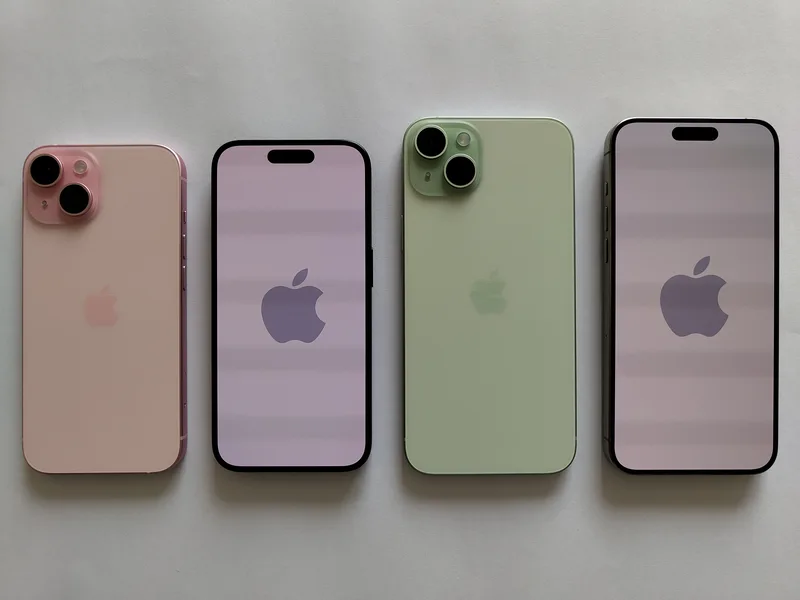
The iPhone 15 and the Nothing Phone (2) sell to buyers with almost nothing in common. One is Apple's default flagship, the safe choice millions of people upgrade into without a second thought. The other is a $599 statement piece from a startup that built its entire pitch around looking different from every other black-glass slab on the market. Putting them side by side isn't really about which is "better" in the abstract — it's about two completely different theories of what a phone should feel like to own.
Design: default premium versus deliberately weird
Apple's design language for the iPhone 15 is flat-edged, glass-and-metal, and by now instantly recognizable — familiar in the best and most boring sense. The Nothing Phone (2) goes the opposite direction with a transparent back that shows real internal components and the Glyph Interface, a grid of LED strips that light up for calls, notifications, and a manual countdown timer, part of the Glyph Interface. It's the single biggest reason the Phone (2) generated more buzz than most mid-tier flagships manage. Neither approach is wrong, but they're aimed at different instincts: one wants to disappear in your hand, the other wants to be noticed on a table.
Camera: consistency versus adequate
The iPhone 15's 48MP main sensor is genuinely excellent for detail retention, with Apple's color science producing photos that look finished straight out of the camera with minimal editing needed. The Nothing Phone (2)'s dual 50MP main and 50MP ultrawide setup was never going to compete with a phone twice its price, and it doesn't try to — photos are perfectly serviceable in good light and show their limits after dark. If camera quality is a top priority, this isn't a close comparison; the iPhone wins clearly.
Performance and everyday speed
Apple's A16 Bionic chip in the iPhone 15 has enormous headroom, the kind of silicon that will still feel fast years from now. Nothing's Snapdragon 8+ Gen 1 is a generation behind current flagship chips, having originally launched as a flagship-tier part before being repositioned into this mid-range price bracket — but it remains plenty fast for everyday multitasking, gaming, and general use, the kind of chip that doesn't feel dated even a couple of years after launch. Most people using either phone for texting, browsing, and social media won't notice a meaningful gap in daily use.
Battery, charging, and software identity
The Nothing Phone (2)'s 4700mAh battery and 45W wired charging comfortably outpace the iPhone 15's smaller cell and 20W wired charging speed — a real, noticeable advantage for anyone who tops up during short breaks rather than charging overnight. Software is where the philosophies diverge most sharply: Nothing OS is one of the cleaner, more considered Android skins on the market, closer in spirit to a minimalist launcher than a feature-bloated interface, while iOS remains the more polished, longer-supported, and more tightly integrated experience across the board. Apple's update commitment — routinely five-plus years of major iOS releases — comfortably outlasts Nothing's shorter and less firmly documented software timeline.
Build quality and durability
The iPhone 15 uses Apple's Ceramic Shield front glass and an aluminum frame with an IP68 rating for dust and water resistance. The Nothing Phone (2) carries a lower IP54 splash-resistance rating rather than full submersion protection — a real trade-off if you're prone to drops near water or live somewhere it rains often. Neither phone is fragile in normal use, but the iPhone's durability rating is meaningfully more reassuring on paper.
Price, positioning, and who each phone is actually for
At $799 versus $599, these phones aren't direct price competitors, and that gap matters more than any single spec. The iPhone 15 is Apple's mainstream flagship, built for buyers who want the safest, most broadly supported phone available and are willing to pay for that peace of mind. The Nothing Phone (2) is aimed at buyers who specifically want to avoid looking like everyone else, who value a distinctive design identity and raw performance-per-dollar over camera polish or maximum software longevity. If you're already inside Apple's ecosystem — a Mac, an iPad, AirPods — the iPhone 15 is the frictionless choice. If you want a phone that starts a conversation and costs $200 less while still handling everyday tasks smoothly, the Phone (2) earns genuine consideration.
Video recording: a bigger gap than the photo comparison suggests
Video is where the iPhone 15 pulls further ahead than its camera specs alone would suggest. Apple's years of video-processing refinement mean stabilization stays smooth even walking, color grading between the front and rear cameras is consistent, and anyone editing footage on a Mac gets a close-to-friction-free workflow. The Nothing Phone (2) shoots competent 4K video for a mid-range phone, but it lacks the dedicated video-processing pipeline Apple has spent a decade building, and footage in mixed or low light shows more noise and less consistent color science between clips. If you regularly shoot video for social media, family memories, or anything you plan to edit afterward, this is a genuine practical gap, not just a spec-sheet difference.
Resale value and long-term ownership cost
Total cost of ownership looks different once you factor in resale. Used iPhones hold their value dramatically better than nearly any Android phone, the Nothing Phone (2) included — a three-year-old iPhone still commands a meaningful trade-in credit, while a Nothing Phone (2) of the same age will have depreciated much further, partly because Nothing is a newer, smaller company with a shorter track record and a less established secondhand market. That doesn't make the Phone (2) a bad purchase; it just means the effective cost gap between the two phones narrows less over time than the $200 sticker-price difference implies, especially if you're the type of buyer who upgrades every two to three years and cares what you get back when you sell.
The bottom line
Buy the iPhone 15 if camera quality, software longevity, and ecosystem integration matter more to you than price or design novelty. Buy the Nothing Phone (2) if you want faster charging, a genuinely different design identity, and you're comfortable trading some camera performance and water resistance for $200 in savings. Our full iPhone 15 verdict and Nothing Phone (2) verdict cover each phone in complete depth, and if design-first phones are what draws you to the Phone (2) in the first place, our Galaxy Z Flip5 vs Nothing Phone (2) comparison covers a different kind of design-forward alternative worth considering. For a broader look at where budget shapes the decision across our whole lineup, see our buying guide by budget.