Galaxy Z Flip5 vs Nothing Phone (2): Which Design-First Phone Actually Wins?
Two phones that bet everything on standing out — one folds, one glows. Here is which novelty actually earns its keep day to day.
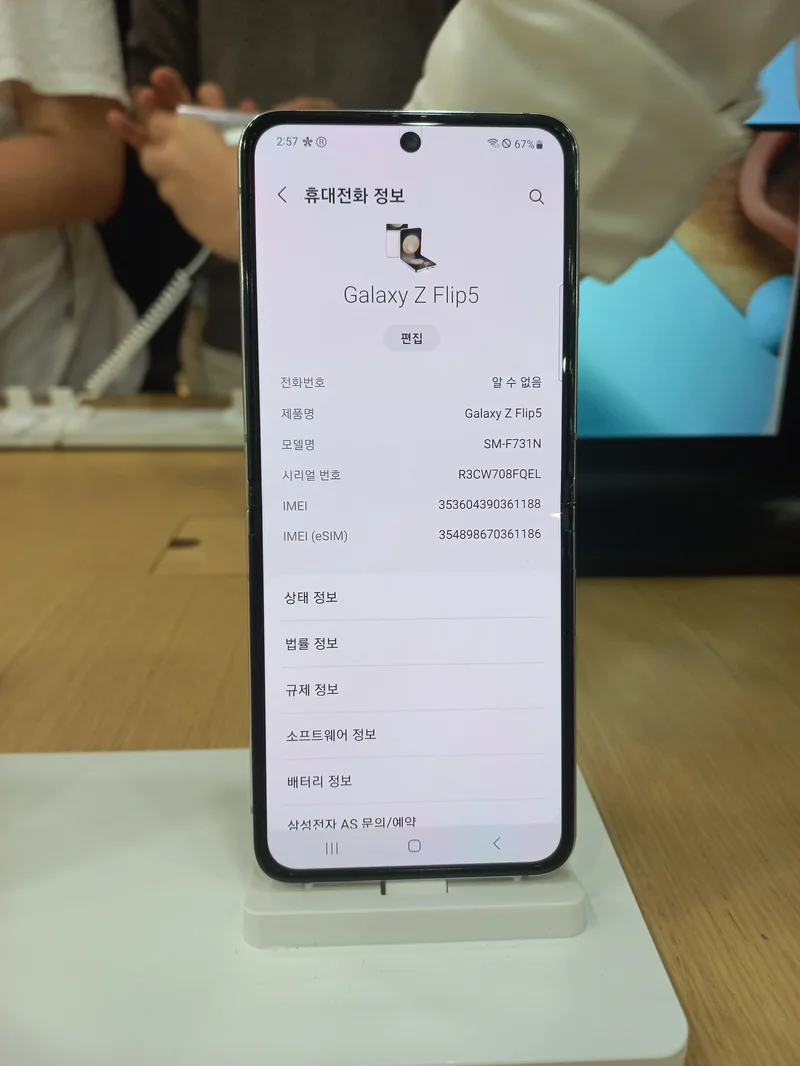
Samsung's Galaxy Z Flip5 and Nothing's Phone (2) approach the same problem from opposite directions. Both companies looked at a market saturated with identical black-glass slabs and decided the answer was to make a phone people would notice across a room. Samsung folded the screen in half. Nothing left the screen flat and put the guts on display instead, wrapped in a translucent back panel lit by programmable LED strips it calls the Glyph Interface. Neither phone is trying to win a spec sheet. Both are trying to win a glance.
That makes them an unusually honest comparison. Strip away the marketing and you're really asking: which kind of "different" would you rather live with every day — a phone that changes shape, or a phone that looks like nothing else in your pocket?
The Case for Folding: Galaxy Z Flip5
The Z Flip5's pitch hasn't changed since the original Flip: take a normal-sized flagship screen, fold it in half, and get a phone that's genuinely pocketable when closed. What changed with the Flip5 specifically is the cover screen — Samsung finally gave up on the useless postage-stamp display of earlier models and put a proper 3.4-inch panel on the outside. You can now run full apps on it, not just glance at notifications. That single change moved the Flip5 from "neat party trick" to "phone I'd consider using the cover screen for on purpose," which is a meaningfully different proposition.
Open it up and you get a completely conventional 6.7-inch AMOLED, the same Snapdragon 8 Gen 2 silicon Samsung put in the non-folding S23 line, and a camera setup that's competent without being class-leading — a 12MP main sensor that handles daylight well and struggles a little more than a flagship slab in dim rooms. The hinge itself is the real engineering story: Samsung's "Flex Hinge" reduces the crease compared to the original Flip, though it hasn't eliminated it, and if you look at the screen at a sharp angle in bright light you can still see where it folds.
Durability is the honest trade-off with any folding phone, and Samsung is upfront that this isn't a device you should expect to survive a full water submersion the way a normal flagship would, despite carrying an IPX8 rating — the fold mechanism is inherently a weak point that flat phones don't have to design around.
The Case for Standing Out: Nothing Phone (2)
Nothing took a different bet entirely: instead of changing the phone's shape, change what people see when they look at the back of it. The Phone (2)'s semi-transparent rear panel exposes a version of the internals — not literally functional components, but a wireless charging coil and cosmetic layering designed to look like it — lit up by the Glyph Interface, a series of LED strips that can pulse for notifications, act as a fill light for photos, or visualize a countdown timer. It's genuinely the only phone that looks like it on a table full of phones, which for a segment of buyers is worth more than another 10% in benchmark scores.
Underneath the light show, the Phone (2) is a well-specced conventional flagship: Snapdragon 8+ Gen 1, a 6.7-inch LTPO AMOLED running up to 120Hz, and a dual 50MP camera system that's genuinely solid for the price, particularly in daylight. Nothing OS, its Android skin, is close to stock Android with a distinctive monochrome dot-matrix aesthetic across icons and widgets — it's one of the cleaner software experiences in Android generally, without the bloatware many Chinese-owned brands (Nothing is UK-based but manufactured with backing that includes Chinese supply chain partners) ship by default.
Because there's no moving hinge, the Phone (2) doesn't carry the fold-related durability caveats the Flip5 does — it's a conventional glass-and-metal slab that should hold up like any other well-built flagship, with Gorilla Glass front and back.
Which Novelty Actually Earns Its Keep Day to Day?
This is where the comparison gets interesting, because "standing out" means very different things in practice. The Flip5's party trick changes your relationship with the phone — you fold it shut and it becomes a smaller object, which genuinely affects how you carry it, how you use it one-handed for quick glances via the cover screen, and how satisfying it is to snap shut at the end of a call (this remains, unironically, one of the most-cited reasons people buy flip phones). The Glyph Interface changes how the phone presents to other people — it's a conversation starter and a design statement, but it doesn't change your day-to-day ergonomics at all. The phone in your hand is exactly as big as any other flagship slab.
If you actually want a smaller phone sometimes and a normal phone other times, the Flip5 delivers something the Phone (2) structurally cannot. If you just want the phone in your pocket to look distinctive and don't care about pocket size, the Phone (2)'s novelty costs you nothing in day-to-day usability, while the Flip5's folding mechanism is a genuine (if small) ongoing durability risk and a real compromise on cover-screen usability compared to a full display.
Price and Where Each One Makes Sense
The Z Flip5 launched at a premium-flagship price point that reflects Samsung's folding engineering costs, while the Phone (2) has consistently positioned itself as a mid-flagship value play — strong specs and standout design without matching Samsung's asking price. That price gap matters for who should actually buy which phone: the Flip5 asks you to pay extra specifically for the folding mechanism and cover-screen functionality, while the Phone (2) asks you to pay a more moderate premium for the Glyph Interface and a clean software experience.
If your budget is the deciding factor and you want striking design without a flagship-Samsung price tag, the Phone (2) is the easier recommendation. If pocketability and the folding form factor are genuinely what you're after — not just "a phone that looks different," but specifically a phone that gets physically smaller — nothing (the concept, not the company) currently does that except the Flip5 and its direct folding-phone competitors.
Our Take
These two phones aren't really competing for the same buyer, and that's the most useful conclusion here. The Galaxy Z Flip5 is for someone who wants the folding form factor specifically — smaller in the pocket, a genuine cover-screen experience, and is willing to accept the durability trade-offs and premium price that come with it. The Nothing Phone (2) is for someone who wants to stand out visually without changing how a phone actually works day to day, at a friendlier price than Samsung's folding flagship. Judged purely on "which is the more interesting piece of hardware engineering," it's close. Judged on "which will you still enjoy using in eighteen months," the Phone (2)'s lack of a hinge to worry about gives it a durability edge that matters more the longer you own the device.