iPhone 14 vs Galaxy S24: Is Samsung's Newest Worth the Premium Over Apple's Older Flagship?
With street prices now overlapping, buyers are choosing between a current-generation Samsung flagship and an iPhone that's two generations behind. Here's what that gap actually buys you.
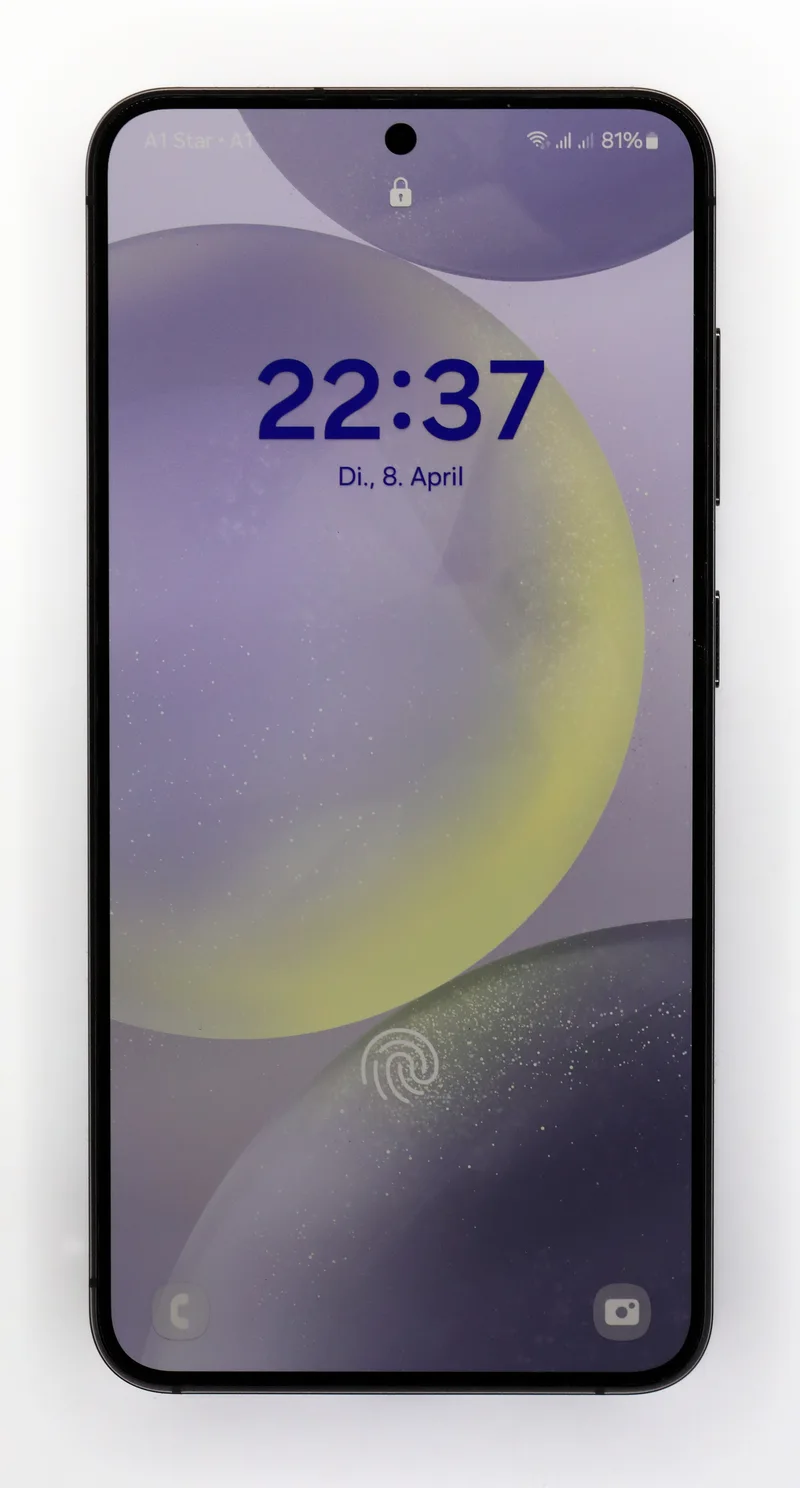
The iPhone 14 launched in September 2022 at $799; the Galaxy S24 launched in January 2024 at the same $799. Two years on, discounting and carrier promotions have often put both phones in the same real-world price range, which raises a fair question for anyone shopping right now: is it worth paying full or near-full price for Samsung's newer flagship, or does the older iPhone still hold up well enough that the generation gap barely matters?
Display: A Two-Generation Leap in Smoothness
The Galaxy S24's 6.2-inch Dynamic AMOLED 2X panel runs at 120Hz with a sharp 2340x1080 resolution, and its peak brightness comfortably beats the iPhone 14's 6.1-inch Super Retina XDR OLED in direct sunlight. The iPhone 14 is still capped at 60Hz, a limitation Apple has carried across its entire non-Pro lineup for years now, and the difference is immediately obvious in side-by-side scrolling. If display smoothness is something you notice and care about daily, this is the single clearest reason to lean toward the S24.
Performance: Two Years of Silicon Progress
Samsung's Snapdragon 8 Gen 3 for Galaxy is a meaningfully newer chip than Apple's A15 Bionic, and it shows in sustained gaming and heavy multitasking benchmarks, where the S24 maintains higher frame rates for longer under thermal load. That said, the A15 Bionic remains a genuinely strong performer even now — Apple's silicon efficiency means the iPhone 14 rarely feels sluggish in ordinary use, texting, browsing, and social apps, even if it can't match the S24's ceiling in the most demanding games and productivity workloads.
Cameras: Triple Versatility vs Computational Simplicity
The Galaxy S24's 50MP main, 12MP ultrawide, and 10MP telephoto (3x optical zoom) give it a real advantage in framing flexibility that the iPhone 14's simpler 12MP main and 12MP ultrawide pair can't match — there's no dedicated telephoto lens on the iPhone 14 at all, so anything beyond 2x digital zoom loses meaningful detail. In good light, both phones produce excellent, reliable shots; where the S24 pulls further ahead is in optical zoom range and in Samsung's increasingly capable computational night mode, refined significantly since the iPhone 14's launch generation.
AI Features: One Generation That Actually Matters
Galaxy AI, introduced with the S24 line, brings on-device features like Circle to Search, live call translation, and generative photo editing tools that simply didn't exist in any form when the iPhone 14 shipped. Apple has since layered its own AI features onto newer iPhones, but the iPhone 14 itself, running iOS 16 at launch, predates that entire wave of on-device AI tooling — a gap that's likely to widen further as both companies keep pushing new AI features to their newest hardware first. If real-time translation or AI-assisted photo editing is something you'd actually use, that's a genuine, tangible generation gap rather than a marketing checkbox.
Battery Life and Charging
The Galaxy S24's 4000mAh battery and 25W wired charging is a modest step up over the iPhone 14's roughly 3279mAh cell and comparable 20W charging ceiling — neither phone is a standout for battery life in its category, and both benefit more from software efficiency than raw capacity. In mixed daily use, the two land close enough that battery life alone shouldn't be the deciding factor here, unlike the wider gap you'd see comparing either against a genuinely large-battery midranger like the Galaxy A54.
Software Longevity
Samsung now commits to seven years of OS updates and security patches on the Galaxy S24, a policy shift that actually surpasses Apple's realistic five-plus years of iOS support on the iPhone 14. That's a meaningful reversal from just a few years ago, when Apple's update longevity was the industry's clear benchmark and Samsung trailed well behind it — buyers planning to hold onto a phone for the long haul now have a genuine reason to weigh Samsung's promise seriously rather than assuming Apple automatically wins this category.
Ecosystem and Practical Trade-offs
Apple's ecosystem pull — iMessage, AirDrop, tight AirPods and Mac integration — remains a real factor for anyone already invested in it, and switching away from that ecosystem has real friction costs beyond the phone itself. Samsung counters with expandable software flexibility, more customizable defaults, and Galaxy AI features baked in from day one rather than added later. Neither ecosystem argument is objectively better; it depends entirely on what you already own and how deep you are into either company's other products.
Storage and Configuration Options
Both phones start at 128GB, with the iPhone 14 topping out at 512GB and the Galaxy S24 offering the same ceiling, so neither has a meaningful edge in maximum capacity. Where they differ is RAM: the S24 ships with 8GB across its configurations, versus 6GB on the iPhone 14, though iOS and Android manage memory differently enough that raw RAM figures aren't directly comparable in real-world multitasking smoothness. Neither phone supports microSD expansion, so buyers who need more than the base 128GB should budget for a higher storage tier at purchase on either device.
Build Quality and Durability
Samsung's Armor Aluminum frame and Gorilla Glass Victus 2 on the Galaxy S24 are built to survive drops noticeably better than the standard aluminum and glass on the iPhone 14, and both carry an IP68 water and dust resistance rating. Apple still holds an edge in raw glass durability thanks to its Ceramic Shield front coating, a technology Samsung hasn't matched directly, but the overall practical durability of both phones is close enough that neither should factor heavily into the buying decision on its own.
Verdict
The Galaxy S24 is the stronger phone on nearly every current spec — display smoothness, camera versatility, AI features, and now even software longevity — and for anyone not already anchored to iOS, it's the more future-proof buy even before accounting for its newer silicon. The iPhone 14 remains a genuinely solid phone that doesn't feel two years behind in ordinary daily use, and its typically lower discounted price makes it a reasonable choice for Apple loyalists who don't need cutting-edge AI features. For the full picture on each, see our iPhone 14 verdict and Galaxy S24 verdict, and for how the iPhone 14 compares against a closer-priced Android rival, read our Galaxy A54 vs iPhone 14 comparison or our iPhone 14, two years later retrospective.