Galaxy A54 vs iPhone 14: Now That Prices Have Converged, Which Wins?
A mid-ranger and an aging flagship have landed at similar street prices. Here's how they actually compare today.
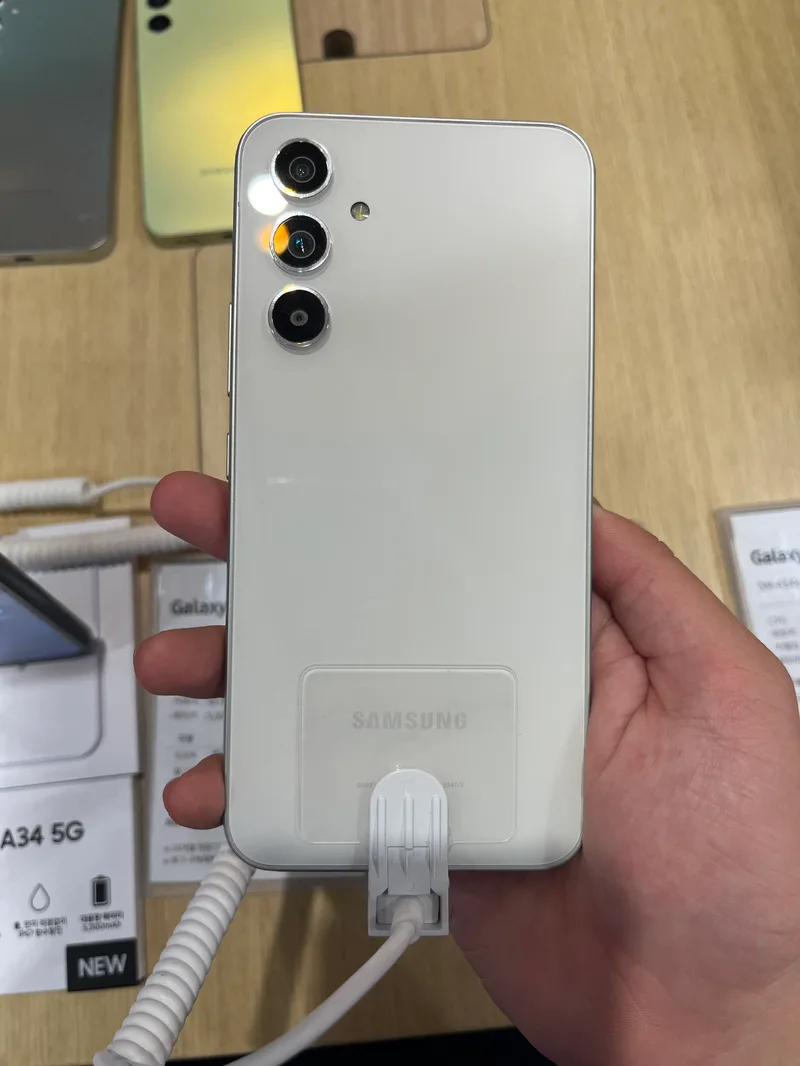
Price drops have pushed the iPhone 14 and the Galaxy A54 5G into direct competition even though they launched at very different price points and were never designed to compete with each other. The iPhone 14 debuted at $799 as a full flagship; the Galaxy A54 launched at $449 as a mid-ranger. Two years on, street pricing has narrowed that gap enough that a lot of budget-conscious buyers are genuinely cross-shopping these two phones, which makes the comparison worth doing properly rather than dismissing it as apples to oranges.
Display and Design: Refresh Rate Is the Real Divide
The Galaxy A54's 6.4-inch Super AMOLED panel runs at 120Hz, which makes scrolling and everyday animation noticeably smoother than the iPhone 14's 6.1-inch OLED, stuck at 60Hz the same as every non-Pro iPhone. For a phone at this price tier, that's a genuinely impressive spec win for Samsung — 120Hz used to be a flagship-exclusive feature, and Samsung brought it down-market faster than Apple has brought it to its base iPhone line at all. Build quality on both is solid: Samsung uses Gorilla Glass 5 front and back with an aluminum frame and IP67 rating, while Apple's Ceramic Shield front glass and IP68 rating give the iPhone 14 a slight edge in outright drop and water resistance, even if the display technology underneath feels a generation behind in daily use.
Cameras: Different Approaches to Similar Money
Apple's dual 12MP main and ultrawide system on the iPhone 14 leans entirely on computational photography rather than sensor count, and it shows — consistent color accuracy, reliable autofocus, and Apple's well-regarded Photonic Engine processing for low-light shots, all from a camera specs list that looks almost minimalist next to Android competitors. The Galaxy A54 counters with a 50MP main sensor (with OIS), a 12MP ultrawide, and a largely token 5MP macro lens that few owners use regularly. In good lighting, the A54's higher-resolution main sensor produces genuinely sharp, detailed shots that hold up well against the iPhone 14's smaller-count sensor; in low light, Apple's years of computational photography refinement still generally pull ahead, a gap you can see reflected across our full camera phone testing.
Performance: A15 Bionic's Lasting Edge
This is the category where the price-tier gap actually shows up clearly. Apple's A15 Bionic, even running in a phone that's now a couple of years old, still comfortably outperforms the Galaxy A54's Exynos 1380 in raw CPU and GPU benchmarks — a reminder that Apple's silicon lead over mid-range Android chips remains substantial even when the iPhone in question isn't current-generation anymore. In practice this means the iPhone 14 handles heavier games and multitasking with more consistent frame rates, while the A54 is perfectly capable for everyday use — browsing, messaging, social apps, casual gaming — but shows its limits sooner under sustained heavier workloads.
Software Longevity and Long-Term Value
Apple's practical track record of five-plus years of iOS updates gives the iPhone 14 a longer realistic useful life than Samsung's four-years-of-OS-upgrades commitment on the Galaxy A54 (with five years of security patches). That's a meaningful gap if you're the type of buyer who keeps a phone until it genuinely stops being supported rather than upgrading every two years, and it's worth weighing against the A54's lower upfront price — the true cost-per-year of ownership narrows considerably once you account for how much longer the iPhone 14 will likely stay current. For buyers weighing this exact trade-off against a third budget option, our iPhone SE vs Galaxy A54 comparison covers the even-cheaper end of this same decision.
Ecosystem and Practical Extras
The Galaxy A54 includes a microSD card slot for expandable storage — a feature Apple has never offered on any iPhone — along with a headphone jack absent from every iPhone since the 7. For anyone who values physical storage expansion or wired headphones without a dongle, these are not minor conveniences. The iPhone 14, in exchange, offers Crash Detection (which can automatically call emergency services after a severe car accident), tighter integration with AirPods and other Apple devices, and access to the App Store's typically earlier and more consistent app updates compared to Android equivalents.
Battery Life and Charging
The Galaxy A54 packs a 5000mAh battery, meaningfully larger on paper than the iPhone 14's roughly 3279mAh cell, and in mixed daily use it typically delivers a longer runway between charges, helped further by Samsung's efficient AMOLED panel at rest. Apple closes some of that gap through iOS power management and the A15's efficiency, so the practical difference is narrower than the raw battery capacities alone would suggest, but the A54 still generally edges ahead for screen-on time in day-to-day use. Charging speed favors Samsung too: the A54 supports faster wired charging than the iPhone 14's comparatively modest charging ceiling, meaning a quick top-up before heading out closes a meaningfully bigger percentage gap on the Samsung phone in the same amount of time.
Storage Options and Starting Price
Apple sells the iPhone 14 starting at 128GB with no lower-capacity option and no expandable storage, pushing buyers who need more space into a pricier 256GB or 512GB tier. Samsung's A54 starts at 128GB as well but supports microSD expansion up to 1TB, which means budget-conscious buyers can start cheap and add storage later for a fraction of what Apple charges to step up a storage tier at checkout. For anyone who shoots a lot of 4K video or keeps a large offline music and photo library, that flexibility is a genuine practical advantage the iPhone 14 simply doesn't offer at any price.
Verdict
Neither phone is a strictly better buy — they're aimed at genuinely different priorities that happen to have converged on similar street pricing. The Galaxy A54 wins on display smoothness, expandable storage, and a lower typical price; the iPhone 14 wins on raw performance, camera consistency in low light, and a longer software support runway. Buyers already inside Apple's ecosystem, or who prioritize raw speed and update longevity, should lean iPhone 14; buyers who want the smoothest screen and most flexible storage for the money should lean Galaxy A54. For the full picture on each, see our iPhone 14 verdict and Galaxy A54 verdict, plus our iPhone 14, two years later retrospective for how well it's actually held up.