Pixel 10 Verdict: The First Complete Non-Pro Pixel
A real telephoto lens and a much larger battery finally make the standard Pixel feel like a complete phone instead of a compromise version of the Pro.

Google's Pixel line has always sold itself on software smarts rather than hardware bragging rights, and the Pixel 10 continues that tradition — but this is the first base-model Pixel in years where the hardware itself stops feeling like the compromise you accept to get Google's camera software and AI features first. A telephoto lens on the standard model, a genuinely large battery, and a new in-house chip make this the most well-rounded non-Pro Pixel Google has shipped.
Design: Same Visor, Quietly Better Materials
The Pixel 10 keeps the horizontal camera bar — Google's "visor" design language — that's defined the Pixel look since the Pixel 6, and at this point it's as recognizable a design signature as the iPhone's notch or Dynamic Island. The 6.3-inch Actua display uses an adaptive 60-120Hz refresh rate rather than a fixed 120Hz panel, which is a sensible efficiency trade-off: the screen scales down when displaying mostly static content like reading an article or checking email, and ramps up for scrolling and video. Peak brightness rated at 3000 nits keeps the screen legible in direct sunlight, an area where Pixels have historically lagged behind Samsung and Apple. Build quality remains solid, with an aluminum frame, Gorilla Glass Victus 2 on both sides, and IP68 dust and water resistance rounding out a phone that feels appropriately premium for its price bracket.
Tensor G5: Google's Chip, Finally Made Somewhere Else
The headline hardware change is the Tensor G5 chip, which Google had manufactured by TSMC rather than Samsung Foundry for the first time — a shift that shows up in real-world efficiency rather than raw benchmark numbers. Tensor chips have never been about winning synthetic benchmark charts against Snapdragon or Apple silicon; they're built around accelerating Google's on-device AI and machine learning workloads, and the G5 continues that focus while running noticeably cooler than its predecessor during sustained camera or video use, a complaint that's dogged Tensor chips since the very first generation. Day-to-day performance is smooth and confident for everything except the most demanding mobile games, where it still trails the top Snapdragon and Apple chips by a real margin — a trade-off Pixel buyers have generally accepted in exchange for camera and AI capability that rivals struggle to match.
Cameras: A Real Telephoto Lens Changes the Story
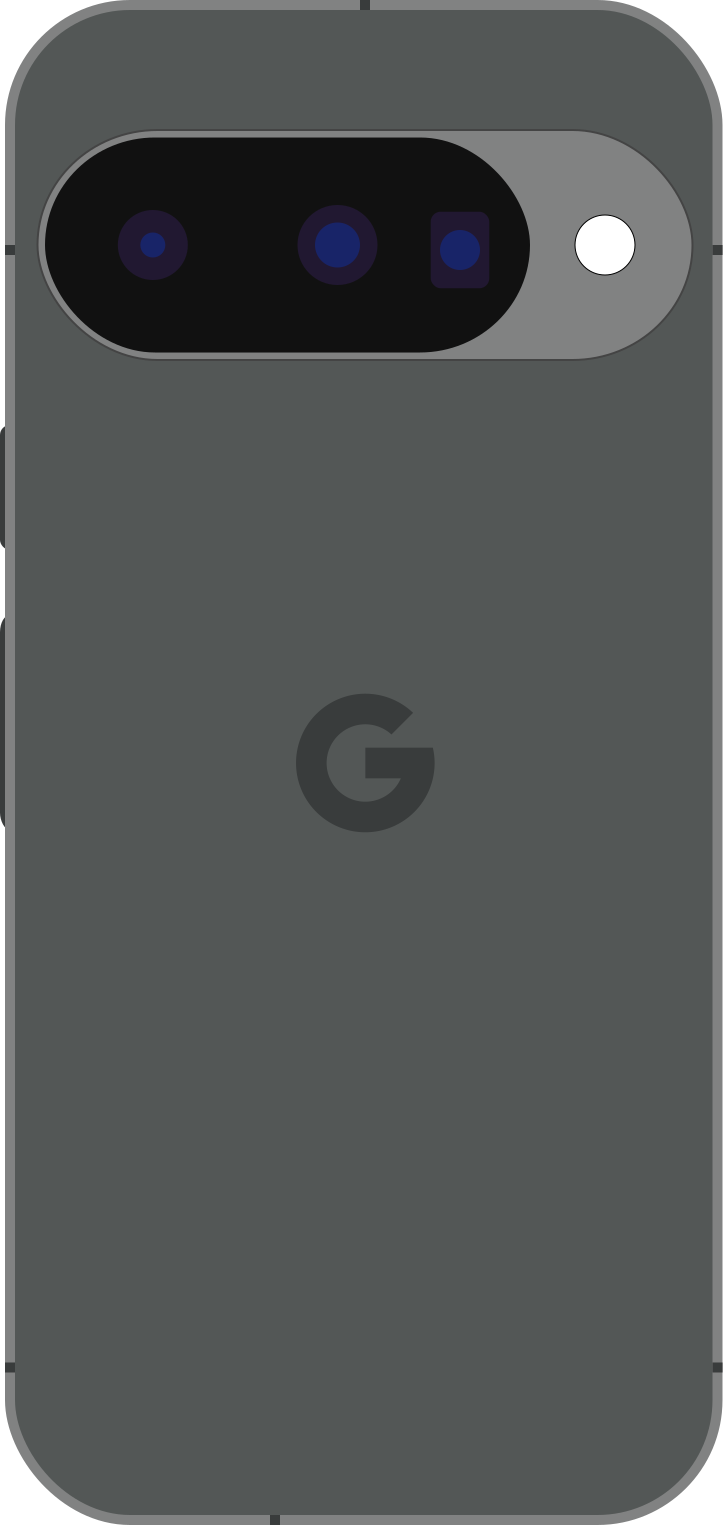
This is the biggest practical upgrade on the base Pixel 10, and arguably the reason to pick this over last year's equivalent model: it now includes a genuine 10.8MP telephoto lens with 5x optical zoom, a feature Google had previously reserved for the Pro models. Pairing that with a 48MP main wide sensor and a 13MP ultrawide gives the standard Pixel 10 a three-lens system that used to require paying the Pro premium, and it's a meaningful shift in what "the affordable Pixel" actually means. Zoomed shots that used to rely entirely on digital cropping from the base Pixel 9 now come from real optics, and the difference in fine detail at 3x-5x zoom is obvious in side-by-side comparisons — less smearing, more retained texture, better performance in anything but bright daylight.
Google's computational photography pipeline remains best-in-class for the fundamentals — Night Sight low-light performance, HDR balancing in mixed lighting, and skin tone accuracy across different lighting conditions are all still genuine strengths that Samsung and Apple are still chasing in different ways. The 10.5MP ultrawide front camera adds a wider field of view for group selfies without needing to hold the phone at an awkward distance, a small but appreciated quality-of-life touch.
Battery and the Software Longevity Argument
At 4970mAh, the Pixel 10's battery is one of the largest in its class, and it shows in real use — this is a phone that comfortably survives a full day of heavy camera use, navigation, and social media without the anxious afternoon battery checks that plagued earlier Pixel generations. Charging at 29W wired isn't class-leading, but it's a clear step up from where Pixels used to sit, and 15W Qi2 wireless charging covers the convenience angle for anyone using a bedside charging pad. Just as important as the battery capacity itself is Google's commitment to seven years of OS and security updates, matching the longest support window in the Android space and meaningfully changing the long-term value calculation — a phone you can realistically expect to keep running current software through the end of the decade, a shift we examined in more depth in our software update policy comparison across the phones we've reviewed.
Software: Where the Pixel Still Wins
Android 16 on the Pixel 10 ships exactly as Google intended it, without a manufacturer skin layered on top reworking the interface, and that clean-software experience remains one of the strongest arguments for buying a Pixel over almost any other Android phone. Pixel-exclusive AI features — call screening, Magic Editor-style photo tools, and on-device processing for many AI tasks that don't require sending data to the cloud — continue to be genuinely useful rather than gimmicky add-ons bolted onto a spec sheet, and they generally arrive on Pixels before spreading to the rest of the Android ecosystem.
Verdict: The Pixel That Finally Feels Complete
The Pixel 10 closes the two biggest gaps that used to separate the base Pixel from its Pro sibling — a real telephoto lens and a genuinely large battery — without losing the software polish and camera intelligence that have always been the line's core appeal. It's not the fastest phone in its price range for gaming, and the Tensor G5 still trails Snapdragon and Apple silicon on raw horsepower, but for anyone who values camera quality, clean software, and multi-year update longevity over benchmark charts, this is the most complete non-Pro Pixel Google has released. Set against our other Google review, the Pixel 8 Pro verdict, the base Pixel 10 now covers most of what used to require paying for the Pro model — a genuinely significant shift in Google's lineup.
Related Reading
Pros
- First base-model Pixel with a genuine optical telephoto lens
- Large 4970mAh battery comfortably lasts a full day
- Seven years of OS and security updates
- Clean Android software with genuinely useful on-device AI
Cons
- Tensor G5 still trails Snapdragon and Apple silicon in raw performance
- 29W wired charging remains behind the fastest Android rivals
- Adaptive 120Hz panel is less consistently smooth than fixed high-refresh screens