How Secure Is Your Phone? Biometrics, Security Chips, and Patch Cadence Compared
Face ID, Knox Vault, and Titan M2 get marketing attention, but the number that actually protects you longest is how many years of security patches you're promised. Here's how our 11 reviewed phones really compare.
Security marketing tends to focus on the flashiest feature — a face-scanning sensor, a dedicated chip with a cool name — while the detail that actually determines how exposed a phone is over its lifetime gets buried in a footnote: how many years of security patches the manufacturer actually commits to. Across the 11 phones we've reviewed, both halves of that story vary enormously, and buyers rarely see them compared side by side before they hand over their card details.
Biometric Authentication: Not All Face and Fingerprint Sensors Are Equal
The iPhone 15 and iPhone 14 both rely on Face ID, a structured-light 3D face map that remains harder to spoof with a photograph than the 2D face unlock offered on some budget Android phones. The iPhone SE, notably, drops Face ID entirely and uses Touch ID instead, a reminder that Apple's cheapest phone doesn't inherit its flagship security hardware wholesale. On the Android side, the Galaxy S24 and Galaxy Z Flip5 use Samsung's ultrasonic in-display fingerprint sensor, which reads a 3D ridge pattern rather than a flat image and is considered more spoof-resistant than the optical sensors found in the Galaxy A54, Pixel 8 Pro, Xiaomi 14, Nothing Phone (2), and HONOR Magic6 Pro. Optical sensors work by photographing your fingerprint under the screen, which is faster and cheaper to manufacture but has historically been easier to fool with high-quality fake prints than ultrasonic hardware. The Xperia 1 V takes a different approach entirely, placing its fingerprint reader in the side-mounted power button — a design older than in-display scanning but one many users find more reliable in daily use since it doesn't depend on screen contact quality.
Dedicated Security Silicon: Titan M2, Knox Vault, and the Rest
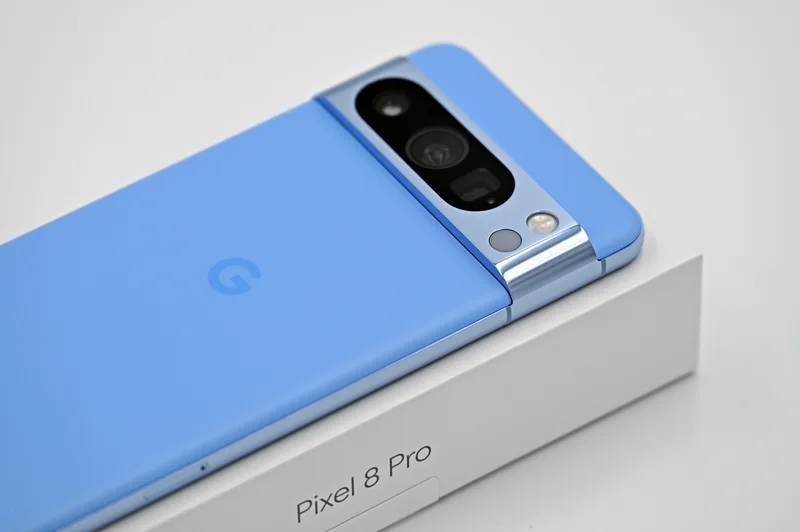
Google's Pixel 8 Pro pairs its Tensor G3 chip with a dedicated Titan M2 security chip, a separate piece of hardware that verifies the bootloader hasn't been tampered with and protects credentials even if the main operating system is compromised. Samsung's equivalent is Knox Vault, present on the Galaxy S24 and Galaxy Z Flip5, which isolates sensitive data like biometric templates in dedicated hardware rather than trusting the main processor alone. Apple's Secure Enclave performs a similar role across the entire iPhone lineup, including the budget iPhone SE, meaning Apple doesn't strip this protection out of its cheaper model even though it does drop Face ID. Xiaomi, HONOR, Nothing, and Sony all rely on more standard Android hardware-backed keystores without a distinctly marketed dedicated security chip, which doesn't necessarily mean weaker protection in practice, but it does mean less to point to when comparing security architecture on a spec sheet.
Patch Cadence: The Number That Actually Matters Most
This is where the gap between phones becomes the widest. Samsung promised seven years of both OS and security updates starting with the Galaxy S24 series, matching Google's identical seven-year commitment for the Pixel 8 and Pixel 8 Pro (support running into 2030). Apple doesn't publish a fixed number the way Samsung and Google do, but iPhones have historically received major iOS updates for roughly five to six years and lingering security-only patches well beyond that — the iPhone 14 and iPhone 15 both remain comfortably inside their supported window today. Below that leading tier, the picture thins out fast: Xiaomi commits flagship devices like the Xiaomi 14 to around four years of HyperOS updates and roughly six years of security patches, HONOR's Magic6 Pro shipped with three major Android upgrades and five years of security patches, Nothing promised the Phone (2) three years of OS updates and four years of security patches, and Sony's Xperia 1 V sits at the bottom of this group with just two years of OS updates and three years of security patches — a genuinely short window for a $1,399 phone.
App Permissions and Privacy Dashboards
Beyond hardware and patches, every phone here runs a reasonably current Android or iOS release with granular per-app permission controls — camera, microphone, and location access can be granted once, granted only while using the app, or denied outright on all 11 devices. Where they diverge is in how visible that control is. Apple's Privacy Report and App Privacy labels on the App Store give iPhone 15 and iPhone 14 owners an unusually clear picture of what each app actually accesses. Google's Pixel 8 Pro ships the cleanest stock-Android privacy dashboard of the Android group, unsurprising since Google controls both the OS and the reference implementation. Samsung, Xiaomi, HONOR, and Nothing all layer their own permission managers on top of stock Android, which are functional but add an extra translation step between what Android exposes and what the manufacturer's skin actually surfaces to the user.
Physical and Network-Level Privacy Details
A few smaller details matter more than they get credit for. The Xperia 1 V retains a 3.5mm headphone jack and microSD slot, both of which are politically neutral from a security standpoint but reduce reliance on Bluetooth and cloud storage for people who prefer to keep media entirely local. Samsung's Secure Folder, available on the Galaxy S24, Galaxy Z Flip5, and Galaxy A54, creates an encrypted, separately authenticated partition for sensitive apps and files distinct from the main phone environment — a feature neither Apple, Google, nor the smaller Android OEMs in this group replicate directly, though Apple's Hidden and Locked albums in Photos cover a narrower version of the same idea for images specifically.
Which Phones Actually Protect You Best
If you weight patch longevity most heavily, as most security researchers would recommend, the Galaxy S24 and Pixel 8 Pro come out clearly ahead of this entire lineup at seven years each. If you weight biometric spoof-resistance highest, the ultrasonic-sensor Galaxy S24 and Face-ID-equipped iPhone 15 lead. If you're buying the Xperia 1 V, it's worth going in with eyes open that its two-year OS update ceiling is a real trade-off for its manual camera controls and headphone jack, not a minor footnote — see our full Xperia 1 V verdict for how that weighs against its other strengths, and check our companion piece on software update policies across the full lineup for the complete patch-longevity picture. And if budget is the constraint, the iPhone SE's inherited Secure Enclave and Apple's update track record make it a meaningfully more secure long-term choice than its $429 price tag might suggest, a point we explore further in our iPhone SE four-years-later retrospective.
Verdict
Security isn't a single spec you can read off a comparison chart — it's a combination of authentication hardware, dedicated security silicon, and, most importantly, how many years the manufacturer keeps patching known vulnerabilities. On that last and most consequential measure, Samsung's Galaxy S24 and Google's Pixel 8 Pro are the clear leaders of this 11-phone lineup at seven years each, while Sony's Xperia 1 V and Nothing's Phone (2) ask buyers to accept a meaningfully shorter security runway in exchange for their other strengths.