Nothing Phone (2) vs HONOR Magic6 Pro: Design Statement vs Spec Sheet Champion
A $599 phone built around a distinctive Glyph interface against a $1099 flagship built to win every camera and battery benchmark.
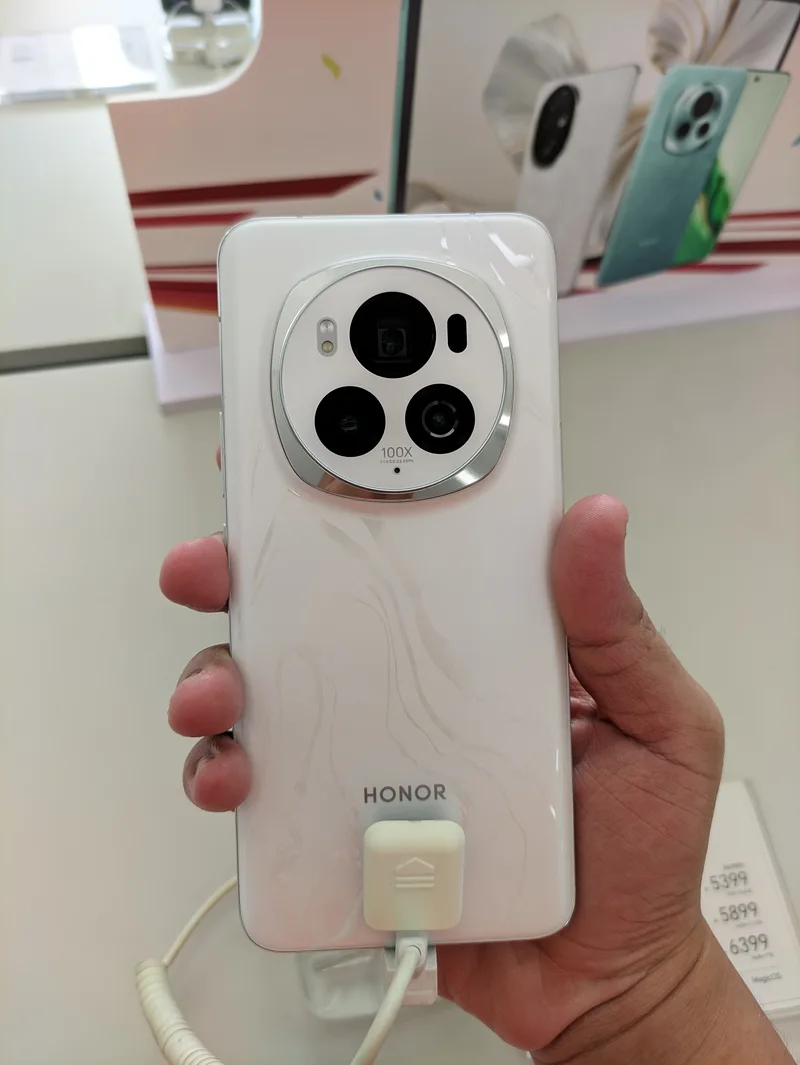
The Nothing Phone (2) and the HONOR Magic6 Pro are both trying to stand out in a market dominated by interchangeable glass slabs, but they take opposite routes. Nothing bets on transparent design and its glowing Glyph Interface at a relatively accessible $599. HONOR bets on raw spec-sheet dominance — a 180MP periscope camera, a silicon-carbon battery — at nearly double the price, $1099. Both succeed at being memorable; only one of them wins on hard numbers.
Design: Personality vs Polish
Nothing's transparent glass back with visible internal components and programmable Glyph LED lighting is genuinely unlike anything else on the market — it turns notifications, charging status, and app-specific alerts into a visual, glanceable experience. The Magic6 Pro takes a more conventional but still premium approach, with a Gorilla Glass Armor back and refined aluminum frame. Neither is objectively better designed; they're aimed at completely different instincts, one prioritizing novelty and identity, the other prioritizing understated flagship polish.
Cameras: Not a Fair Fight
The Magic6 Pro's camera system is in a different league. Its 50MP main and 50MP ultrawide are paired with an extraordinary 180MP periscope telephoto capable of 2.5x-100x zoom — a setup that outclasses most flagships, let alone the Phone (2)'s simpler 50MP main and 50MP ultrawide pairing, which has no telephoto lens at all. For anyone who photographs distant subjects regularly, this gap alone may decide the comparison, a theme our best camera phones ranking explores across the whole lineup.
Battery Life: Silicon-Carbon vs Standard Lithium-Ion
HONOR's 5600mAh silicon-carbon cell dwarfs the Phone (2)'s 4700mAh battery, and the gap in real-world endurance is significant — easily a half-day or more of extra screen-on time under similar use. Charging speed tells the same story: 80W wired and 66W wireless on the Magic6 Pro against 45W wired and 15W wireless on the Phone (2). Anyone who's followed our Nothing Phone (2) one-year retrospective knows battery anxiety has been a recurring theme for Nothing owners, and this comparison shows exactly why.
Performance
The Magic6 Pro runs a full Snapdragon 8 Gen 3, a generation ahead of the Phone (2)'s Snapdragon 8+ Gen 1. Both chips handle everyday tasks without issue, but the Magic6 Pro has significantly more headroom for gaming, video editing, and other demanding workloads, and it will likely stay comfortably fast for longer as software grows more resource-intensive over the coming years.
Display
Both phones use 120Hz LTPO AMOLED panels and look excellent in daily use. The Magic6 Pro's 6.8-inch panel is larger and reaches higher peak brightness, while the Phone (2)'s 6.7-inch display is nearly as good and, combined with the Glyph lighting on the back, contributes to a phone that feels more like a complete design object than a screen with hardware attached.
Software Philosophy
Nothing OS is deliberately close to stock Android, clean and minimally modified beyond the Glyph-specific features — a real draw for buyers who dislike heavy manufacturer skins. MagicOS 8.0 is more feature-dense, closer to Samsung's One UI in scope, offering more built-in tools at the cost of a busier interface. Neither is wrong; it depends on whether you want Android in its purest available form or a more loaded software experience.
Build Quality and Durability
The Magic6 Pro carries a full IP68 rating, while the Phone (2) is rated only IP54, meaning it's protected against splashes but not sustained submersion. For buyers who take their phone anywhere near water regularly, that's a meaningful practical gap the Phone (2)'s lower price doesn't fully offset.
Price and Who Should Buy Which
At $599, the Nothing Phone (2) is roughly half the Magic6 Pro's $1099 price, and it delivers a genuinely distinctive design experience along with solid, if not class-leading, everyday performance. The Magic6 Pro is for buyers who want the best possible camera and battery hardware money can buy and don't mind paying a real premium to get it, with design that's polished rather than eye-catching.
The Glyph Interface in Daily Practice
It's worth being specific about what the Glyph Interface actually adds beyond novelty. Assign a specific Glyph pattern to a specific contact and you'll know who's calling without looking at the screen at all — useful in meetings or while driving. Use it as a fill-level indicator while charging face-down and you get a glanceable progress bar with no screen wake required. These are small conveniences individually, but together they give the Phone (2) a genuinely different relationship with notifications than any phone the Magic6 Pro's camera-first design philosophy offers.
Zoom Photography as a Deciding Factor
If there's one spec that should single-handedly decide this comparison for a specific type of buyer, it's the Magic6 Pro's periscope zoom. Parents photographing kids at sports events, wildlife enthusiasts, concertgoers stuck in the back rows — anyone who regularly needs to capture something far away will find the Phone (2)'s lack of a telephoto lens a real, recurring limitation that no amount of design charm fully compensates for.
Community and Brand Trajectory
Nothing has built a genuinely loyal, vocal community around its distinctive design language, and each successive Phone release has refined that identity further rather than abandoning it for something more conventional. HONOR, backed by deeper manufacturing resources, has focused its energy on out-executing rivals on pure specifications rather than cultivating a specific brand aesthetic. Both strategies are working for their respective companies, but they appeal to buyers with very different priorities about what a phone brand should stand for.
Verdict
These two phones aren't really competing for the same buyer. The Magic6 Pro wins decisively on camera capability, battery life, charging speed, and raw performance — it's simply the more complete flagship. The Phone (2) wins on identity and value, offering a design and software experience unlike anything else at a price that's genuinely accessible. Choose based on whether you want the best spec sheet or the most distinctive phone in the room.