HONOR Magic6 Pro vs Pixel 8 Pro: Two Different Takes on AI Photography
One bets on better capture, the other on better editing. Which AI camera philosophy actually wins.
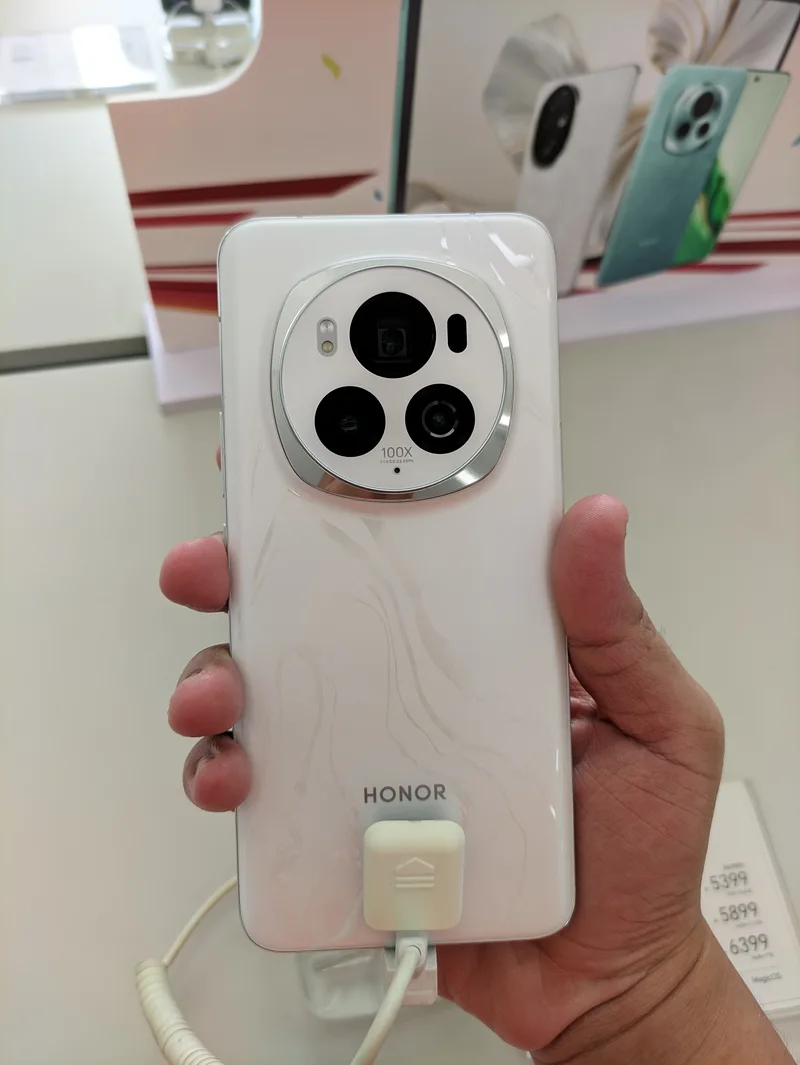
Google's Pixel 8 Pro and HONOR's Magic6 Pro represent two completely different theories of what "AI photography" should mean on a phone in 2024. Both cost roughly $1,000-1,100, both ship with genuinely capable hardware, and both put computational imaging at the center of their pitch to buyers. But the software philosophy behind each one couldn't be more different, and which one is "better" depends entirely on what you actually want AI to do to your photos.
Google's approach: editing after the fact
Pixel 8 Pro's headline camera features — Best Take, Magic Editor, Audio Magic Eraser — are all post-capture tools. You take a normal photo (or several), and then Google's on-device and cloud models let you reassemble faces from a burst so nobody's blinking, move a subject to a different part of the frame, or remove backgrounds and objects entirely, powered by the Tensor G3 chip's dedicated AI cores. This is editing-as-a-feature, built directly into the Google Photos app most Pixel owners already use daily.
The Pixel 8 Pro's actual camera hardware is a 50MP main sensor with a 48MP ultrawide and a 48MP telephoto offering 5x optical zoom — solid, not class-leading in raw specs, but Google's computational pipeline has consistently punched above the hardware's weight class in independent testing since the original Pixel. The color science leans warm and high-contrast, which reads as "punchy" straight out of the camera app without any editing at all.
HONOR's approach: better capture, less post-processing needed
The Magic6 Pro takes the opposite bet: put more optical capability into the hardware itself so there's less need to fix things afterward. Its headline number is a 180MP periscope telephoto lens covering an enormous 2.5x-100x zoom range, paired with a 50MP main and 50MP ultrawide, all on a Snapdragon 8 Gen 3 chip that's a generation newer than the Pixel's Tensor G3. HONOR also ships an AI feature of its own — Magic Portrait, which can generate portrait variations — but the primary sales pitch is optical reach: photographing something across a stadium, a concert stage, or a distant landmark without needing to walk closer.
In practice, the 100x "AI zoom" at the extreme end is a digital reconstruction, not a true optical shot — the same asterisk that applies to every phone advertising 100x zoom. But the useful range, 2.5x to roughly 30x, is genuinely optical or near-optical, and it's a range neither the Pixel 8 Pro nor most flagship competitors can match. If your photography habit involves a lot of "zoom in on the thing across the room," the Magic6 Pro's telephoto is simply a different class of tool.
Where the rest of the phone diverges
Battery life favors HONOR clearly on paper: the Magic6 Pro's 5600mAh silicon-carbon battery cell is meaningfully larger than the Pixel's 5050mAh pack, and it charges at 80W wired versus the Pixel's comparatively slow 30W — a full charge in well under an hour versus well over an hour. HONOR's MagicOS is a heavier Android skin than stock-adjacent Pixel software, which is either a pro or a con depending on whether you like extra customization options or prefer Google's minimal approach.
Software update policy cuts the other way. Google commits to seven years of OS and security updates on the Pixel 8 Pro, a policy that led the industry when announced and still beats most Android competitors outright. HONOR's update commitments have historically been shorter and less consistently documented in Western markets, which matters if you plan to keep the phone past its third year.
Availability is the deciding factor for most buyers
Before getting too invested in either phone's camera philosophy, it's worth being direct about the practical issue: the Pixel 8 Pro has official, warrantied sales channels in the US, UK, and most of Europe. The Magic6 Pro's Western availability has been inconsistent — sold officially in some European markets, absent or import-only in the US — which for a lot of buyers makes this comparison more theoretical than practical. If you're in a market where both are readily available with local warranty support, the choice comes down to genuine feature priorities; if you're in the US specifically, the Pixel 8 Pro is very likely the only one you can buy without dealing with an importer.
Display and everyday feel
Both phones use LTPO OLED panels that scale their refresh rate down to save battery during static content, but the specs diverge in ways that matter for different use cases. The Magic6 Pro's 6.8-inch panel runs at a 2800x1280 resolution with genuinely high peak brightness, useful for outdoor visibility when you're using that long telephoto lens in direct sunlight. The Pixel 8 Pro's 6.7-inch panel is very slightly smaller with a 1344x2992 resolution and Google's typically accurate, if slightly cooler, color calibration out of the box.
In hand, the two phones feel like products of different design priorities. The Magic6 Pro is built around that camera module — it's a physically larger, heavier device with a camera bump substantial enough to notice in a pocket, a direct consequence of packing a 180MP periscope sensor into the body. The Pixel 8 Pro's camera bar is Google's now-familiar horizontal strip, which distributes the weight differently and, subjectively, feels less front-heavy during one-handed use despite the two phones' overall weights being fairly close.
Which one should you choose?
Pick the Pixel 8 Pro if you value editing flexibility after the shot is taken, want the longest software support commitment in the Android world, and live somewhere with straightforward retail access and carrier support. Pick the Magic6 Pro if you photograph distant subjects often, want faster charging and larger battery capacity, and either live somewhere it's officially sold or are comfortable importing a flagship phone.
For more on how Google's AI camera tools compare to a very different photography-first phone, see our Sony Xperia 1 V review, and for the broader question of whether Pixel's AI photo tricks hold up against Samsung's version of the same idea, read our Pixel 8 Pro vs Galaxy S24 comparison.