5 Phones We'd Actually Recommend This Year
Not sorted by price tier — sorted by the kind of buyer you actually are, from family photographers to compact-phone holdouts.
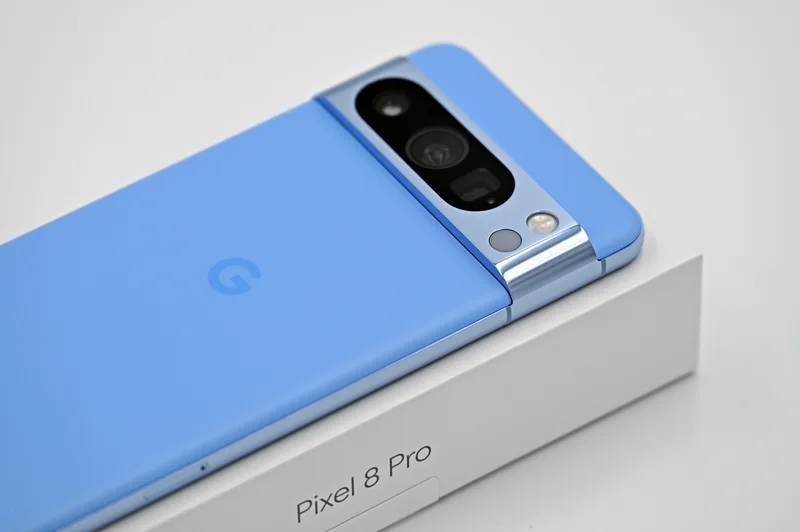
Most "best phones" lists sort by price tier and call it a day. That's useful, but it misses the more honest question most people are actually asking, which isn't "what's the best phone under $800" but "what phone fits how I actually use my phone." Here are five real recommendations built around specific kinds of buyers, not specific price brackets — each one a phone we've tested and verdicted ourselves, not a guess from a spec sheet.
For the person who takes a lot of photos of their kids or pets: the Pixel 8 Pro. Fast-moving, unpredictable subjects are the hardest thing to photograph well on a phone, and Google's combination of a genuinely fast shutter, reliable autofocus tracking, and forgiving computational processing means more usable shots from more attempts. Best Take, which lets you merge multiple group photos to grab everyone's best expression at once, is a genuinely practical feature for anyone photographing kids who won't sit still. Beyond the shutter speed and tracking, the Pixel's Magic Eraser tool is genuinely useful for family photos specifically — the ability to remove a stranger who wandered into the background of a birthday party shot, or a stray shopping cart in a playground photo, without needing any editing skill, has quietly become one of the most-used features for parents who photograph the same few chaotic locations repeatedly. Our full Pixel 8 Pro verdict covers the rest of what makes it one of our highest-scoring phones.
For the person who wants a small phone and refuses to compromise on that: the iPhone SE (3rd generation), with real caveats. It's genuinely the smallest current flagship-chip phone you can buy, and if a phone that fits fully in your palm and pocket without stretching is non-negotiable, there's simply no modern alternative that matches it — most "compact" flagships from other brands still land around 6.1 inches or larger. The tradeoffs are real: an outdated design, a single mediocre-in-low-light camera, and a 60Hz LCD screen that looks dated next to nearly everything else on this list. Buy it only if phone size genuinely matters more to you than screen quality or camera versatility; our iPhone SE verdict is upfront about exactly where it falls short.
For the person who wants one phone to double as a real camera and video rig: the Xperia 1 V. We've written before about why almost nobody buys Sony's flagship despite it being genuinely excellent, and that recommendation holds here specifically for buyers who already think in photography and videography terms — manual controls, a variable aperture lens, and professional-grade video tools that no mainstream flagship attempts to match. It's expensive and its everyday convenience features lag behind, but for the specific buyer it's built for, nothing else on this list comes close. See our deeper look at who the Xperia 1 V is actually for before deciding.
For the person who wants the newest folding phone without early-adopter reliability worries: the Galaxy Z Flip5. Samsung is on its fifth generation of the Flip form factor now, and it shows — the hinge feels genuinely solid rather than like a first-generation experiment, the outer cover screen is finally big enough to be useful for more than checking notifications, and the crease, while still visible under certain lighting, has become far less distracting than on earlier folds. It's not cheap at $999, and folding phones still carry more theoretical long-term durability risk than a traditional slab phone, but Samsung's iteration count buys real peace of mind here. The bigger outer cover screen also means less need to unfold the phone for quick tasks — checking the time, replying to a notification, or snapping a quick selfie using the main cameras as a viewfinder — which in practice reduces hinge cycles over the phone's lifetime and, anecdotally, seems to correlate with fewer reported hinge issues than earlier Flip generations that required unfolding for nearly everything. Our Galaxy Z Flip5 verdict and our separate piece on whether the Flip5 is actually worth buying in 2024 both dig deeper into the durability question specifically.
For the person who wants their money to go the furthest without feeling like a compromise: the Galaxy A54 5G. At $449 it undercuts every other phone on this list by a wide margin, yet it doesn't feel like a budget phone in daily use — a genuinely good 120Hz AMOLED screen, a versatile triple-camera setup, and all-day battery life. It won't out-perform a true flagship chip in gaming or heavy multitasking, and Samsung's mid-range software support window trails its flagship line, but for sheer value relative to what you're giving up, it's hard to beat. Read our full Galaxy A54 verdict and our head-to-head against the iPhone SE for the complete budget-tier picture.
Worth noting: none of these five recommendations is the newest or most expensive phone in its category by default, and that's deliberate. Buying the absolute latest flagship the day it launches rarely makes financial sense once you account for how quickly prices drop and how marginal the year-over-year improvements usually are for any single use case. Each of these five earns its spot because it does one thing particularly well for a particular kind of buyer, not because it topped a spec sheet, and that's a more durable basis for a recommendation than chasing whatever launched most recently.
None of these five is "the best phone" in some universal sense — that question doesn't really have a single honest answer anymore, given how differently people actually use their phones day to day. What they share is that each one is the phone we'd genuinely recommend first for a specific, real kind of buyer, based on hands-on testing rather than a spec sheet comparison. If you don't see your own priorities reflected in any of these five, our full phone database and individual verdicts cover the rest of the field in the same hands-on, tested detail rather than guesswork from a spec sheet.