iPhone 14 vs Galaxy Z Flip5: Conventional Flagship vs Folding Novelty
A dependable $799 iPhone against a $999 foldable that trades battery life and camera range for genuine pocketability.
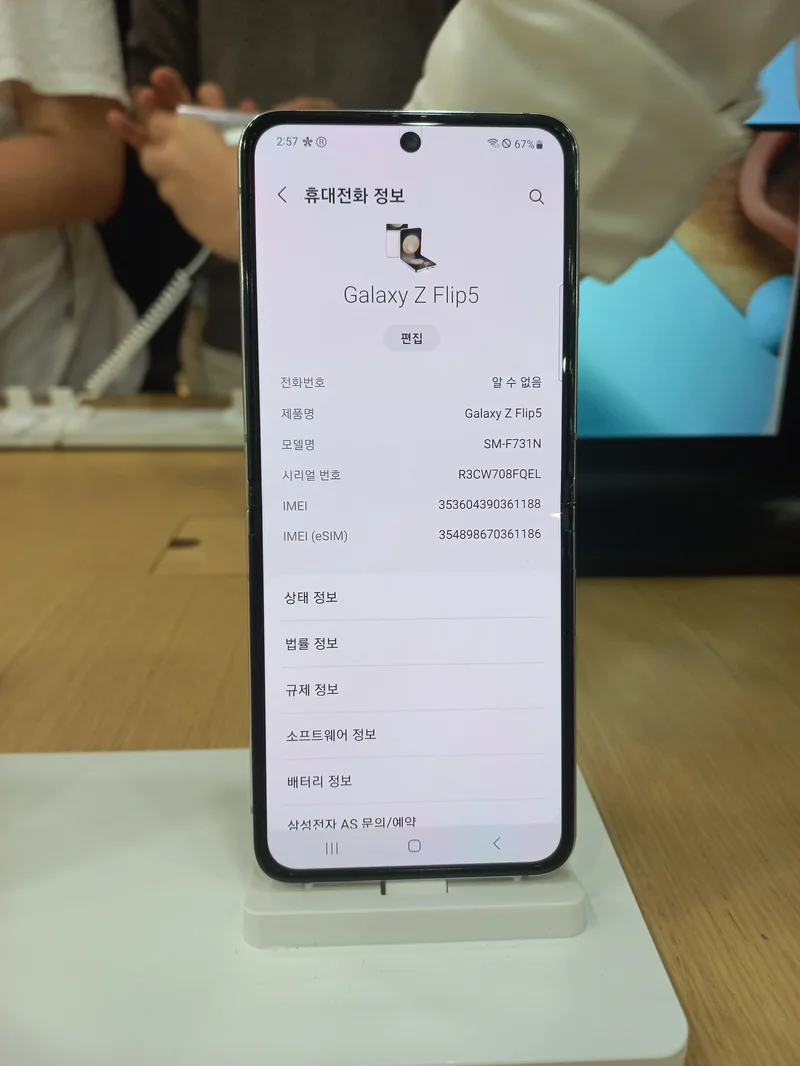
The iPhone 14 and the Galaxy Z Flip5 sit $200 apart at retail, but the real gap between them isn't price — it's form factor. Apple's phone is a conventional slab built on a design philosophy that's barely changed in years. Samsung's phone folds in half, trading some battery life and camera capability for a level of pocketability no iPhone offers. Choosing between them means deciding how much that novelty is worth to you.
Form Factor: The Central Question
The Z Flip5 folds down to roughly half its unfolded size, genuinely transforming how the phone fits in a pocket or small bag, and its 3.4-inch external cover screen lets you glance at notifications without unfolding. The iPhone 14 offers none of that — it's a well-made, familiar slab that prioritizes consistency over novelty. Our flip phone buying guide is worth reading in full if you're genuinely torn on whether folding is worth the trade-offs involved.
Cameras
Both phones offer a 12MP main and 12MP ultrawide pairing with no telephoto lens — genuinely comparable resolution on paper. Apple's computational photography pipeline tends to produce slightly more consistent results across varied lighting, while Samsung's processing leans toward punchier, more vibrant colors out of the camera app. Neither phone will disappoint casual photographers, and neither offers the zoom range serious camera-focused buyers might want elsewhere on this site.
Display
The iPhone 14's 6.1-inch Super Retina XDR display is capped at a fixed 60Hz refresh rate, while the Z Flip5's 6.7-inch main foldable display runs at up to 120Hz once unfolded, plus the added functionality of its external cover screen. Scrolling and animations feel noticeably smoother on Samsung's phone, an advantage that partially offsets the inherent visible crease that comes with any current foldable hinge.
Performance
The Z Flip5's Snapdragon 8 Gen 2 for Galaxy and the iPhone 14's A15 Bionic trade blows depending on the specific benchmark, with Apple's chip efficiency keeping the iPhone 14 feeling fast despite being architecturally older. In everyday use, neither phone will feel like the limiting factor for typical tasks.
Battery Life
This category clearly favors Apple. The iPhone 14's battery, combined with Apple's chip efficiency, comfortably outlasts the Z Flip5's much smaller 3700mAh cell — a direct consequence of the internal space the folding hinge mechanism requires. Anyone who's found foldable battery life disappointing should weigh this heavily, a recurring theme in our iPhone 14 two-years-later review.
Build Quality and Durability
The iPhone 14 carries a full IP68 rating with no moving parts to wear down over years of use. The Z Flip5's Armor Aluminum hinge and Gorilla Glass Victus 2 hold up well to Samsung's fold-cycle testing, but it's rated only IPX8, with no official dust resistance — a trade-off inherent to folding hinge mechanisms that the iPhone 14's conventional design avoids entirely.
Software and Ecosystem
The iPhone 14 benefits from Apple's tightly integrated ecosystem, years of guaranteed iOS updates, and Crash Detection and satellite SOS safety features. The Z Flip5 runs One UI with Samsung's own strong multi-year update commitment and Galaxy AI features, offering a comparably long software runway on the Android side.
Pocketability as a Daily, Cumulative Advantage
The Z Flip5's folded size isn't a one-time party trick — it's a small, repeated convenience across every single day of ownership: fitting into pockets on tighter-fitting clothes, sliding into small bag compartments, feeling less bulky during workouts or commutes. None of that shows up on a spec sheet, but for buyers who've specifically found conventional slab phones cumbersome to carry, it's a real quality-of-life improvement the iPhone 14 structurally cannot offer, regardless of how good its other specs are.
What You Give Up for That Convenience
The honest trade-off is durability confidence and battery runway. A phone with a folding hinge inherently has more moving parts and more potential failure points than a solid slab, even with Samsung's rigorous fold-cycle testing behind it, and the smaller battery means more frequent charging for heavy users. Buyers should weigh that mechanical complexity and reduced battery life honestly against how much they actually value the folded form factor day to day.
Repair and Insurance Considerations
Foldable hinge repairs tend to cost more than a conventional screen or battery replacement on the iPhone 14, both because the technology is newer and because fewer repair shops have built up hands-on experience with folding displays. Buyers seriously considering the Z Flip5 should look closely at Samsung's own extended warranty and screen-protection plans, which are considerably more relevant here than they'd be for a conventional slab phone like the iPhone 14.
Two Ecosystems, Two Different Bets on the Future
Apple's iPhone 14 represents a bet that refining a proven, familiar form factor is the right long-term strategy, while Samsung's Z Flip5 represents a bet that folding hardware is where phones are eventually headed for a meaningful segment of buyers. Neither company has definitively won that argument yet, and buyers today are essentially choosing which vision of the smartphone's near future they'd rather live with in the meantime.
A Quick Gut Check Before Deciding
If the idea of a folding phone genuinely excites you and you've already accepted a shorter battery runway as a fair trade, the Z Flip5 will likely satisfy that curiosity. If you'd rather not think about your phone's form factor at all and simply want dependable performance day after day, the iPhone 14's conventional design remains the lower-risk, higher-certainty choice between the two.
Verdict
For buyers who value reliability, battery life, and a proven ecosystem over novelty, the iPhone 14 remains the safer, more broadly satisfying choice. The Z Flip5 earns its $200 premium specifically for buyers who want a genuinely pocketable phone and are willing to accept a real battery-life trade-off to get a form factor no iPhone currently offers. Neither is objectively wrong — it depends entirely on how much that folding hinge is worth to you.