Best Android Phones Under $600 Right Now
The Galaxy A54 and Nothing Phone (2) take very different approaches to the same price bracket.
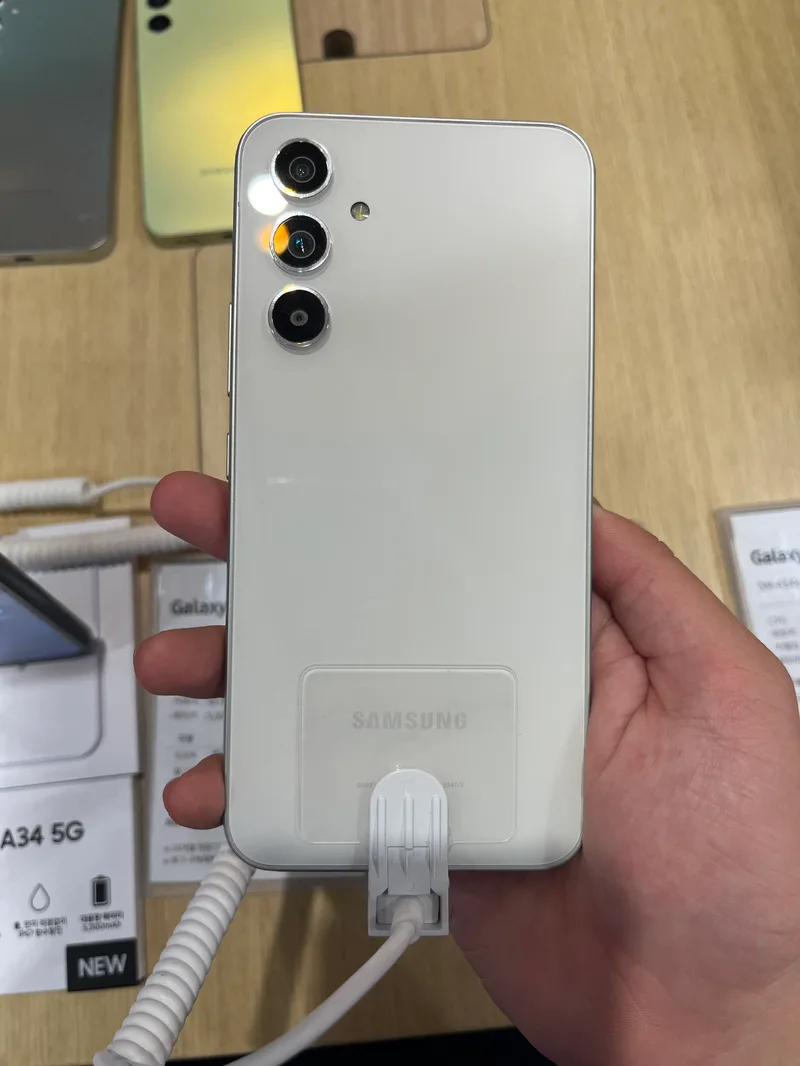
Flagship phones get most of the attention, but the $400-600 range is where the majority of phone purchases actually happen — and it's also where the gap between "good enough" and "genuinely good" has narrowed dramatically over the past few years. Two phones in our catalog sit squarely in this bracket with very different personalities: the Samsung Galaxy A54 5G and the Nothing Phone (2). Here's how they actually compare for someone shopping this price range.
Samsung Galaxy A54 5G: the safe, complete choice
At $449, the Galaxy A54 5G is Samsung's mid-range flagship-adjacent phone, and it borrows more from Samsung's actual flagships than most competitors at this price borrow from theirs. The 6.4-inch Super AMOLED display runs at 120Hz — a refresh rate that was flagship-exclusive just a few years ago and is now standard even at this price tier — and the 50MP main camera with 12MP ultrawide and 5MP macro delivers genuinely competent photos in good and moderate lighting, falling off more noticeably than flagship cameras only once light gets low.
The Exynos 1380 chip inside isn't a performance leader — it trails Qualcomm's mid-range Snapdragon options in raw benchmarks — but it's more than adequate for messaging, social media, browsing, and casual gaming, which covers the actual daily use pattern of most buyers in this price bracket. Samsung backs the A54 with a genuinely strong update commitment for a mid-ranger: four years of OS updates and five years of security patches, a policy that puts it ahead of most competitors at this price and even some phones costing twice as much.
Nothing Phone (2): the one with actual personality
The Nothing Phone (2) takes a completely different approach: rather than trying to be the safest, most complete package, it leads with genuine design identity. The transparent glass back and Glyph Interface — a set of LED light strips visible through the back panel that flash for notifications, ringtones, and a fill-light for photos — is a real, distinctive feature you won't find replicated on any Samsung, Google, or Apple device, not a gimmick tacked onto otherwise generic hardware.
Underneath the design flourish, the specs are genuinely stronger than the Galaxy A54's in several places: a Snapdragon 8+ Gen 1 chip (originally a flagship-tier chip from the previous generation, now repositioned into the mid-range price bracket) significantly outperforms the A54's Exynos 1380, and 45W wired charging is meaningfully faster than Samsung's 25W. The dual 50MP main and 50MP ultrawide cameras are close in real-world quality to the A54's setup, without a clear winner in most lighting conditions.
The trade-off is the IP54 water resistance rating — splash-resistant but not the full submersion protection the A54's IP67 rating provides — and Nothing OS updates, while clean and close to stock Android, come with a shorter and less firmly committed update timeline than Samsung's four-year OS policy.
Where each one actually wins
For raw performance per dollar, the Nothing Phone (2)'s repurposed flagship chip is the clear winner — it handles heavier multitasking and gaming more comfortably than the A54's mid-range silicon, and the 45W charging noticeably reduces how often low battery becomes an actual interruption during the day. For long-term software support and water resistance, the Galaxy A54 is the safer bet, with a support commitment that genuinely rivals phones twice its price and a build that tolerates rain, spills, and brief submersion without hesitation.
Samsung's broader ecosystem — SmartThings, Galaxy Watch pairing, Samsung DeX for basic desktop-style use with an external display — is a real factor if you already own other Samsung devices, in a way that doesn't have an equivalent on the Nothing side. Nothing's appeal is closer to enthusiast territory: a phone that looks and behaves differently from the default Android experience, aimed at buyers who specifically want to avoid looking like everyone else.
Display and battery in daily use
Both phones use AMOLED panels with 120Hz refresh rates, but they're tuned differently. The A54's Super AMOLED display leans toward Samsung's typically vibrant, slightly oversaturated color profile — a look many buyers specifically associate with Samsung phones and actively prefer. The Nothing Phone (2)'s LTPO AMOLED panel supports variable refresh down to 1Hz for battery savings during static content, a more efficient implementation than the A54's standard 120Hz panel, and Nothing's software leans toward a more neutral, closer-to-stock-Android color calibration.
Battery capacity is close on paper — 5000mAh on the A54 versus 4700mAh on the Phone (2) — but real-world endurance depends more on chip efficiency and software optimization than raw cell size at this level of difference. Neither phone struggles to make it through a full day of moderate use, and the more meaningful differentiator ends up being charging speed: the Phone (2)'s 45W wired charging gets you back to a comfortable battery level in a fraction of the time the A54's 25W charging takes, which matters more for people who habitually top up during short breaks rather than charging fully overnight.
Gaming and everyday performance
This is where the chip difference actually shows up in daily use rather than just benchmark charts. The Nothing Phone (2)'s Snapdragon 8+ Gen 1 handles current mobile games at higher sustained frame rates and with less thermal throttling during extended sessions than the A54's Exynos 1380, which is a genuine mid-range chip built for efficiency and cost rather than gaming performance. For anyone who plays graphically demanding mobile games regularly — not just casual puzzle or card games, but titles with real 3D rendering — the Phone (2) is the noticeably smoother experience.
For everyday tasks that don't push the chip hard — messaging, browsing, social media, video streaming — the difference is far less noticeable, and the A54 handles all of it comfortably without any sense of being underpowered. The performance gap is real but only matters if your actual usage pattern includes the workloads that expose it.
The verdict for this price bracket
If you want the safest, most broadly compatible choice with the strongest long-term update commitment and don't want to think about the decision again for years, the Galaxy A54 5G is the right default. If you want stronger raw performance, faster charging, and a phone that doesn't look like every other mid-range Android device on the market, the Nothing Phone (2) is worth the trade-off in water resistance and update longevity.
Both remain genuinely competitive choices in this price bracket rather than compromises you settle for — a reflection of how much the sub-$600 Android market has matured. For phones further down the price ladder, our iPhone SE vs Galaxy A54 comparison covers the budget tier specifically, and for a broader roundup across price points, see our five phones we'd actually recommend.