ROG Phone 9 Verdict: A Gaming Phone That Keeps the Headphone Jack
ASUS's eighth-generation gaming phone puts a Snapdragon 8 Elite, a 5800mAh battery and a display that can run at up to 185Hz behind a rear LED panel and an old-school 3.5mm jack.
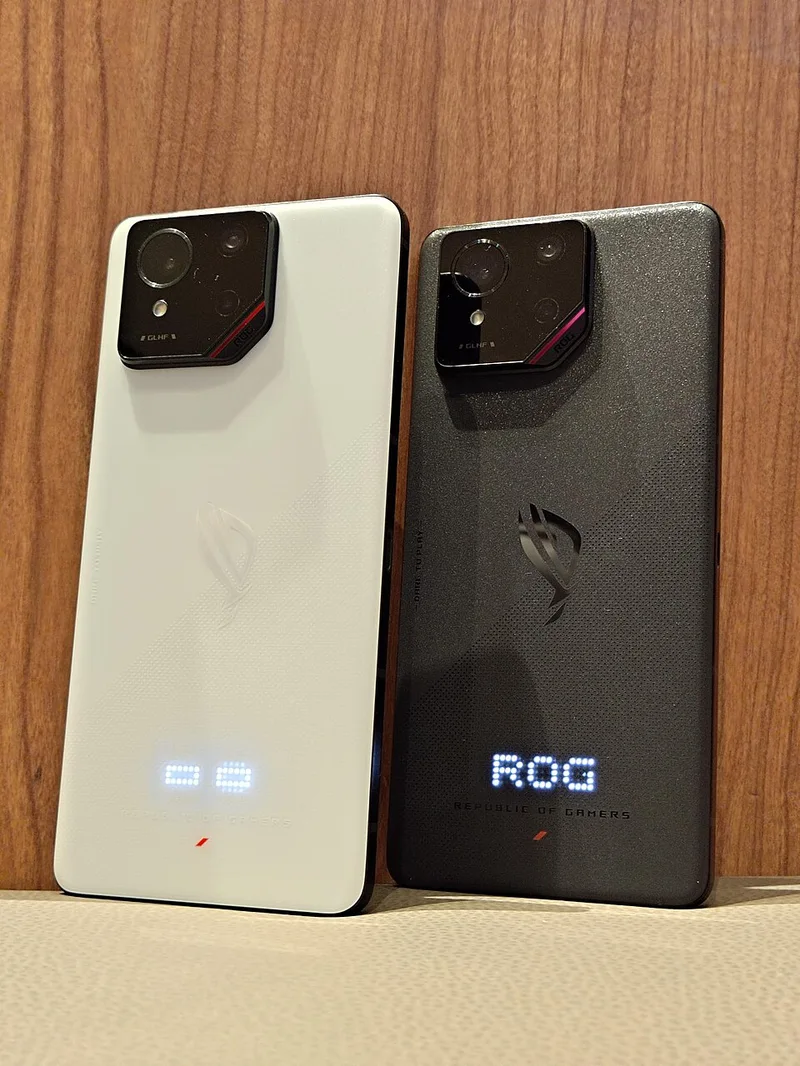
Most flagship phones try to be good at everything and slightly memorable at nothing. The ROG Phone 9 takes the opposite route. It is the eighth generation of the ASUS Republic of Gamers phone line, launched on November 19, 2024, and it is built around one idea: a phone that plays demanding games well, and that keeps the physical features gamers care about, such as a headphone jack, big speakers and a screen that can go beyond 120Hz. This verdict reads the manufacturer's published specification and asks whether those priorities leave the phone practical for people who do not game all day.
A display built around speed
The screen is a 6.78-inch Samsung Flexible AMOLED panel with a resolution of 2400 x 1080 pixels and LTPO technology. In regular use the refresh rate scales from 1Hz to 120Hz to save power. You can push it to 165Hz in system settings, and the Game Genie tool can raise it to 185Hz for supported titles. ASUS lists a peak brightness of 2500 nits, with 1600 nits in the high-brightness mode, and the panel covers more than 107 percent of the DCI-P3 colour range with HDR10 support. It is protected by Gorilla Glass Victus 2.
Two things are worth stating plainly. First, very high refresh rates only help when a game can actually produce that many frames, so the 185Hz figure is an advantage for a small set of titles, not a universal upgrade. Second, the resolution is FHD+, not QHD+. That is a deliberate choice for gaming: fewer pixels to draw means the chip can reach higher frame rates and use less power. If you care most about text sharpness for reading, a QHD+ phone will look crisper. If you care about fluid motion, this panel is aimed squarely at you.
Performance from the Snapdragon 8 Elite
The chipset is the Qualcomm Snapdragon 8 Elite, an octa-core design whose fastest core reaches 4.3GHz, paired with an Adreno 830 graphics processor. On ASUS's specification page there are two configurations: 12GB of LPDDR5X memory with 256GB of UFS 4.0 storage, or 16GB with 512GB. Other markets and the Pro variants add larger memory options, but the pairing on the standard phone is already generous for gaming and heavy multitasking. The same Snapdragon 8 Elite family also powers other 2025 flagships such as the Galaxy S25, so raw chip capability is not what sets this phone apart. What differs is the phone built around the chip, and that is where the ROG Phone 9 tries to earn its place.
We should be clear about what we cannot say. The specification page does not describe the cooling system as a dedicated section, and we have not measured sustained performance, so we make no claim about how the phone holds its clocks in a long session. What we can say is that the hardware ceiling is as high as it gets in the Android market, and that ASUS designed the phone around gaming from the outset.
Battery and charging
The battery is 5800mAh, one of the larger cells in a mainstream flagship, and wired charging is 65W using Quick Charge 5.0 and USB Power Delivery 3.0. Wireless charging is 15W over the Qi 1.3 standard. That combination is sensible for a gaming phone: gaming drains a battery quickly, so capacity matters, and the wired speed is fast enough for a quick top-up between sessions. The wireless speed is modest, and if you want the fastest possible wireless refill for reference, our Xiaomi 14 page lists 50W wireless charging. Explore our battery life articles for more context on how capacity and charging speed interact.
Design: matte back, LED panel, and a jack
The phone measures 163.8 x 77 x 8.9mm and weighs 227g, so it is heavy and slightly thick by current standards. That is the price of a large battery and the hardware inside. The back has a matte glass finish with a nano-crystalline texture that is meant to resist fingerprints, and the rear carries the AniMe Vision LED panel, a grid of mini-LEDs on the standard phone that can show animations, notifications and custom patterns. The Pro version has a much denser array that supports simple games, but the standard phone has 85 mini-LEDs. Whether you like this depends on taste; it is a distinctive design and it is the phone's visual signature.
The practical details matter more. The phone keeps a 3.5mm headphone jack, which is increasingly rare on flagship phones and matters to gamers who want wired audio. It has dual front-facing stereo speakers, Hi-Res audio support at up to 384kHz and 32-bit, and three microphones with noise reduction. It also carries an IP68 rating for dust and water resistance. Connectivity is current: Wi-Fi 7, Bluetooth 5.4, NFC, USB-C and dual nano-SIM, with wide 5G and 4G band support. For another phone that keeps the headphone jack, see our Xperia 1 V page.
Cameras: capable, not the headline
The rear camera system is a triple setup led by a 50MP main camera using the Sony Lytia 700 sensor, which is a 1/1.56-inch unit with an f/1.9 lens. ASUS pairs it with a 6-axis hybrid gimbal stabiliser, which physically stabilises the camera and can help video and low-light stills. Alongside it are a 13MP ultrawide with a 120 degree field of view and a 5MP macro camera. The front camera is a 32MP RGBW sensor with a 90 degree field of view; it outputs 8MP images by combining pixels, which is meant to help in dim light. The phone can record 8K video at 30fps.
This lineup is enough for everyday photos, but it is clearly not the focus. The lack of a telephoto lens on the standard phone means you rely on digital zoom for distant subjects, and a 5MP macro is a minor extra rather than a major feature. The Pro version replaces the macro with a 32MP telephoto with 3x optical zoom, so if photography matters to you, that model is the one to look at. If you want to see how other phones approach camera hardware, the Pixel 8 Pro verdict is a good place to start.
Software
The phone launched with Android 15. The manufacturer's specification page we consulted does not state how many years of updates ASUS commits to, so we cannot judge that part of ownership. Buyers who keep phones for four or five years should check the current policy before purchasing. Game-focused software is part of the offering, including the Game Genie tool, which is what unlocks the highest refresh rate for supported games.
Who should buy it
The ROG Phone 9 is for people who play demanding mobile games regularly and want hardware that was designed for that job: a very fast display, a large battery, loud front-facing speakers and a headphone jack. It will also suit anyone who wants a large, durable, water-resistant phone with lots of memory and does not mind extra weight. It makes less sense for those who prioritise cameras, a slim body or long-term software commitments, where mainstream flagships have an edge. Browse our full verdict archive to compare it with more conventional options.
We give it an 8.1. The score reflects strong hardware in the areas it targets, the rare combination of IP68 and a headphone jack, and a well-sized battery. It loses points for its weight, limited wireless charging, the lack of a telephoto on the standard model and the absence of a stated update policy in the sources we used. Prices vary by region and configuration, so check the current price before deciding.
Pros
- Snapdragon 8 Elite with a 4.3GHz prime core and up to 16GB of RAM
- Display tops out at 165Hz in settings and 185Hz in Game Genie
- 5800mAh battery with 65W wired charging
- 3.5mm headphone jack and dual front-facing stereo speakers
- IP68 rating, unusual for a gaming-focused phone
- Gimbal-stabilised 50MP main camera and 32MP RGBW selfie camera
Cons
- Heavy and thick at 227g and 8.9mm
- Wireless charging is limited to 15W
- Standard model has no telephoto, only a 5MP macro alongside the 13MP ultrawide
- Full-resolution display is FHD+, not QHD+
- Software update length is not stated on the manufacturer's specification page