Pixel 8 Pro vs Xperia 1 V: Automatic Genius vs Manual Control
Google wants to do the thinking for you. Sony wants to hand you the controls. Which camera philosophy actually fits how you shoot?
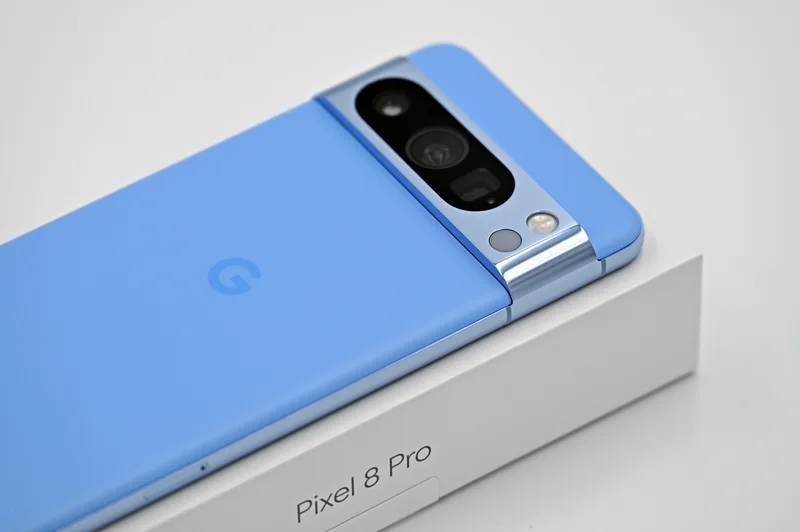
Ask ten people what makes a phone camera "good" and you'll get answers that split roughly into two camps: people who want the phone to figure everything out and hand them a great photo automatically, and people who want manual control and are willing to do a little work for a specific creative result. Google's Pixel 8 Pro and Sony's Xperia 1 V are, almost uncannily, built for exactly those two camps respectively — which makes them one of the more genuinely useful phones to compare if you're trying to figure out which camp you're actually in.
Pixel 8 Pro: Computational Photography as the Whole Point
Google doesn't really compete on camera hardware specs — the Pixel 8 Pro's 50MP main sensor is good but not exceptional by 2024 flagship standards. What Google competes on is what happens after the shutter clicks. The Tensor G3 chip is built specifically to run Google's computational photography models on-device, and features like Magic Editor (AI-powered object moving and scene reconstruction), Best Take (merging multiple group photos to get everyone's eyes open), and Audio Magic Eraser for video are the actual product, with the camera hardware acting as the input layer for that software.
In practice, this means a Pixel 8 Pro photo taken by someone who has never opened a manual camera setting will typically look better than the equivalent shot from most competing phones, because Google's HDR+ and Night Sight processing are tuned to produce a strong result by default, every time, without the user making a single decision. The trade-off is that you're accepting Google's interpretation of the scene — the processing is aggressive enough that photography enthusiasts sometimes find Pixel photos look slightly over-sharpened or unnaturally bright in shadow detail compared to what the scene actually looked like.
Beyond the camera, the Pixel 8 Pro runs a 6.7-inch LTPO OLED at up to 120Hz, and Google backs it with seven years of OS and security update commitments — genuinely the longest support window in the Android ecosystem, longer even than Samsung's flagship commitment, which matters enormously if you plan to keep the phone for the long haul.
Xperia 1 V: A Camera Built for People Who Already Know What They're Doing
Sony takes almost the opposite bet. The Xperia 1 V ships with a genuine manual camera app — Photography Pro — modeled directly on the interface of Sony's Alpha mirrorless cameras, with physical dial-style controls for shutter speed, ISO, and manual focus, plus real-time eye-autofocus tracking borrowed from Sony's camera division. This is not a phone that tries to guess what you want and do it for you; it's a phone that assumes you already know what you want and gives you the controls to get there, the same way a proper camera would.
The hardware backs this up in ways that matter to people who shoot manually: a genuine 4K 120fps video mode, a 21:9 aspect ratio 6.5-inch 4K OLED display (a genuinely unusual resolution and aspect ratio combination that exists specifically because Sony wants the screen to double as a content-creation monitor), and a 3.5mm headphone jack — a detail that sounds minor until you remember almost no other 2024 flagship still includes one. The triple camera system uses a continuously variable telephoto lens that physically shifts between 85mm and 125mm focal lengths, a genuinely unique piece of hardware engineering no other phone maker currently ships.
The trade-off is real: point-and-shoot users who never touch manual settings will often get a less consistently "wow" result straight out of the Xperia's camera app than they would from a Pixel, because Sony deliberately doesn't apply the same aggressive automatic processing. The phone is rewarding you for camera knowledge you have to actually bring to it.
Software and Ecosystem: Two Very Different Philosophies
Google's software advantage isn't limited to the camera. Pixel phones run the cleanest, most stock-adjacent version of Android available, get new Android versions before any other manufacturer, and are the reference device for Google's own AI features like Gemini, which reach Pixels first or Pixel-exclusively before rolling out elsewhere. Sony's software is also close to stock Android with minimal bloatware, but Sony does not have Google's first-party advantage on AI feature rollout timing, and Sony's update commitment, while solid, doesn't match Google's seven-year window.
Where Sony pulls ahead is in the details enthusiast users care about: expandable microSD storage (Pixel has none), that 3.5mm jack, and genuinely best-in-class stereo speakers tuned with Sony's own audio engineering — all things Google has deliberately stripped out of the Pixel line in pursuit of a simpler, more mainstream design.
Which Camp Are You Actually In?
If you want to point your phone at something and trust that Google's processing will make it look good without you thinking about it, and you value the longest software support window in Android, the Pixel 8 Pro is the clear pick — it's built for exactly that use case and executes it about as well as any phone on the market. If you already understand exposure, shutter speed, and manual focus, or want to learn on a device that treats those controls as first-class citizens rather than a hidden "Pro mode" buried in a menu, the Xperia 1 V offers a genuinely deeper photographic toolkit that no other current flagship, including the Pixel, actually matches.
Neither phone is "better" in the abstract — they're built on fundamentally different assumptions about what the person holding the camera wants from it, and that's about as clean a real-world choice as flagship phone comparisons get.
Video: The Gap Is Even Wider Than Stills
If anything, the philosophical split between these two phones is more pronounced in video than in photos. The Pixel 8 Pro's video mode leans on the same computational approach as its stills — Google's Video Boost feature uploads footage to the cloud after recording to apply enhanced HDR and stabilization processing, meaning the best version of a Pixel video isn't actually available until minutes after you've shot it and it's finished processing remotely. It's a clever solution, but it requires a network connection and patience, and the on-device preview you see immediately after recording isn't the final, fully-processed result.
Sony's approach is the inverse: everything happens on-device, in real time, because Sony's target user is someone recording for professional or semi-professional purposes who needs to see exactly what they're getting the moment they record it, not a cloud-enhanced version delivered later. The Xperia 1 V's 4K 120fps mode, direct log-format color profile support for those who want to color-grade footage afterward in a proper editing suite, and that continuously variable telephoto lens for smooth optical zoom during video all point at a creator workflow that assumes the phone is a tool feeding into a larger production process — not the final output on its own.
For casual video — birthday parties, vacation clips destined straight for a group chat — the Pixel's automatic approach will produce a more consistently pleasant result with zero effort. For anyone shooting video with intent to edit it afterward, the Xperia's on-device control and log-format support give it a genuine professional-workflow edge the Pixel doesn't attempt to compete with.