Pixel 8 Pro vs Xiaomi 14: Two Completely Different Philosophies of Camera Excellence
Google bets on computational AI and Tensor silicon. Xiaomi bets on Leica-tuned optics and blistering charge speeds. Both cost the same $999.
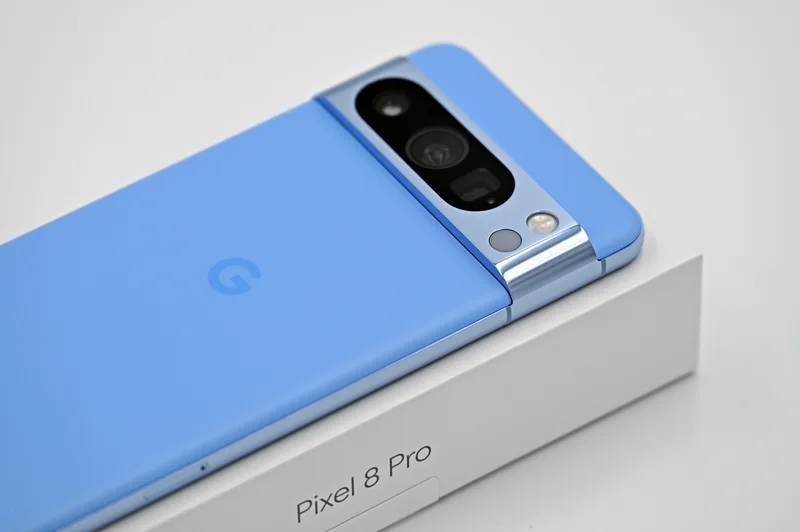
At exactly the same $999 price point, the Pixel 8 Pro and Xiaomi 14 make almost opposite bets on how to build the best camera phone available. Google leans entirely into computational photography and machine learning, using its custom Tensor G3 chip to process images in ways no other phone can replicate. Xiaomi leans into optical hardware and a genuine partnership with Leica, the century-old German camera maker, to tune color science and lens quality the traditional way.
Computational Photography vs Leica Optics
The Pixel 8 Pro's camera party trick is entirely software-driven: features like Magic Eraser and Best Take — which lets you composite the best facial expression from multiple group photos into a single image — don't exist anywhere else in quite the same form, because they depend on Google's specific machine learning models trained on the Tensor chip. The 50MP main sensor, 48MP ultrawide, and 48MP telephoto (5x optical zoom) hardware is excellent, but the real differentiator is what Google's software does with the images after capture — computational tricks that make everyday photography more forgiving of mistakes.
The Xiaomi 14 takes a more traditionalist approach. Its triple 50MP camera system — main, ultrawide, and 3.2x telephoto — is Leica-tuned, meaning Xiaomi worked directly with Leica's optical engineers on color science, contrast, and lens coatings rather than relying primarily on post-processing software. The result is a more naturalistic, less obviously "processed" look straight out of the camera, closer to what a dedicated Leica camera would produce, appealing to photographers who find Google's computational style occasionally over-sharpened or artificial-looking.
Charging Speed
Charging speed is not close: the Xiaomi 14 supports 90W wired charging, capable of refilling its 4610mAh battery to near-full in about 30 minutes. The Pixel 8 Pro tops out at 30W wired — perfectly ordinary by 2026 standards but nowhere close to Xiaomi's speed, and a real everyday inconvenience if you're used to topping up a phone during a short coffee break. Wireless charging follows the same pattern: Xiaomi's 50W wireless is more than double the Pixel's 23W, extending its charging-speed advantage across both wired and wireless.
Software and Update Support
Software philosophy is where the two phones diverge most for daily use. The Pixel 8 Pro runs close to stock Android with Google's own thoughtful additions layered on top, and Google promises seven years of OS updates and security patches — a genuinely class-leading commitment that matches Samsung's best and exceeds nearly everyone else in the Android ecosystem. The Xiaomi 14 runs HyperOS, a heavily customized skin that's more feature-dense but less consistent than stock Android, and Xiaomi's update commitments — while improved in recent years — still don't match Google's seven-year promise. Our full Pixel 8 Pro verdict covers why its software support remains one of its strongest selling points.
Display and Size
Display quality is close — both use LTPO OLED panels capable of scaling their refresh rate for power efficiency, with the Pixel 8 Pro's 1-120Hz range against the Xiaomi 14's 120Hz panel. The Pixel's screen is larger at 6.7 inches versus the Xiaomi's more compact 6.36 inches, a genuine advantage for anyone who prioritizes a smaller, one-hand-friendlier flagship — Xiaomi built the 14 deliberately compact while most competitors keep growing, and it's one of the phone's most underrated qualities.
Regional Availability
One practical note for buyers outside China: Xiaomi's global software experience, app store integration, and carrier compatibility can be less polished than what you get from a Pixel sold directly through Google and major US/European carriers — worth checking regional availability and full carrier band support before buying. Our Xiaomi 14 verdict goes into more detail on where the software habits show through despite genuinely excellent hardware.
AI Features Beyond the Camera
Google's Tensor G3 chip powers more than just camera tricks — on-device features like Live Translate for real-time conversation translation without an internet connection, and Recorder's automatic transcription with speaker labeling, represent a different category of "AI phone" than Xiaomi's camera-focused approach. If you value AI features that extend beyond photography into daily productivity and communication, the Pixel's advantage widens considerably beyond just the camera comparison this article has focused on.
Build Quality and In-Hand Feel
Both phones use genuinely premium materials — aluminum frames with Gorilla Glass Victus 2 on the Pixel, and a choice of ceramic or glass backs on the Xiaomi 14 depending on configuration, with ceramic offering a notably more premium, if heavier and more fragile-feeling, in-hand experience. Both carry IP68 water resistance. The Xiaomi's more compact dimensions make it noticeably easier to hold and use one-handed despite packing comparable specs to the larger Pixel, a real ergonomic advantage for buyers who find modern flagships have grown uncomfortably large.
Video Recording Quality
Video recording favors the Pixel 8 Pro for most casual users thanks to Google's excellent stabilization and consistent exposure handling across lighting conditions, while the Xiaomi 14's video quality is very good but occasionally less consistent in mixed or challenging lighting, reflecting the broader hardware-versus-software divide that defines this entire comparison — Google's computational strength shows up as much in video as it does in stills.
Call Quality and Network Bands
Network compatibility is worth checking regardless of which phone you lean toward: Pixel phones sold through Google in the US and Europe carry broad carrier band support out of the box, while Xiaomi's global variants can vary by region in which 5G bands and carrier features are fully supported, occasionally requiring buyers to double-check compatibility with their specific carrier before purchasing, particularly for buyers importing the phone outside its primary sales regions.
Long-Term Value
Factoring in Google's longer update commitment against Xiaomi's typically faster depreciation on the resale market, the Pixel 8 Pro tends to hold its practical usefulness for longer relative to its original price, even though both phones launched at the same $999 figure and often see similar discounting during major sales periods throughout their lifecycle.
Verdict
Choose the Pixel 8 Pro for the best all-around software experience, the longest update runway, and Google's genuinely unique computational photography tricks. Choose the Xiaomi 14 for a more compact flagship, dramatically faster charging, and a more naturalistic Leica-tuned camera look.