Pixel 8 Pro vs Galaxy Z Flip5: Best-in-Class Camera vs Best-in-Class Novelty
One is arguably the best all-around camera phone you can buy. The other folds in half. They cost roughly the same and appeal to very different priorities.
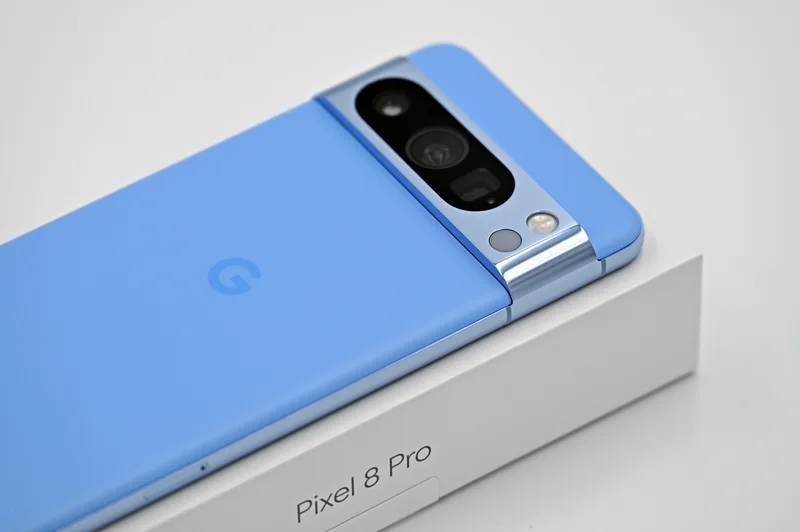
The Pixel 8 Pro ($999) and the Galaxy Z Flip5 ($999) land at almost exactly the same price, but they're solving completely different problems. The Pixel 8 Pro is built to be the best all-around camera and software experience available on Android. The Z Flip5 is built to prove that a folding phone can be a legitimate flagship rather than a gimmick. Neither is really trying to out-compete the other directly — they appeal to buyers with different priorities entirely.
Camera Quality
Camera quality isn't close. The Pixel 8 Pro's 50MP main, 48MP ultrawide, and 48MP telephoto (5x optical zoom) system, backed by Google's Tensor G3 chip and computational photography software, remains one of the most consistently excellent camera setups on any phone at any price. The Z Flip5's 12MP main and 12MP ultrawide combination is competent but far less capable — no telephoto lens at all, and noticeably behind in low light and detail retention compared to the Pixel. If photography is your top priority, this comparison ends quickly in the Pixel's favor.
The Foldable Trick
What the Z Flip5 offers instead is a genuinely novel daily-use experience. Its 3.4-inch cover screen lets you check notifications, reply to messages, and control music without unfolding the phone, and the ability to half-fold the device for hands-free photography or video calls is a trick no traditional slab — including the Pixel — can replicate. It's the kind of feature that's hard to appreciate from a spec sheet; owners who actually live with a Z Flip5 for a week often report genuinely changed habits around notification-checking and one-handed use.
Battery Life
Battery capacity heavily favors the Pixel: its 5050mAh cell is more than a third larger than the Z Flip5's comparatively small 3700mAh battery, a direct consequence of Samsung needing to fit a battery around a folding hinge mechanism. Real-world stamina reflects that gap — the Pixel 8 Pro comfortably handles a full day of heavy use, while the Z Flip5 often needs a top-up by evening for the same usage pattern. Our full Pixel 8 Pro verdict covers more on its all-day battery performance.
Software Support
Software update policy also favors Google significantly: the Pixel 8 Pro gets seven years of OS updates and security patches, one of the longest commitments in the Android ecosystem. Samsung's Z Flip5 gets Samsung's standard flagship update policy, which has improved substantially in recent years but historically trails Google's Pixel-specific promise by a couple of years in practice, even as both companies' baseline commitments continue to improve.
Durability
Durability is where the folding mechanism becomes a genuine consideration. The Z Flip5's hinge has improved significantly over earlier Z Flip generations, and Samsung rates it for hundreds of thousands of fold cycles, but it still introduces a crease in the display and carries no dust resistance rating — just IPX8 for water. The Pixel 8 Pro's traditional sealed aluminum-and-glass body carries a full IP68 rating with zero moving parts to wear out over years of ownership. If long-term mechanical reliability is a top concern, the traditional form factor has a real, structural advantage. Our Galaxy Z Flip5 verdict covers how the hinge holds up in extended testing.
Display
Both main displays are excellent LTPO-class OLED panels, but they serve different purposes: the Pixel's 6.7-inch 1-120Hz panel is a conventional, best-in-class flagship screen, while the Z Flip5's 6.7-inch foldable panel trades a small amount of raw sharpness and durability for the ability to fold in half — a tradeoff that's inherent to the format, not a flaw specific to Samsung's execution.
Video Call and Selfie Use Cases
One area where the Z Flip5's design genuinely earns its keep: using the main rear camera for selfies and video calls by shooting through the cover screen while the phone sits half-folded, propped on a table like a tiny tripod. This lets Z Flip5 owners use their far superior main camera for video calls and selfies instead of a typically weaker front-facing sensor — a trick the Pixel 8 Pro, with its fixed body, structurally cannot replicate regardless of how good its own 10.5MP front camera is.
Price Stability Over Time
Both phones have seen meaningful price drops since their original launch prices, common for flagships roughly two years into their lifecycle by 2026. The Pixel 8 Pro in particular tends to see aggressive periodic discounting through Google's own store and major retailers, sometimes bringing it closer to $700-750 during sales events, which meaningfully improves its value proposition against the Z Flip5's comparatively slower price erosion, since folding phones as a category have historically held resale and retail pricing somewhat more firmly than conventional flagships.
Software Ecosystem
Both phones run Android, but the experience diverges: the Pixel 8 Pro runs Google's own near-stock build with the fastest access to new Android features and Pixel-exclusive tools, while the Z Flip5 runs Samsung's feature-rich One UI, which includes deep foldable-specific software like Flex Mode for hands-free use and multi-window support tailored to the unfolded display — a genuine software advantage specific to the folding form factor that a conventional phone like the Pixel has no equivalent for.
Storage and RAM
The Pixel 8 Pro offers a 1TB storage tier the Z Flip5 doesn't match, useful for buyers who shoot extensive photo and video without relying heavily on cloud backup, while both phones start with comparable RAM configurations suitable for smooth everyday multitasking.
Multitasking and Productivity
Samsung's One UI includes robust split-screen and floating-window multitasking tools that work particularly well on the Z Flip5's unfolded display, giving it a genuine productivity edge for users who want to run two apps side by side — something the Pixel's more streamlined, single-focus software approach doesn't prioritize to the same degree, reflecting each company's differing philosophy about how a phone should handle multiple tasks at once.
Verdict
If you want the best camera and longest-supported software experience at this price, the Pixel 8 Pro is the clear choice. If you're drawn to a genuinely different form factor and are willing to trade camera quality and battery capacity for it, the Z Flip5 remains one of the most polished folding phones available.