iPhone SE vs Galaxy Z Flip5: Small Flat Phone vs Small Folding Phone
Both phones appeal to people tired of giant slabs, but they solve the problem in opposite ways — one shrinks by staying old-fashioned, the other shrinks by folding in half.
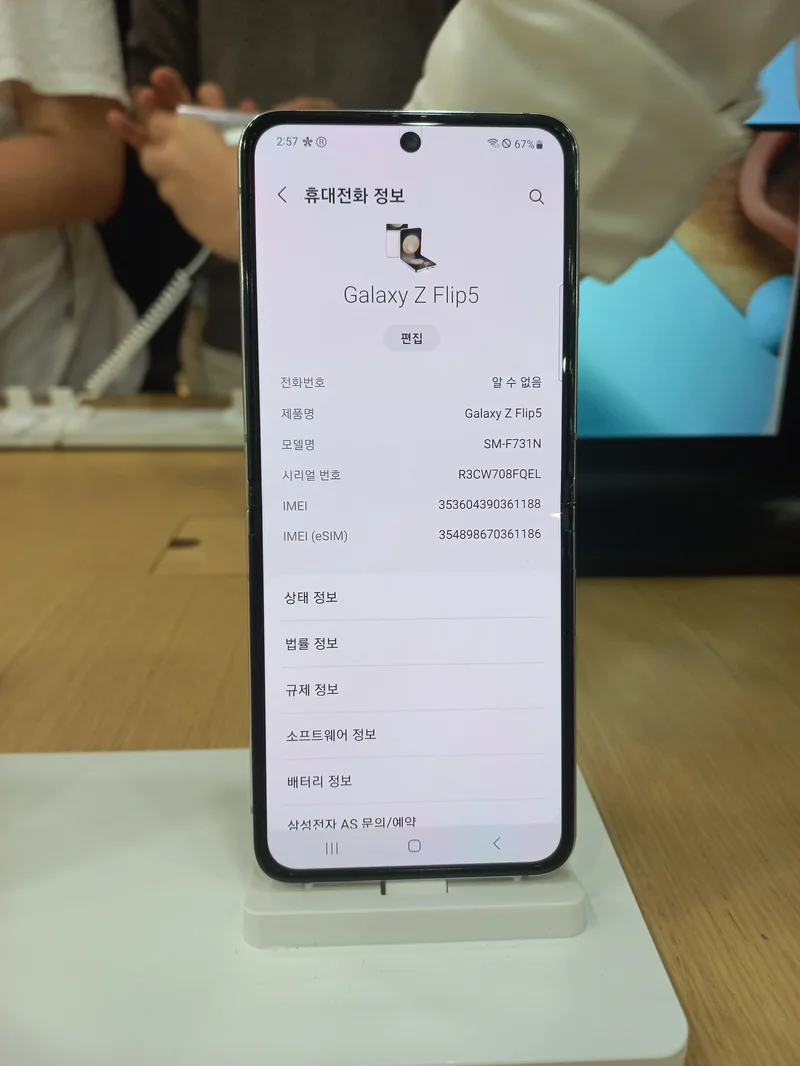
People who are tired of giant phones tend to land on one of two solutions: buy something that was never designed to be huge in the first place, or buy something that folds down to pocket-friendly size when you're not using it. The iPhone SE represents the first approach and the Galaxy Z Flip5 represents the second, and while they cost roughly the same distance apart in price as they do in philosophy — $429 versus $999 — both get recommended to the same kind of buyer: someone who wants a phone that doesn't dominate their pocket.
Size, Unfolded and Folded
Unfolded, the Z Flip5 is actually a fairly large phone — a 6.7-inch foldable Dynamic AMOLED 2X display that competes with mainstream flagships for screen real estate. Folded, it drops to roughly the size of a deck of cards. The SE never changes size; its 4.7-inch screen is compact by design, full stop, no folding mechanism required. If your priority is genuinely small in every dimension, the SE wins without qualification — the Z Flip5 is only small when closed, and reopening it every time you want to check a notification adds friction the SE never has.
The Cover Screen Advantage
The Z Flip5's redeeming trick is its 3.4-inch cover screen, a major upgrade over the tiny cover display on its predecessor. You can reply to messages, check notifications, control music, and even run selected apps without ever unfolding the phone, which meaningfully closes the convenience gap with a normal flat phone. It's genuinely useful in a way that makes the Z Flip5 feel less like a novelty than earlier folding phones did — but it's still an extra screen to manage, not a substitute for opening the phone when you need to actually do something.
Cameras
Camera hardware is close on paper — both phones use a 12MP main sensor, with the Z Flip5 adding a 12MP ultrawide the SE simply doesn't have. In practice, the Z Flip5's flexibility — using the cover screen as a viewfinder for selfies with the superior rear camera, or propping itself up half-folded for hands-free tripod shots — gives it creative options the SE's fixed single-lens setup can't replicate, even though the underlying sensor specs are similar in raw resolution.
Durability
Durability is where the comparison flips in the SE's favor. A folding phone has a mechanical hinge — a real point of failure that a traditional phone simply doesn't have. Samsung has improved the Z Flip5's hinge and crease significantly over earlier generations, and it carries an IPX8 water resistance rating, but there's no dust resistance rating at all, a real vulnerability for a device with a fold line where sand and grit can collect. The SE, despite its dated design, is a solid, sealed IP67-rated slab with no moving parts and nothing to hinge-fatigue over years of folding and unfolding. Our Galaxy Z Flip5 verdict goes deeper into how the hinge holds up in extended testing.
Battery Life
Battery capacity is a genuine weakness for the Z Flip5 — its 3700mAh cell is smaller than you'd expect from a phone this expensive, a direct consequence of packing a battery around a hinge mechanism. The SE's battery is also modest, but Apple's chip efficiency keeps it competitive despite the numbers looking similarly unremarkable on both phones. Neither is a battery-life star; if all-day stamina under heavy use is your top priority, look elsewhere on this site rather than at either of these two.
Price and Positioning
Price positions them for different buyers entirely. At $429, the SE is a budget phone that happens to be small. At $999, the Z Flip5 is a premium phone that happens to fold — you're paying flagship money for the folding mechanism and cover screen novelty, not getting a discount for the compact form factor. If your actual goal is "spend as little as possible," the SE is the only sensible choice here. If your goal is "I want a phone that feels different and don't mind paying flagship prices for it," the Z Flip5 delivers an experience the SE can't match at any price.
Longevity in the Hand
Ownership experience over multiple years diverges in a way spec sheets don't capture well. The SE's simple, hinge-free design means a three-year-old unit works essentially identically to a brand-new one, mechanically speaking — no wear points beyond the usual screen and battery aging every phone experiences. Folding phones are a newer enough category that long-term reliability data is still accumulating, though Samsung is now several generations into the Z Flip line and has clearly improved hinge durability with each iteration. Buyers who plan to keep a phone for three-plus years without a case-and-screen-protector-obsessive routine may find the SE's mechanical simplicity genuinely reassuring in a way that's easy to underrate before you own a foldable.
The Psychological Appeal of Folding
It's also worth acknowledging something spec comparisons tend to skip: for many Z Flip5 owners, the satisfaction of physically snapping the phone shut is a real, if hard-to-quantify, part of the appeal — genuinely one of the most commonly cited reasons people buy flip-style phones over any purely functional advantage. That's not a knock on the SE, which has its own appeal in raw simplicity, but it explains why some buyers pay a genuine premium for the Z Flip5 despite its camera and battery limitations relative to price — the phone itself is part of the daily experience in a way a flat slab, however capable, generally isn't.
App and Screen Adaptation
Software adaptation also differs meaningfully between the two. iOS on the SE runs every app exactly as designed, since Apple controls a tightly limited set of screen sizes across its whole lineup. Samsung's One UI has to handle the Z Flip5's unusual cover-screen dimensions and the transition between folded and unfolded states, and while Samsung has refined this significantly across several Z Flip generations, some third-party apps still don't scale perfectly to the compact cover display, occasionally requiring a full unfold for functionality that should, in theory, work fine on the smaller screen.
Verdict
Both phones solve the "big phone fatigue" problem, but only one of them does it on a budget. Choose the SE for genuine affordability and simplicity. Choose the Z Flip5 for a flagship experience in a novel, pocketable format, and accept the durability and battery tradeoffs that come with the folding mechanism.