HONOR Magic6 Pro vs Xiaomi 14: China's Two Very Different Flagship Bets
One chases periscope zoom and AI, the other chases Leica color science in a compact body. Here is how they actually differ.
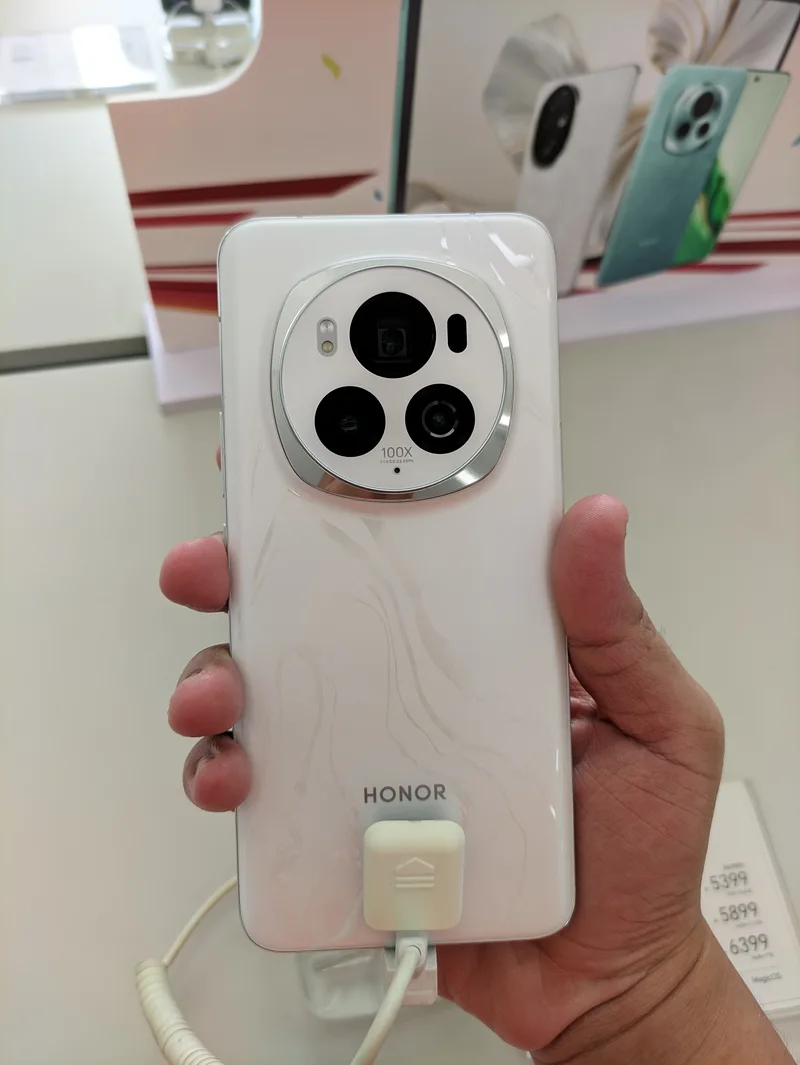
Western phone coverage tends to treat Chinese flagship brands as a monolith — "the Android phones with great cameras and cheap-for-what-you-get pricing." HONOR and Xiaomi make that framing look lazy the moment you put the Magic6 Pro and Xiaomi 14 side by side, because the two companies are chasing genuinely different ideas of what a flagship should prioritize, even though both are competing for the exact same shelf space against Samsung and Apple.
HONOR Magic6 Pro: Betting Everything on AI and Optics
HONOR's pitch with the Magic6 Pro is that computational photography and on-device AI are the actual battleground for flagship phones now, not raw benchmark numbers. The headline feature is a 180MP periscope telephoto — a genuinely unusual spec even among flagships, most of which top out around 50-64MP on their zoom lens — paired with a 50MP main sensor and a 50MP ultrawide, all tuned jointly rather than treated as three separate cameras bolted together. In daylight zoom shots specifically, this shows: detail retention at 3x-5x zoom is a clear step above most Android competitors, including phones with nominally similar specs on paper.
The AI framing goes beyond the camera. HONOR built eye-tracking features into the Magic6 Pro that can, for example, adjust what's shown on screen based on where you're actually looking, and leaned hard into on-device AI photo editing — object removal, reflection removal from photos taken through glass, and similar computational tricks that used to require a desktop app. Whether you personally find these gimmicky or genuinely useful probably depends on how much you already lean on AI photo tools, but HONOR clearly built the phone around the bet that this is where flagship differentiation goes next.
Under the camera system, the Magic6 Pro runs a Snapdragon 8 Gen 3, a 5600mAh silicon-carbon battery (notably larger than most flagship competitors while keeping the phone's physical size reasonable), and a curved 6.8-inch OLED at 1-120Hz adaptive refresh. Battery life is a genuine strength here — the silicon-carbon cell chemistry lets HONOR fit meaningfully more capacity into the same physical volume than older lithium-ion designs, and it shows in real-world screen-on time.
Xiaomi 14: Leica Optics and a More Restrained Design Philosophy
Xiaomi's approach with the Xiaomi 14 is almost the opposite instinct: rather than chasing a single showpiece spec like a 180MP periscope, it leans on a co-engineered partnership with Leica for color science and lens design across a more conventional 50MP triple-camera array (main, ultrawide, 3.2x telephoto). The result is a camera that photography enthusiasts tend to describe as having more "natural" color rendering out of the box — less aggressive HDR processing, less oversaturation — which is a direct reflection of Leica's involvement in tuning the image pipeline rather than leaving it purely to Xiaomi's own computational photography team.
The Xiaomi 14 is also physically smaller than most 2024-generation flagships, with a 6.36-inch display — a genuine rarity in a market where "flagship" has become nearly synonymous with 6.7-inch-plus screens. For buyers who specifically want flagship silicon and cameras without a phone that barely fits in a normal pocket, this is one of very few current options. It runs the same Snapdragon 8 Gen 3 as the Magic6 Pro, so raw performance is a wash between the two, but Xiaomi ships it with 90W wired charging that gets the phone from empty to full in well under 30 minutes — noticeably faster than HONOR's charging speeds, even accounting for the Magic6 Pro's larger battery.
MIUI (Xiaomi's Android skin, since rebranded HyperOS on newer devices) has historically been criticized in Western reviews for aggressive notification management and pre-installed apps, though it has improved significantly across recent generations. It remains more heavily customized than HONOR's MagicOS, which sits closer to a lightly-skinned Android experience.
Camera Philosophy Is the Real Dividing Line
If you photograph a lot of distant subjects — concerts, wildlife, architecture from across a street — the Magic6 Pro's periscope zoom is simply doing something the Xiaomi 14 cannot match; a 3.2x optical zoom versus a genuine 5x+ periscope is not a small gap in practice. If you care more about how a phone renders skin tones, sunsets, and everyday scenes without needing to zoom, the Leica-tuned Xiaomi 14 produces images that need less editing to look right straight out of the camera app, according to most side-by-side comparisons from photography-focused reviewers.
Size is the other genuinely decisive factor: the Xiaomi 14 is one of the only current flagships that fits comfortably in a normal-sized hand and pocket without compromising on chipset or camera quality, while the Magic6 Pro is a large-handed phone by design, in service of that bigger battery and periscope module.
Which One Should You Actually Buy?
Neither phone is officially sold through carrier channels in most Western markets, so buying either typically means importing — which affects warranty support, software update timelines, and band compatibility with your specific carrier, all things worth checking before ordering either device. That caveat aside: if periscope zoom and multi-day battery life matter more to you than pocket size, the Magic6 Pro is the stronger pick. If you want the most compact true flagship currently available with class-leading color science, the Xiaomi 14 is very hard to beat, and its faster charging is a real quality-of-life advantage for daily use.
Both phones make the case that "flagship Android" is not one single formula — HONOR and Xiaomi are solving for genuinely different priorities, and the right answer depends entirely on whether zoom range or pocket size is the thing you're less willing to compromise on.
Software Longevity: A Real Difference That's Easy to Overlook
It's worth weighing software support commitments alongside hardware, because a flagship you keep for three or four years lives or dies on how long it keeps getting security patches and OS upgrades. Xiaomi has steadily extended its update commitments on flagship-tier devices in recent generations, moving closer to the multi-year Android version guarantees that Samsung and Google offer, though Xiaomi's rollout schedule for major Android version updates has historically lagged behind Pixel and Galaxy devices by several months in any given cycle. HONOR has made similar public commitments on the Magic6 Pro, but as the newer entrant to premium Western-adjacent markets, HONOR has a shorter public track record to judge those promises against compared to Xiaomi, which has been shipping global flagships for close to a decade.
For a buyer planning to hold onto either phone for the long haul, this is worth factoring in alongside camera preference and hand size — a phone with the "wrong" ergonomics for three months is a minor annoyance you adapt to, but a phone that stops getting security patches two years early is a real cost that shows up much later, after the return window has long closed.